Ingredients
Enoki Mushrooms: Trim the Cluster and Cook It Through
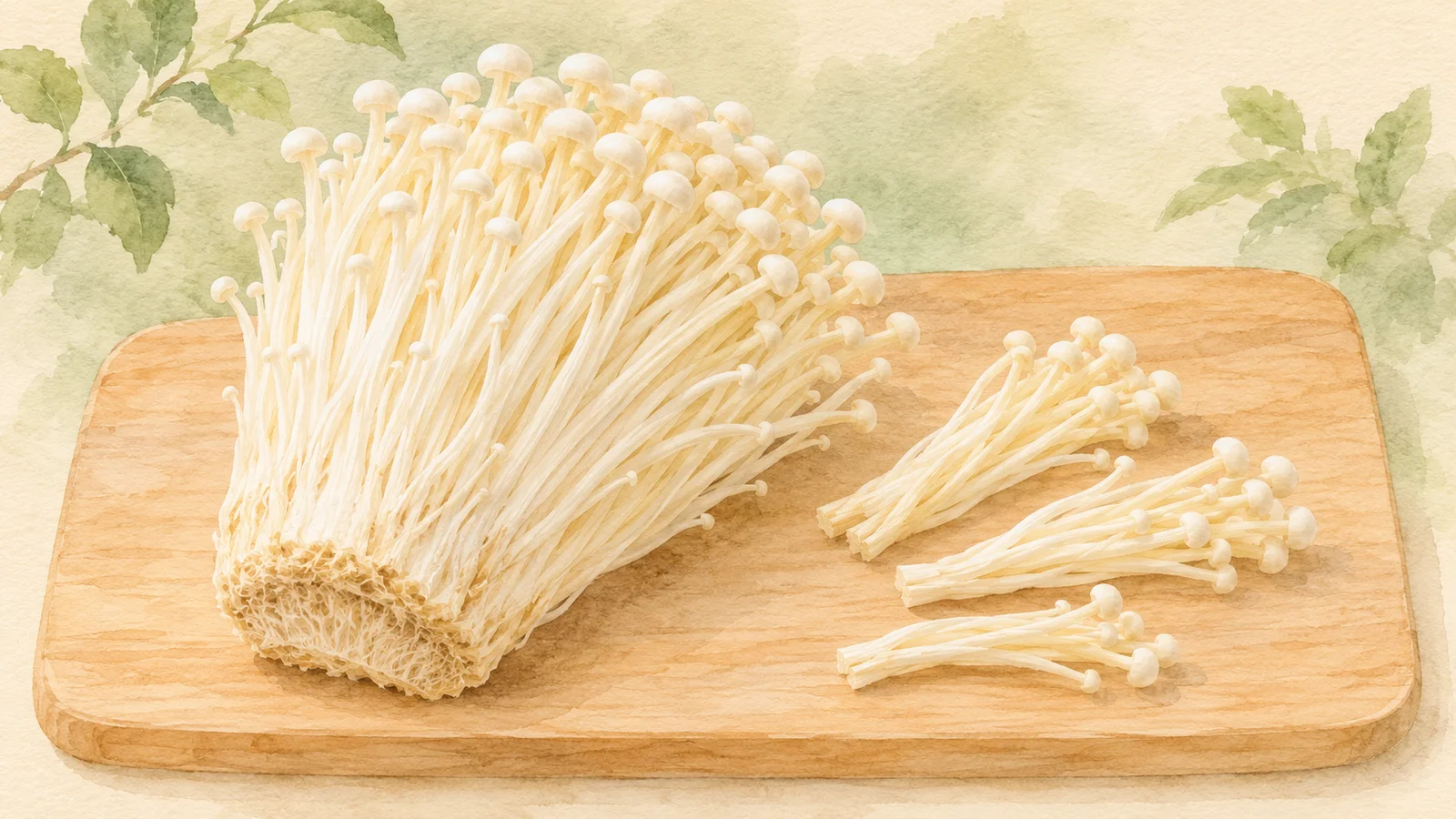
Enoki mushrooms look like a bundle of fine noodles wearing tiny caps. Their slender stems bring a mild mushroom flavor and a little chew to soups, hot pots and stir-fries. The compact block at the bottom holds the bunch together; trimming that base lets you pull it into portions that are easier to cook and eat.
Plan to cook enoki thoroughly. They belong in the cooking pot, not scattered raw over a finished bowl. That distinction matters even when the package looks fresh.
Bring home a cold, firm bunch
Look in the refrigerated produce section for cultivated enoki with pale, firm stems and small caps. Just One Cookbook’s ingredient guide describes their clustered form and advises avoiding soggy, slimy or discolored mushrooms. A sound appearance helps you choose quality, but it cannot rule out harmful bacteria.
Keep the package label until you have used the mushrooms. Compare the brand, lot and other identifying details with FDA’s recall notices when checking a purchase. Return or discard a recalled product as directed; cooking is not a reason to use a recalled pack.
Health Canada advises refrigerating raw enoki at 40°F (4°C) or below as soon as you get home. Follow the package’s storage directions and use the mushrooms promptly. Keep them separate from food that will be eaten without further cooking, including salad leaves, fruit and prepared sauces.
Trim low, then tease apart
Set out a clean cutting board, knife and bowl before opening the packet. Cut away the compact growing base so the long edible stems can separate. There is no need to cut off every tiny cap or reduce the whole bunch to short pieces.
Gently pull the stems apart from their lower ends into small, loose clusters. This keeps a manageable bundle together without leaving a dense block in the pan. If some stems separate completely, cook them with the rest. For shorter spoonfuls of soup, you can cut the trimmed stems across once more.
If there is visible dirt, Just One Cookbook suggests swishing the mushrooms in clean water and patting them dry. Treat this as cleaning, not disinfection: rinsing does not replace cooking. Wash your hands before and after handling the raw mushrooms, and clean the board, knife, bowl and work surface before using them for ready-to-eat food.
Give the mushrooms real cooking time
Enoki are thin, but a quick dip or a ladle of hot broth is not a dependable cooking method. CDC specifically warns against adding raw enoki to soup just before serving, because they may not get hot enough to kill Listeria. Keep cooking after the mushrooms enter the dish.
For a clear preparation benchmark, Food Standards Australia New Zealand recommends boiling enoki for at least two minutes and cooking them until steaming hot. Health Canada gives a heat treatment of 70°C (158°F) for at least two minutes. The mushrooms themselves need that treatment; dropping a cold, tightly packed bunch into a pot and immediately starting a short countdown is not the same thing. Follow any more demanding package directions.
Choose a recipe that includes an actual cooking stage for enoki. In a hot pot or soup, separate the clusters so broth can reach them. In a stir-fry, leave enough room to turn and heat the mushrooms throughout. Do not judge safety only by whether the stems have wilted. For measuring food temperature, see the thermometer placement guide.
Keep the cooked portion separate
Use clean serving utensils rather than the tongs or bowl that held raw enoki. CDC emphasizes thorough cooking and raw-food separation, with particular concern for pregnant people, adults 65 and older, and people with weakened immune systems. Serving enoki cold is possible only after proper cooking and safe chilling; a raw mushroom salad is not the shortcut.
Refrigerate leftovers promptly. FDA’s storage guidance limits perishable food at room temperature to two hours, or one hour above 90°F (32°C). For a mixed dish, follow the storage and reheating instructions for the whole recipe. Prepare a modest amount that fits comfortably in the pot, and let those delicate stems cook all the way through.