Ingredients
Dried Wood Ear Mushrooms: From Packet to Pan
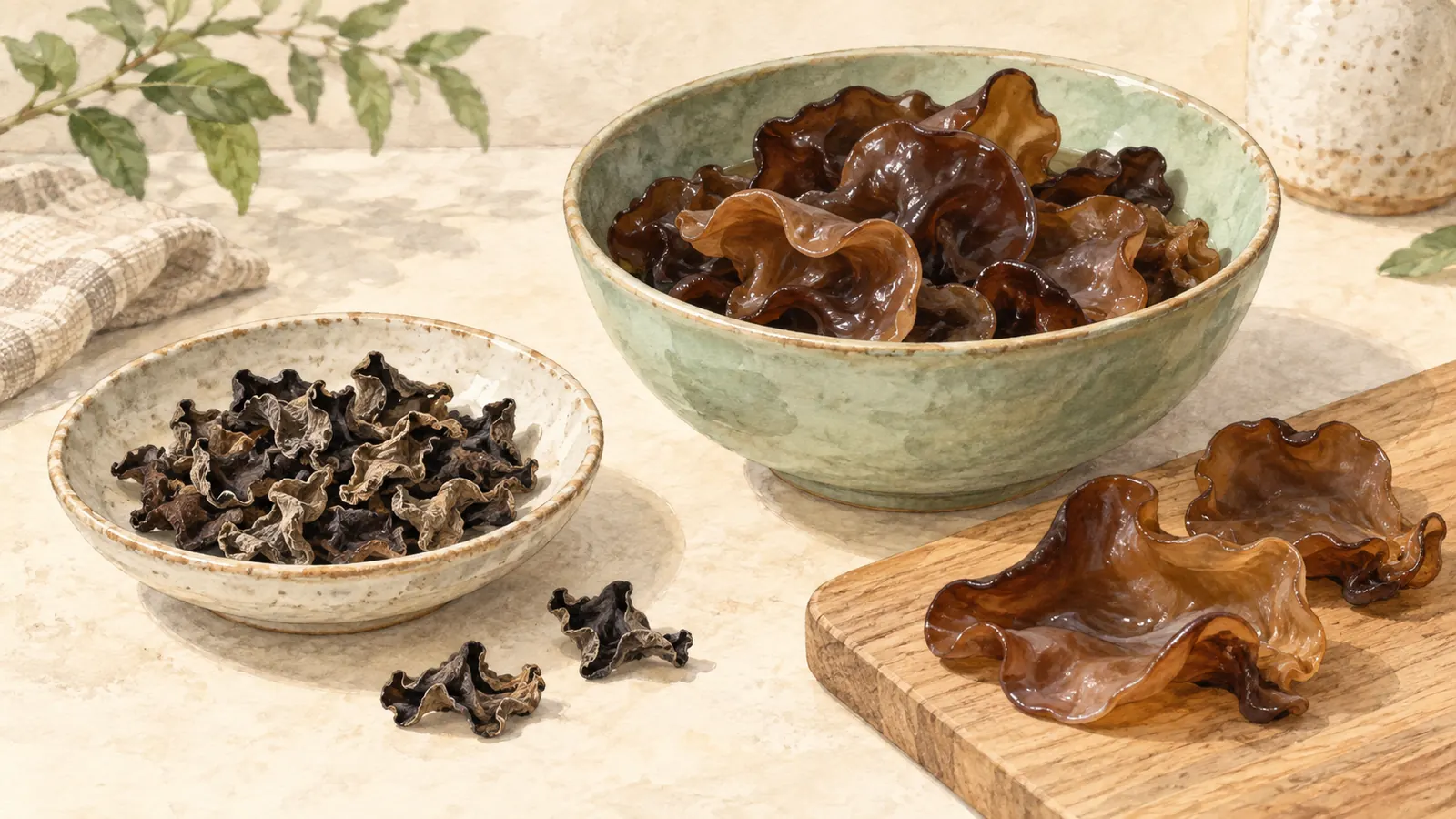
Those small, crumpled black pieces in the packet become broad, ruffled mushrooms with a springy bite. Wood ear is useful when a dish needs that texture: something to catch a little sauce and interrupt a mouthful of soft noodles or tender vegetables.
It does a different job from dried shiitake. Choose shiitake when you want a pronounced mushroom flavor and a useful soaking broth. Choose wood ear when you want the folds and chew. Substituting one for the other changes more than the color of dinner.
Check the name and the amount
Packets may say wood ear, black fungus, kikurage or mu er. The FDA lists these names together. Buy a labeled food product from a reliable seller; this is not a guide to identifying wild fungi.
Wood ear is sold as loose dried pieces and compressed blocks. The Woks of Life’s ingredient glossary also distinguishes it from pale snow fungus. Match the ingredient to the recipe rather than buying any dried fungus in the aisle.
Check whether the recipe’s amount means dry mushrooms or mushrooms already soaked. They expand substantially in water, so a dry cup and a rehydrated cup are very different starting points. Measure the requested form, use a roomy container and resist emptying the whole packet just because it looks small. Keep the unused dry portion in a cool, dry place, as Maangchi recommends, following the package’s storage directions.
Rehydrate shortly before cooking
Rinse the dry mushrooms under clean running water. Put the amount you need in a clean, heatproof container with plenty of room for expansion. The FDA’s general advice for dried mushrooms is to reconstitute them using boiling water. Handle the container carefully and keep it on a stable, heat-safe surface.
Use the package’s preparation directions to judge the required soaking period. The pieces should unfold and become pliable rather than remain dry and rigid in their folds. Hydration is a preparation step; it does not make the mushrooms a ready-to-eat snack.
Set a reminder when you start. Hong Kong’s Centre for Food Safety advises limiting room-temperature mushroom soaking to no more than two hours and refrigerating longer soaks. Plan to prepare only what you will cook promptly, instead of leaving a bowl on the counter for later. Discard a forgotten batch left out beyond that guidance; chilling it afterward does not undo the time it spent warm.
Open the folds, then trim
Drain away the soaking water. Once the mushrooms are cool enough to handle, rinse individual pieces and work around the folds where grit can hide. Snip away any hard attachment point, then tear or cut large pieces to suit the dish. A tough base needs trimming rather than an indefinitely longer soak.
Wei Guo’s wood-ear guide shows this washing and trimming stage and emphasizes cooking before eating. For a stir-fry, let the cleaned pieces drain well before they reach the pan. For soup, cut pieces small enough to share a spoonful with the other ingredients. Follow a recipe written for wood ear so its cooking step fits the dish.
A chilled wood-ear salad still needs cooked mushrooms. Dressing, vinegar and a period in the refrigerator do not replace that cooking step. The desired springiness is a texture, not proof that an uncooked piece is safe to eat.
A longer boil cannot rescue a neglected soak
The Centre for Food Safety’s bongkrekic-acid review describes an uncommon but serious toxin associated with some improperly stored foods, including black fungus soaked for prolonged periods. The toxin withstands heat. That is why safe handling before cooking matters, even when the mushrooms will later go into a hot pan.
Discard soaked mushrooms with slime or an abnormal smell, and do not taste a suspect batch. A normal smell is not a substitute for knowing how it was handled. Recalled mushrooms must also be discarded, not washed or cooked in an attempt to make them usable. With a fresh, properly handled batch, finish the preparation and get it into the dish while the rest of dinner is ready for it.