Ingredients
Dried Anchovies for Broth and Side Dishes
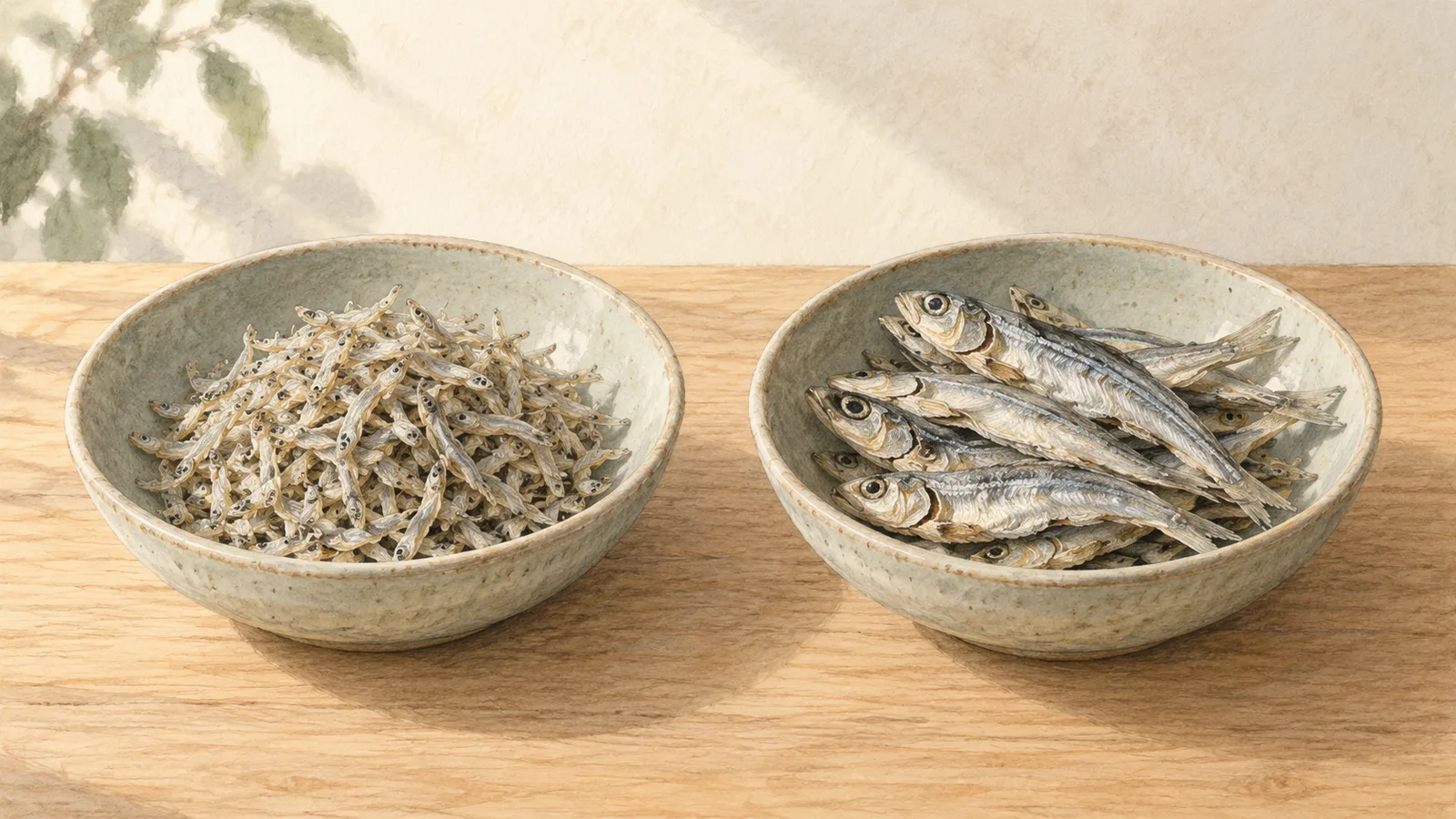
A bag of tiny dried anchovies and a bag of thumb-length ones may sit beside each other at the Korean market, but they lead to different dinners. The little fish can become a crisp, savory side dish. The larger ones usually lend their flavor to broth and are strained out before serving.
Look for myeolchi (멸치), the Korean name for anchovies, and choose by the use printed on the package as well as by size. This guide concerns whole dried fish. Oil-packed fillets, anchovy paste and fish sauce are different ingredients; buy the form your recipe actually names.
Read the intended use before choosing a bag
For a side dish such as myeolchi bokkeum, look for small anchovies labeled bokkeum yong (볶음용), meaning intended for stir-frying. The tiniest may be called jiri myeolchi (지리멸치). Hyosun’s guide to stir-fried anchovies explains that small fish are used whole, including heads and bones. You are choosing the texture that will remain in the finished dish.
For soup or stew, look for gukmul yong (국물용), intended for broth. Medium to large fish are the usual choice. Check the intended use as well as the size; a counted quantity of large fish cannot be replaced by the same number of tiny ones.
Hyosun’s anchovy-broth guide recommends clean, silvery skin with a bluish cast. Check the package seal and storage directions before buying.
Small fish stay whole; large fish need a closer look
Tiny side-dish anchovies do not need individual head-and-gut removal. Follow a complete recipe for the frying and sauce: these fish already contribute salt, so a generous extra pour of soy sauce can overwhelm them. Have the seasoning ready before the pan goes on; small, dry ingredients need attention at the stove.
For large stock anchovies, open the belly and remove the dark innards. They can give the broth a bitter edge. Cooks differ on the heads: Maangchi removes heads and guts, while Hyosun keeps the heads for her stock. Follow the method of the recipe you are making.
If your stock recipe calls for dry-toasting, stay at the pan and keep the fish moving. Follow its water quantity and cooking time; extended boiling can spoil the broth’s delicate flavor.
Give the opened bag a home in the freezer
Keep dried anchovies in a tightly sealed freezer bag or airtight container, following any stricter package instructions. Both Maangchi and Hyosun recommend freezer storage. Label the container with its contents and opening date so a small unmarked bag does not become a mystery ingredient.
Return the unused portion promptly after measuring what you need. Keep storage guidance for dry fish separate from guidance for a finished broth or sauced side dish; adding water and other ingredients changes what you are storing.
Check what else is in a stock packet
Anchovy stock packets can contain kelp, mushrooms or other seafood. Read the ingredient list instead of assuming every packet is simply a measured portion of fish. Follow the packet’s water quantity.
Anchovies are fish, and anchovy broth is not vegetarian. The FDA identifies fish as a major food allergen. If cooking for someone with an allergy, check every ingredient and avoid their allergens; straining out the fish does not make this a fish-free broth. Choose a suitable fish-free recipe from the beginning.
Once the right bag is home, pick its first job. Large stock anchovies belong with a complete broth method, such as the one linked above, before making doenjang jjigae with tofu and zucchini. Small fish belong with a side-dish recipe that uses them whole.