Ingredients
Rice Noodles for Soup, Salad and the Wok
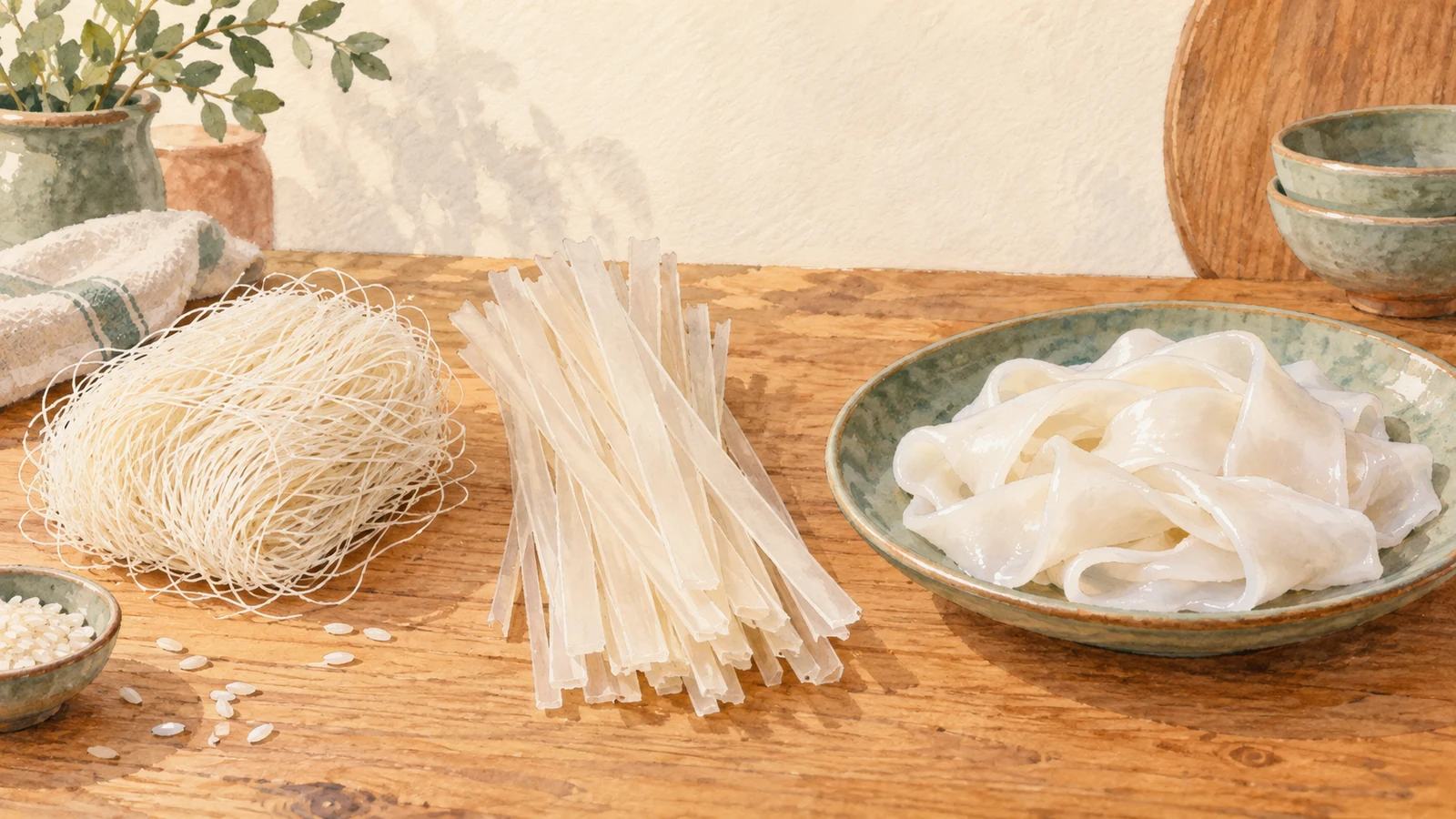
A nest of thin white strands, a packet of brittle flat sticks and a soft bundle from the refrigerator can all be called rice noodles. Put them through the same boiling-water routine and they will not arrive at dinner in the same condition.
Start with the dish. A noodle salad needs noodles cooked before they meet the herbs. A stir-fry may need noodles hydrated just enough to finish in the sauce. Soup has its own sequence, with a brief noodle cook followed by hot broth. The package name alone does not tell you which sequence to use.
Look through the packet
Shape is more useful than an English label such as “rice sticks.” Andrea Nguyen’s guide to buying pho noodles distinguishes flat bánh phở from round bún and notes that small, medium and large are not standardized sizes.
| What you see | Where to start |
|---|---|
| Flat, narrow dried ribbons | A pho recipe that specifies dried bánh phở; compare the actual width with the recipe's noodle. |
| Flat dried sticks of medium width | A pad Thai recipe written for that size, including its soaking instructions. |
| Very broad, soft fresh ribbons | Chow fun or pad see ew that calls for fresh wide rice noodles. |
| Round strands sold as bún | A Vietnamese noodle salad or rice-paper roll filling calling for cooked bún. |
“Vermicelli” needs a second look. Fine Thai sen mee and round Vietnamese bún are not interchangeable instructions in a bag. Pailin Chongchitnant’s rice-noodle guide shows the difference. Glass noodles are another category: common versions use mung-bean or sweet-potato starch. Read the ingredients rather than identifying a noodle by its pale color.
For a wheat allergy or gluten restriction, check the full ingredient and allergen labeling. Nguyen notes that some fresh rice noodles contain wheat starch; the word “rice” is not enough reassurance.
Decide where the cooking will finish
For dried flat noodles going into a Thai stir-fry, Chongchitnant recommends soaking first, then cooking in the pan. A hydrated strand droops when lifted instead of keeping its stiff shape. Follow a recipe matched to the noodle width and start checking before its suggested soaking time is over. Fully boiling the noodles and then giving them another long cook in sauce can leave them falling apart.
Do not transfer that advice wholesale to bún salad. In Nguyen’s noodle-salad method, the dried round noodles are boiled until tender, drained, cooled in cold water and drained again. They need to be ready to eat before assembly; dressing and lettuce will not finish cooking a firm center. Let a sample cool enough to taste safely when checking texture.
That also matters for rice-paper rolls. Prepare the filling noodles first and drain them well. The wrapper’s dip in water is a separate job. A wet mound of filling and a damp wrapper give you a different handling problem from either ingredient on its own.
For soup, use the noodle preparation in the soup recipe. Do not assume that pouring hot broth over a completely dry bundle will cook it through. Buy the specified fresh or dried form when possible; changing the form means changing the preparation, not just the shopping list.
Fresh noodles need a gentler hand
Fresh wide ribbons may be cooked already, while other refrigerated rice noodles still need cooking. Check the package. If cooked ribbons have hardened together in the refrigerator, warm them gently in the microwave until they can be separated, then peel them apart before stir-frying. Avoid pulling a cold block into pieces.
Keep perishable fresh noodles refrigerated according to their label and plan to use them promptly. For cooked leftovers, USDA recommends refrigeration within two hours, or one hour above 90°F (32°C), in shallow containers at 40°F (4°C) or below. Use refrigerated leftovers within three to four days. Cold storage may change a noodle’s texture; leaving it warm to keep it soft is not a safe storage method.
Before discarding a successful packet, save its name, noodle width and the preparation that worked. Those details make the next shop more useful than a note that says only “rice noodles.”