Ingredients
Chinese Sesame Paste: Stir the Jar, Then Thin the Sauce
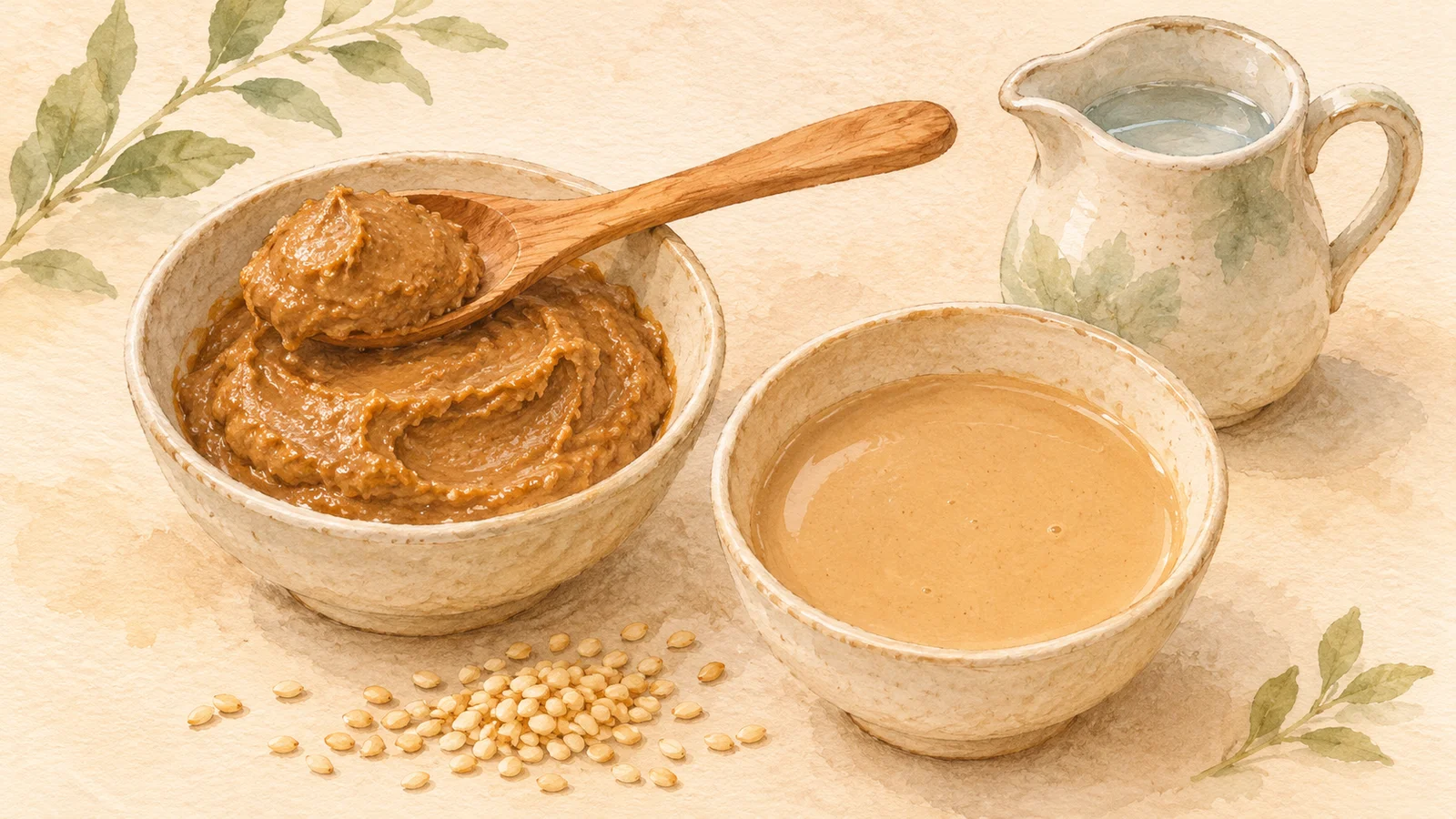
A spoonful of Chinese sesame paste can bring deep roasted flavor to a bowl of noodles, but straight from the jar it may cling to the spoon instead of coating dinner. Stir the separated paste first, then loosen only the portion you need. Those are two different jobs: putting the jar back together and making a sauce that flows.
Find roasted sesame paste, not a ready-made dressing
Look for 芝麻酱, often written zhi ma jiang, and read the ingredient list. Chinese sesame paste made from roasted white sesame seeds is brown, thick and intensely nutty. The Woks of Life’s ingredient guide distinguishes it from the milder tahini commonly sold alongside Mediterranean ingredients.
The word “sesame” alone does not tell you what is in the jar. Some pastes contain peanuts; some bottled sesame sauces are already seasoned and diluted. For a recipe that calls for plain sesame paste, choose a plain paste so the recipe’s salt, sweetness and liquid still make sense. A ready-to-pour salad dressing brings its own balance.
Elaine at China Sichuan Food describes both pure sesame paste and sesame-peanut mixtures. A blend is not automatically a bad purchase, but it is a different ingredient. Check it before serving someone with a peanut allergy. Sesame itself is a major food allergen, and tahini is also made from sesame. FDA’s sesame-label guidance explains how it appears in ingredient lists and “Contains” statements. If a label leaves an allergy question unresolved, contact the manufacturer before using it.
Stir down to the bottom
A layer of oil over a dense mass can be normal separation. Use a clean, dry spoon to work that oil back through the paste, reaching the bottom and the sides. Pouring the oil away leaves the remaining paste harder to use; skimming only the top gives you a very different spoonful from digging into the bottom.
Stir before measuring your recipe’s amount. Maggie Zhu’s sesame-paste guide notes this separation and recommends mixing it back together. If the jar is packed tightly, work slowly near the surface before digging deeper so oil does not spill over the rim.
Keep the jar separate from the mixing bowl. Spoon out your portion, then close and refrigerate the original paste according to its label. The Woks of Life also recommends refrigeration after opening and notes that chilled paste becomes firmer. Do not add water to the whole jar simply to make one meal easier.
Add liquid a little at a time
Put the measured paste in a bowl with room to stir. Add a small splash of cold or warm water and work it in thoroughly with a spoon or spatula. The paste may get thicker before it loosens. Keep adding small amounts and stirring between them, rather than flooding the bowl and chasing lumps through a pool of water.
This behavior is described in Maggie Zhu’s Beijing hot-pot sauce method. Her guidance uses cold or warm water and cautions that boiling liquid can make the mixture separate. Stop when the paste has the consistency needed for your recipe; a dipping sauce and a noodle coating do not have to be equally thin.
If your recipe supplies soy sauce, vinegar or other liquids, account for those before adding lots of extra water. Taste after the sauce is mixed, then adjust its seasoning. Extra soy sauce changes saltiness as well as consistency, so it is not a neutral way to fix a sauce that is too thick.
Make substitutions with the dish in mind
Tahini can fill in when you cannot find Chinese sesame paste, but expect a different roasted flavor. Peanut butter changes both the flavor and the allergens. Choose an unsweetened version if using it in a savory recipe, and check whether the recipe specifies a substitution rather than assuming every jar behaves alike.
Toasted sesame oil supplies aroma without the ground-seed body of a paste. It cannot replace a spoonful of paste by itself. Likewise, the ground-seed dressing for spinach has its own texture and proportions; a smooth commercial paste is not an automatic same-measure replacement.
For a first jar, pick a noodle or dipping-sauce recipe that specifically calls for Chinese sesame paste. Measure from a well-stirred jar, thin in a separate bowl, and taste the finished sauce before it reaches the food. Save the label’s storage instructions with the jar rather than borrowing the keeping time of a different brand or a homemade sauce.