Ingredients
Canned Bamboo Shoots: From Pantry to Pan
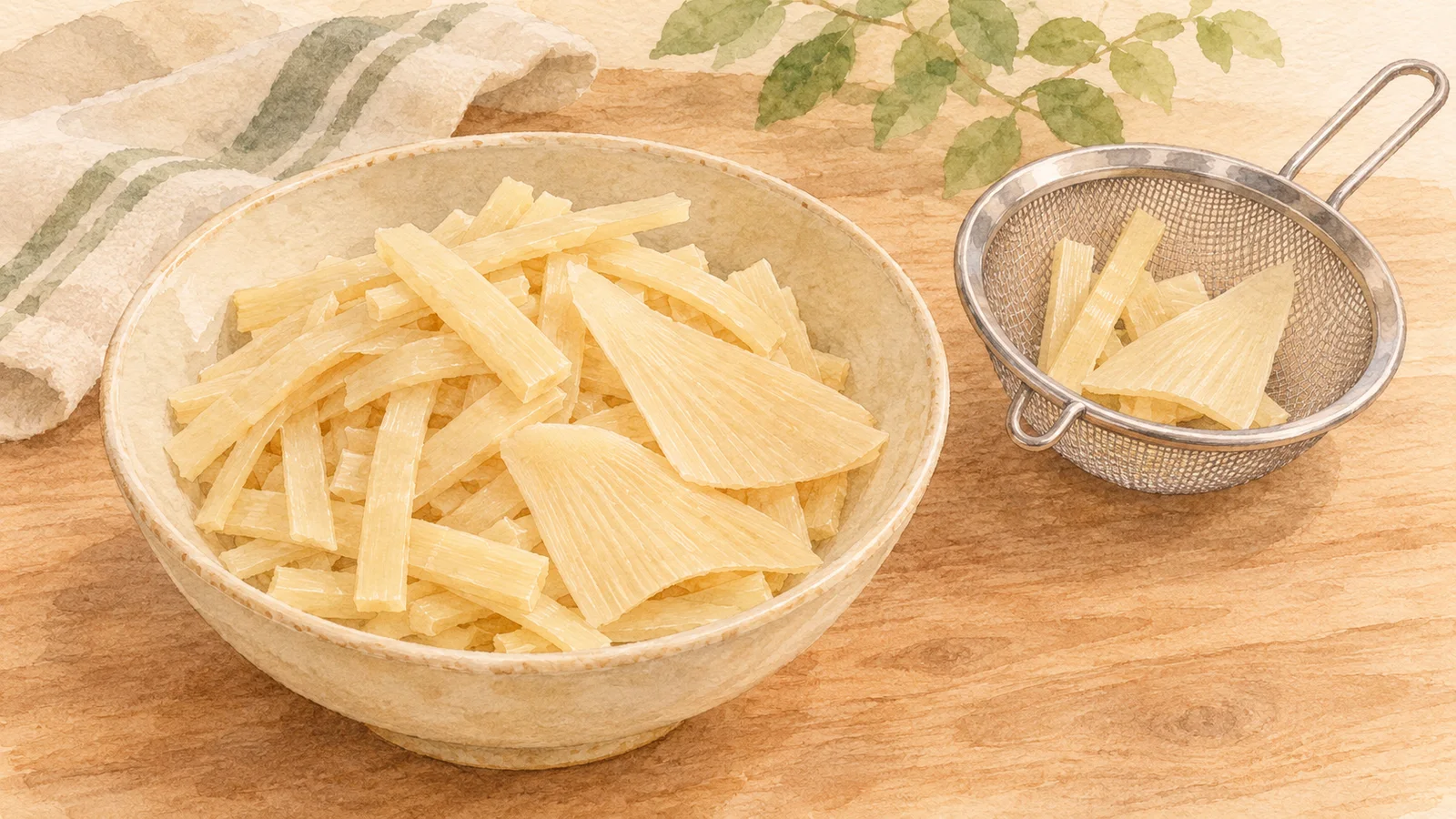
A can of bamboo shoots brings a gentle crunch to a bowl of soup or a skillet of vegetables. The pale pieces are mild enough to take on the seasoning around them, but they arrive with packing liquid that usually belongs in the sink. Start by checking what is in the can and how it is cut.
Choose plain shoots for cooking
Look for bamboo shoots packed in water when you want to control the sauce yourself. Read the ingredient list for salt and other additions. A jar of chili-seasoned shoots is already a condiment; using it in place of plain shoots changes the heat, oil and salt in the dish.
The cut matters, too. Thin strips distribute easily through noodles and soup. Broad slices are useful when you want distinct pieces among other vegetables. If you have larger pieces, cut them to the size your recipe requests before starting the stove. Keep the pieces reasonably even so one bite is not a thick chunk beside several fine shreds.
Do not assume every packaged bamboo shoot is interchangeable. Just One Cookbook’s bamboo-rice recipe calls for pre-boiled shoots and specifically advises against the canned variety for that dish. A recipe built around the flavor and texture of one form may need more than a direct swap.
Rinse, drain and prepare the rest of dinner
Tip plain canned shoots into a colander and rinse under cold running water. Let them drain thoroughly. If they are heading into a skillet or an oil-based dressing, blot surface moisture with a clean towel. The Woks of Life uses this rinse-and-drain preparation for its dressed bamboo-shoot topping.
Prepare the other ingredients before heating the pan. Wet shoots added at the last moment can bring unwanted liquid into a carefully measured sauce. Drain them first, then follow your recipe’s order for adding vegetables and sauce. The ordinary-skillet stir-fry guide explains how to organize the work without crowding the pan.
For soup, use the prepared pieces at the stage specified by the recipe and heat them through in the broth. They contribute texture rather than a strong base flavor. For a dressed topping, choose a recipe written for commercially prepared shoots and follow any heating directions on the package. A plain can does not become a finished ramen topping merely by being opened.
Keep fresh shoots out of this shortcut
Commercially canned bamboo shoots have already been processed. Fresh bamboo is a different starting point: Food Standards Australia New Zealand explains that unprocessed shoots contain compounds that can release hydrogen cyanide, while commercial processing reduces this hazard.
Do not apply the rinse-and-drain method to fresh shoots, or substitute bamboo gathered from a garden. Use a reputable food product and follow its preparation directions. A quick rinse is not a way to make raw bamboo safe.
Put the unused portion in the refrigerator
Check the can before opening it. Discard a leaking, swollen or damaged container, and discard contents that spurt abnormally, show mold or smell spoiled. The CDC’s canned-food guidance also warns against tasting suspicious food to decide whether it is safe. Rinsing or adding strong seasonings cannot rescue it.
Move the unused portion to a clean, covered container and refrigerate promptly at 40°F (4°C) or below. Label it with the opening date. Virginia Cooperative Extension’s food-storage guide gives canned vegetables a three-to-four-day refrigerator window; follow a shorter limit on the package if one is provided. Do not extend that window by changing the water or dressing the shoots.
Before opening a large can, decide where the rest will go. A second soup or stir-fry within that short storage window is a useful plan; leaving an undated container behind the jars is not.