Ingredients
Bonito Flakes: Choose a Shaving for Broth or Toppings
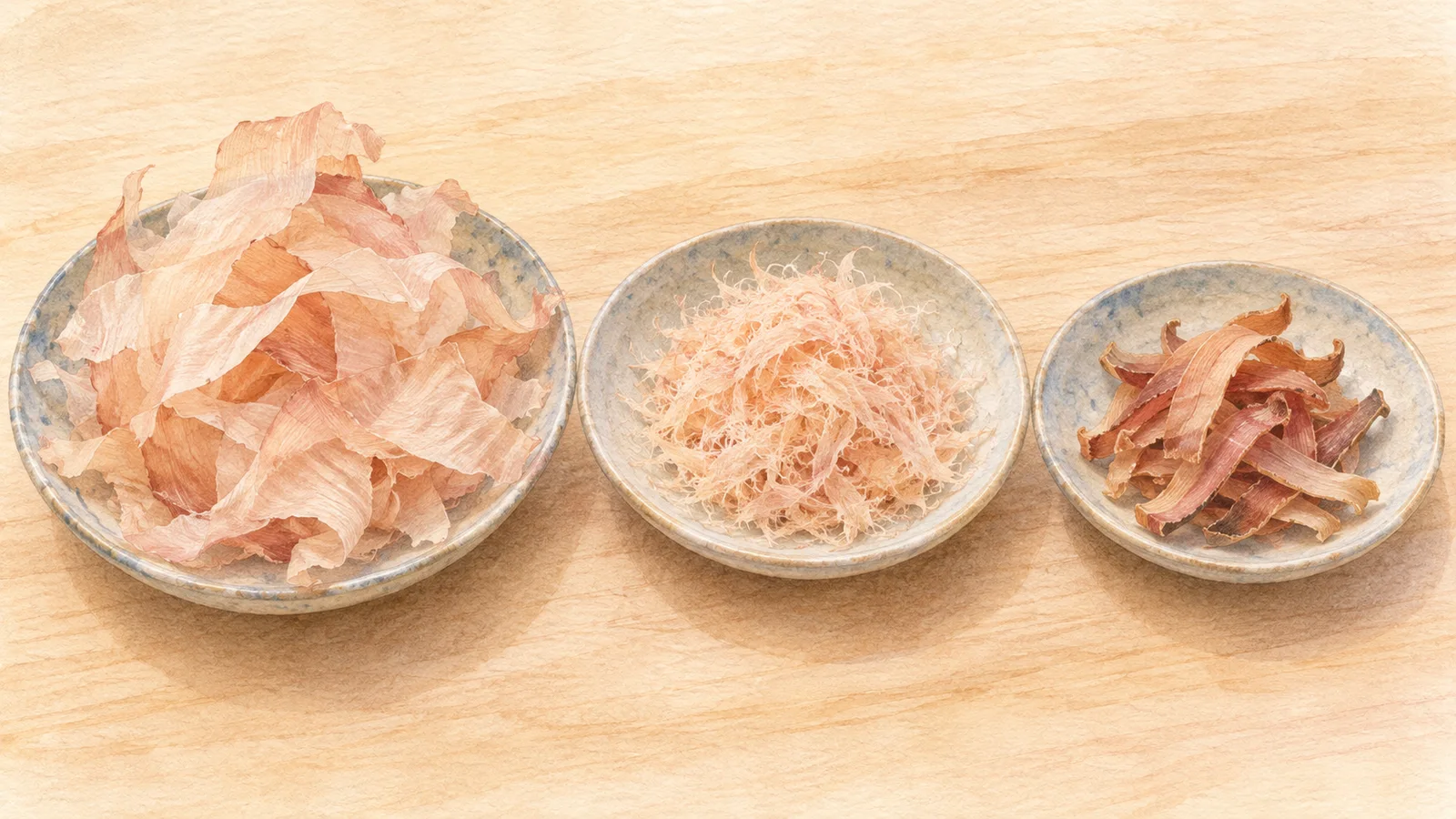
A bag of bonito flakes can look almost empty until you open it: the broad, curled shavings take up a surprising amount of space. That airy texture matters. Flakes meant to soften over a bowl of tofu and thick shavings meant to simmer into a strong broth do different jobs, even when both packages say katsuobushi.
Start with the fish, then the cut
Katsuobushi is dried, processed katsuo, commonly sold in English as bonito flakes. It is a fish ingredient, not a seaweed seasoning. Plain flakes and any stock made with them contain fish; straining the flakes out does not make the broth fish-free. For a meal that excludes fish, choose a verified plant-based broth instead.
The broader term kezuribushi means shaved dried fish. It can include bonito, mackerel, sardines or mixtures. Ninben’s guide to shaving terminology distinguishes these by the fish used, as well as by the shape of the shaving. Read the ingredient list rather than relying on the color of the packet. A bag of plain flakes is also a different purchase from seasoned dashi granules; follow the directions for the form you actually have.
Three useful shapes
| What you see | Words you may find | Where it fits |
|---|---|---|
| Broad, light, paper-thin curls | Hana-katsuo; thin shavings or usukezuri | A common choice for dashi; thin flakes can also finish a dish |
| Fine threads or small, soft flakes | Itokezuri; soft shavings | A delicate topping where large flakes would overwhelm the bite |
| Firm, thicker shavings | Atsukezuri | A more sustained extraction for a full-flavored broth, including noodle sauces |
Width and thickness are different things. A large fluttery flake can still be very thin. The small pieces in a topping sachet may be cut-down thin flakes, not a stronger or weaker grade of fish. Ninben’s types guide shows these distinctions and their uses.
For broth, use the shaving specified by the recipe and follow its weight and extraction method. Do not replace a weighed amount with a tightly packed handful: these loose curls compress easily. Thick shavings are not a straight swap for thin flakes in a short steep. A recipe calling for prepared dashi, such as miso soup with tofu and wakame, begins after that stock-making step.
For a topping, choose a fine or soft cut and scatter a little over the food just before serving. Plain tofu, rice and cooked greens give you room to notice the smoky aroma without covering the whole surface. Keep the remaining flakes away from rising steam while you serve.
Curing words describe something else
Arabushi and karebushi describe processing before the block is shaved. Arabushi has been cooked, smoked and dried; karebushi undergoes additional mold-assisted curing and drying. Nippon.com’s overview explains the sequence. These terms do not tell you whether the contents are thick flakes, fine threads or powder. Choose the cut for the dish first, then explore differences in aroma if you wish.
Close the bag while the aroma is still there
Choose a package size you can use readily. Small portions are convenient for occasional toppings; a larger bag makes more sense if you regularly prepare stock. Once opened, the flakes lose quality through exposure to air.
Follow the package’s storage directions. Kikkoman’s ingredient guide recommends an airtight container and refrigeration or freezing after opening to preserve flavor. Keep the flakes dry, close the package promptly and mark the opening date. The unopened best-before date is not a promise that an open bag will keep its aroma until then.
If your next dish uses both fish flakes and seaweed, the kombu guide covers the other purchase. Keep their identities separate: together they can make dashi, but a kombu label does not cancel the fish in the pot.