Kitchen skills
Deglaze the Brown Bits Before They Burn
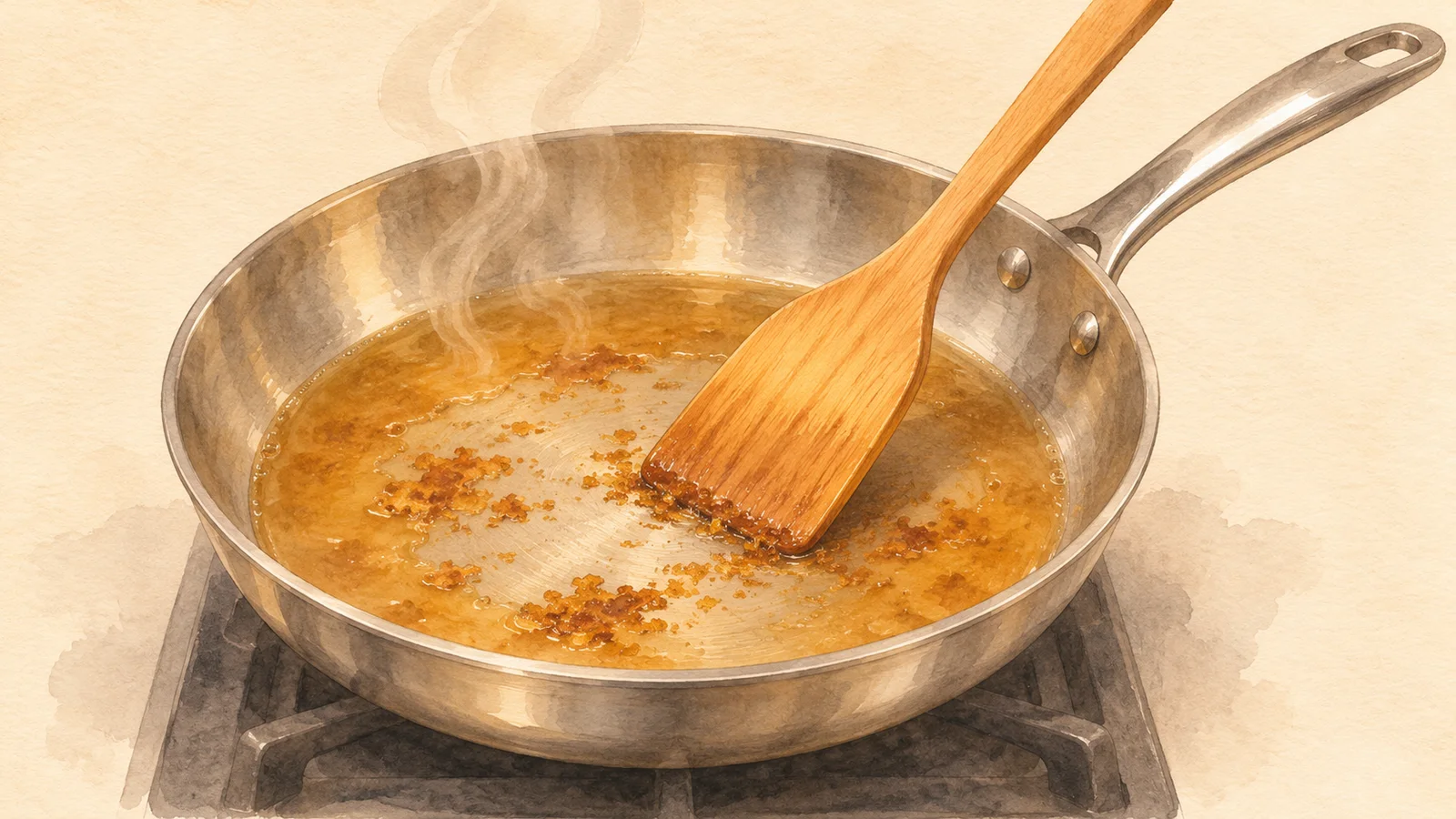
The food is on the plate, but a second layer of flavor is still stuck to the skillet. Those brown patches are fond: residue left behind as meat or vegetables cook. Add liquid and loosen them, and they become part of a sauce, gravy or braising liquid instead of something to scrub away.
The useful window is short if the empty pan stays over a hot burner. Have your liquid and a suitable spatula nearby before you lift out the food.
Look at the bottom before you pour
Golden to deep brown patches are promising. Black, brittle residue and an acrid smell are reasons to stop. Wyoming Extension’s pan-sauce guide distinguishes brown fond from residue that will make a sauce taste burnt. Water can release either; it cannot turn a scorched flavor into a good one.
If the bottom has burned, move the pan off the heat. Transfer any usable food without scraping burnt debris onto it, then let the pan cool before cleaning according to its care instructions. Make the rest of the dish in a clean pan. Do not plunge hot cookware into a cold sink; Le Creuset’s care guidance warns that sudden cooling can damage cookware.
Lower the heat and remove excess fat
For a straightforward first attempt, deglaze after cooking vegetables or after the main food has finished cooking. Put cooked food on a clean plate. With meat, poultry or fish, check the appropriate safe internal temperature with a thermometer; browning alone does not establish doneness. The FDA’s handling guidance also cautions against reusing a plate that held raw food without washing it.
Take the pan off the burner while you carefully pour excess cooking fat into a suitable heatproof container, leaving a thin film. Do not pour water into a pool of hot oil. Return to medium heat, or let an overheated pan settle first. You want controlled bubbling when the liquid goes in, not a violent burst of steam.
Use a wooden or heat-resistant silicone spatula suited to the pan. Its broad edge should slide over the bottom without gouging the surface. Follow the cookware maker’s utensil instructions, especially with enamel or nonstick coatings.
Wet the patches, then loosen them
Water works; stock adds its own flavor. Choose unsalted stock when possible so you can adjust the seasoning after any reduction. Have more liquid within reach, and keep your face and hands clear of rising steam.
Pour in enough to form a shallow layer across the bottom while stirring carefully. Le Creuset’s deglazing instructions use medium heat for this stage. Sweep the spatula over the brown patches as the liquid bubbles. They should soften and lift into the liquid without forceful scraping.
If the bottom dries before the residue releases, lower the heat and add a little more liquid. Escoffier’s technique guide describes adding liquid as needed while scraping and reducing. Watch the pan rather than waiting for a fixed number of minutes: the amount of residue, pan width and burner all change the pace.
Once the bottom is mostly clear and the liquid has picked up the browned flavor, the deglazing step is complete. Continue with your sauce or braise recipe. Deglazing releases flavor; it does not automatically give the liquid the thickness or seasoning the finished dish needs. Taste a cooled spoonful after any further reduction before adding salt, and turn off the burner if you are not continuing straight away.