Recipes
Roasted Barley Tea by the Pitcher
A small pitcher of toasty Korean barley tea, with a loose-grain brewing method, a quick cooling plan and a clear distinction between caffeine-free and gluten-free.
Jump to recipe ↓Recipe
- Total time
- About 15 minutes, plus cooling
- Method
- Brew
- Difficulty
- Easy
- Allergens
- Barley contains gluten
About 1 litre, or 4 small glasses
Allow roughly 15 minutes to brew, plus cooling and refrigeration if serving cold. This makes unsweetened tea. Barley contains gluten.
Equipment: 2-litre saucepan, fine-mesh strainer, heat-safe stainless-steel bowl, spoon, ice bath and a clean covered jug.
Ingredients
- 1 litre drinking water
- 1 1/2 tablespoons plain roasted barley grains sold for tea, not raw pearl barley or barley malt
Method
Bring the water to a boil
Measure the water into the saucepan and bring it to a full boil. Keep the handle turned inward.
Convert a measurement for this stepSimmer the roasted grain
Add the barley carefully. Reduce the heat to keep a gentle bubble and simmer for about 5 minutes, staying at the stove. The liquid should turn amber and smell toasted. This is a starting strength, not a required darkness.
Convert a measurement for this stepRemove the grain
Turn off the burner. Set the strainer securely over the heat-safe bowl and pour slowly, away from your hands. Discard the spent grains. Taste a small spoonful only after it has cooled enough; dilute an overly strong brew with a little drinking water.
Convert a measurement for this stepServe warm or cool promptly
Pour a warm serving into a heat-safe cup. For iced tea, set the metal bowl in an ice-water bath without letting bath water enter the tea. Stir with a clean spoon and replenish the ice as it melts. Transfer to the clean jug, cover and refrigerate promptly at 40°F (4°C) or below; do not leave a pot cooling on the counter for hours. Aim to finish this small batch within 24 hours. Pour servings into glasses rather than drinking from the jug.
Convert a measurement for this step
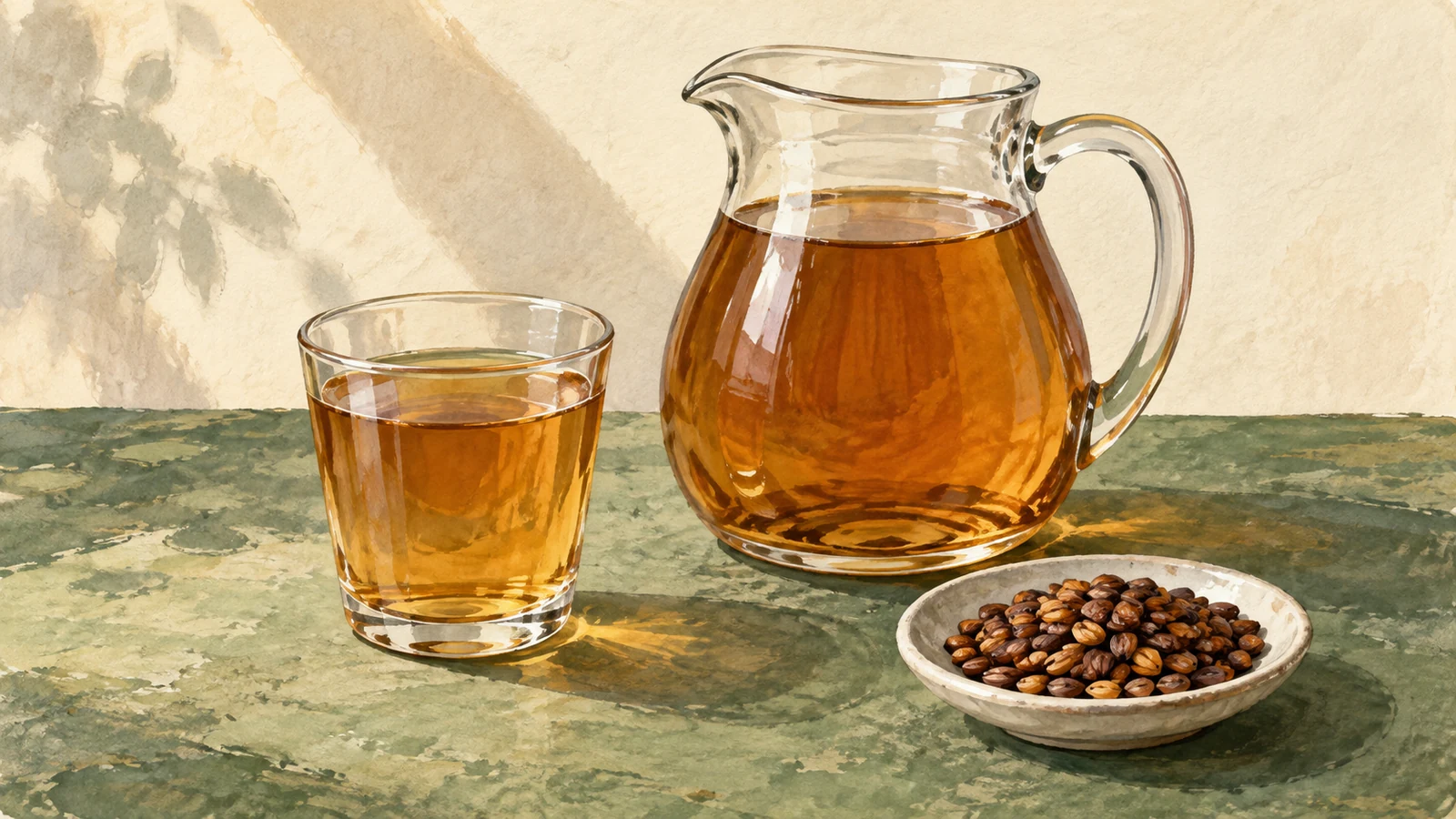
The pleasure of barley tea is the roasted flavor without a sugary finish. It can sit beside dinner as easily as a glass of water. In Korea it is called boricha; in Japan, mugicha. This version starts with loose roasted grains and makes one litre, enough to enjoy cold without leaving a large pitcher lingering in the refrigerator.
The loose-grain proportion and brief simmer are adapted from Sue Pressey's barley tea.
Buy the roast, not just the grain
Look for plain roasted barley intended for brewing. Raw pearled barley from the soup aisle has not had the same preparation. Starting with it would mean adding a roasting step, not simply putting pale grains into this recipe.
Tea bags are a different format. Their contents may be finely broken and their intended batch sizes vary; use the packet’s water quantity and brewing directions rather than replacing the loose grains spoon for spoon. Check blends too. A barley-and-corn mixture will not taste quite like plain barley.
Pure barley tea has no caffeine, but it is not gluten-free. Barley is one of the gluten-containing grains identified in FDA’s gluten guidance. Straining out the grain is not a way to make this drink suitable for a gluten-free diet.
Adjust the glass before adjusting the whole batch
Taste the tea at the temperature you plan to drink it. A spoonful of very hot liquid is both uncomfortable and a poor basis for deciding what you want in an iced glass.
If the cooled brew feels too strong, dilute just one glass first. Prefer that version? Dilute the jug to match. If the tea tastes too light, use a little more grain in the next batch and keep everything else the same. That gives you a useful comparison without changing the amount of grain, simmer and water all at once.
There is no need to aim for the color of coffee. The roast and concentration affect the shade, and a darker pitcher is not automatically a better one.
A clean jug matters as much as a cold one
Wash the jug, lid and pouring spout between batches. Do not keep topping up yesterday’s tea with today’s. The brewing water was boiled; the finished drink can still pick up contamination from containers and handling.
Cool the tea quickly, cover it and keep it refrigerated. Aim to finish this small batch within 24 hours, consistent with ITO EN’s guidance for tea made from bags and instant preparations. FDA recommends a refrigerator temperature of 40°F (4°C) or below.
Serve it plain first. The toasted grain has enough to say without a garnish.