Ingredients
Dried Bean Curd Sticks: Soak Before You Cook
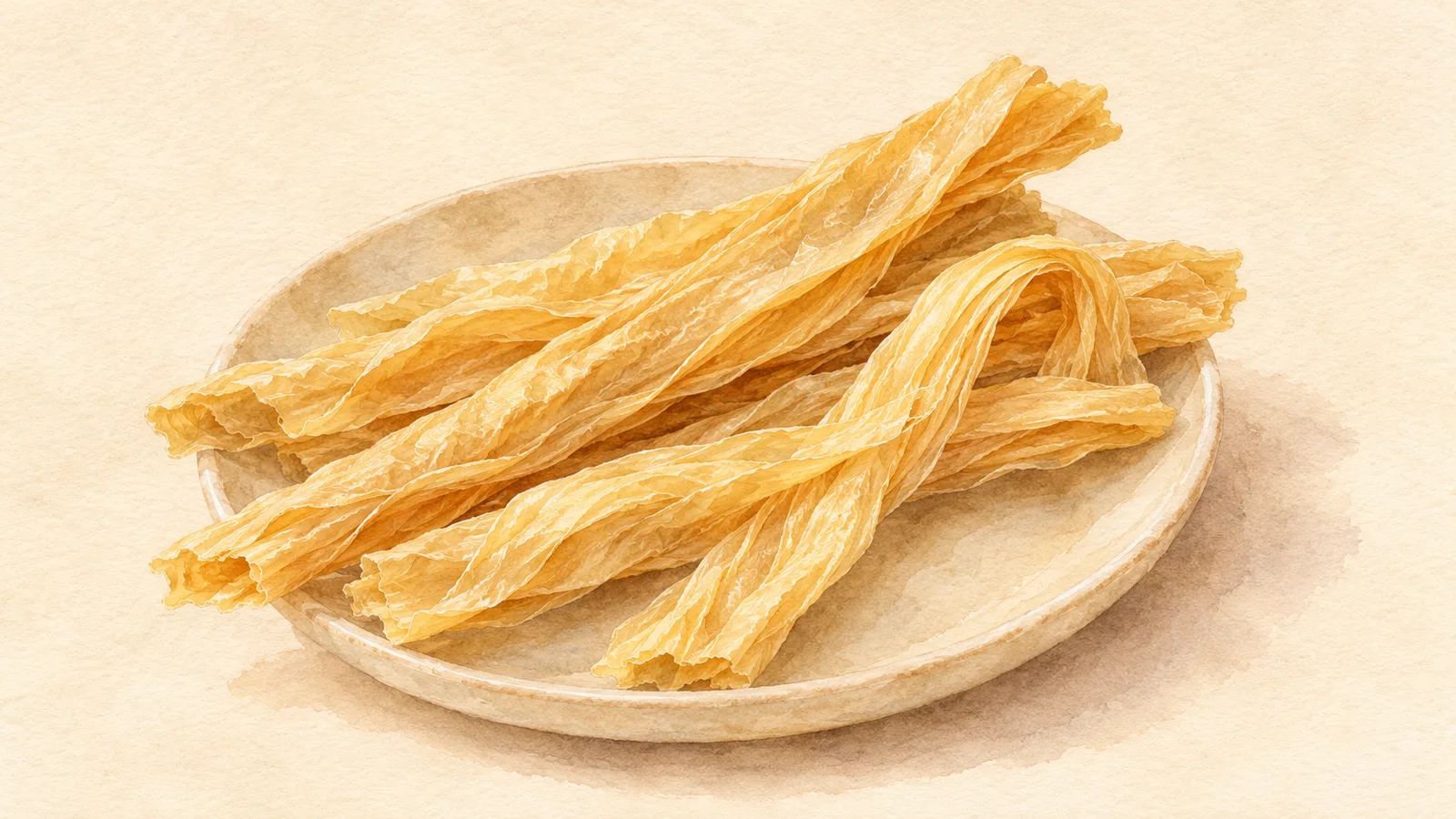
Dried bean curd sticks look fragile in the bag: pale gold, wrinkled and folded into long, uneven lengths. After soaking and cooking, those layers become pleasantly chewy and catch sauce between their folds. They are useful when you want something more substantial than a few vegetables in a braise, without adding a block of tofu.
The part to plan is the soak. Open the packet before you start dinner, not after the wok is hot.
Find the folded sticks
Look for fuzhu (腐竹), also sold as dried bean curd sticks or foo jook. The Woks of Life’s ingredient guide explains that they come from the film lifted from heated soy milk, folded and dried. Their surface has thin layers rather than the smooth cut face of pressed tofu.
“Tofu skin” on a label can mean several forms. A flat sheet intended for wrapping, a refrigerated pressed-tofu sheet and a bag of dried sticks do not necessarily share a preparation method. Match the shape and storage instructions to the dish you want to make. Choose a packet with intact sticks if you want generous pieces on the plate; the crumbs at the bottom will not turn into long strips.
These are a soy food. If cooking for someone with an allergy, read the entire ingredient and allergen information before buying. FDA’s food-allergy guidance identifies soy as a major allergen. Soaking is not a way to make a soy ingredient suitable for someone who must avoid it.
Give the thick folds time
Follow the packet’s preparation directions. For plain dried sticks without a different specified method, allow several hours; an overnight start can be more convenient. Use a clean container large enough to hold the sticks under water without crushing them. For a long soak, use cold water and keep the covered container in the refrigerator at 40°F (4°C) or below. This applies FDA’s cold-storage precautions to the waiting period.
Check a thick folded section as well as a thin end. It should bend and open enough to cut without snapping like the dry stick. A pliable outer flap can hide a still-rigid fold. Turn the pieces so exposed portions get submerged, then give firm sections more time. Use the packet’s directions and the actual texture together; one timing claim cannot cover every thickness.
Elaine’s tofu-skin preparation uses soaking before cutting and cautions against squeezing the softened layers. Lift the sticks out, let excess water drain and cut them on a board into pieces suited to your dish. Do not wring them like a towel. Keep hydrated sticks refrigerated until cooking, and plan to use them promptly rather than making a large wet reserve.
Choose a dish with room for the texture
Softened sticks still need cooking. A braise gives their folds sauce to hold; a vegetable stir-fry gives them contrast with crisper pieces. They also work in soups. Choose a recipe written for this ingredient so that its liquid, cooking time and intended texture agree.
Handle the pieces gently in the pan. If your goal is distinct strips, lift and turn them instead of stirring vigorously enough to shred the layers. They can stay pleasantly firm after cooking; “tender” does not have to mean collapsing.
Reseal the unused dry portion and store it in a cool, dry cupboard according to the label. Keep wet utensils out of the bag. Once sticks have been hydrated, treat them as perishable: refrigeration matters even when they look and smell ordinary. Put only the portion you intend to cook into the soaking container, and leave the rest dry for another meal.