Ingredients
Chinese Black Vinegar for Dips, Noodles and Braises
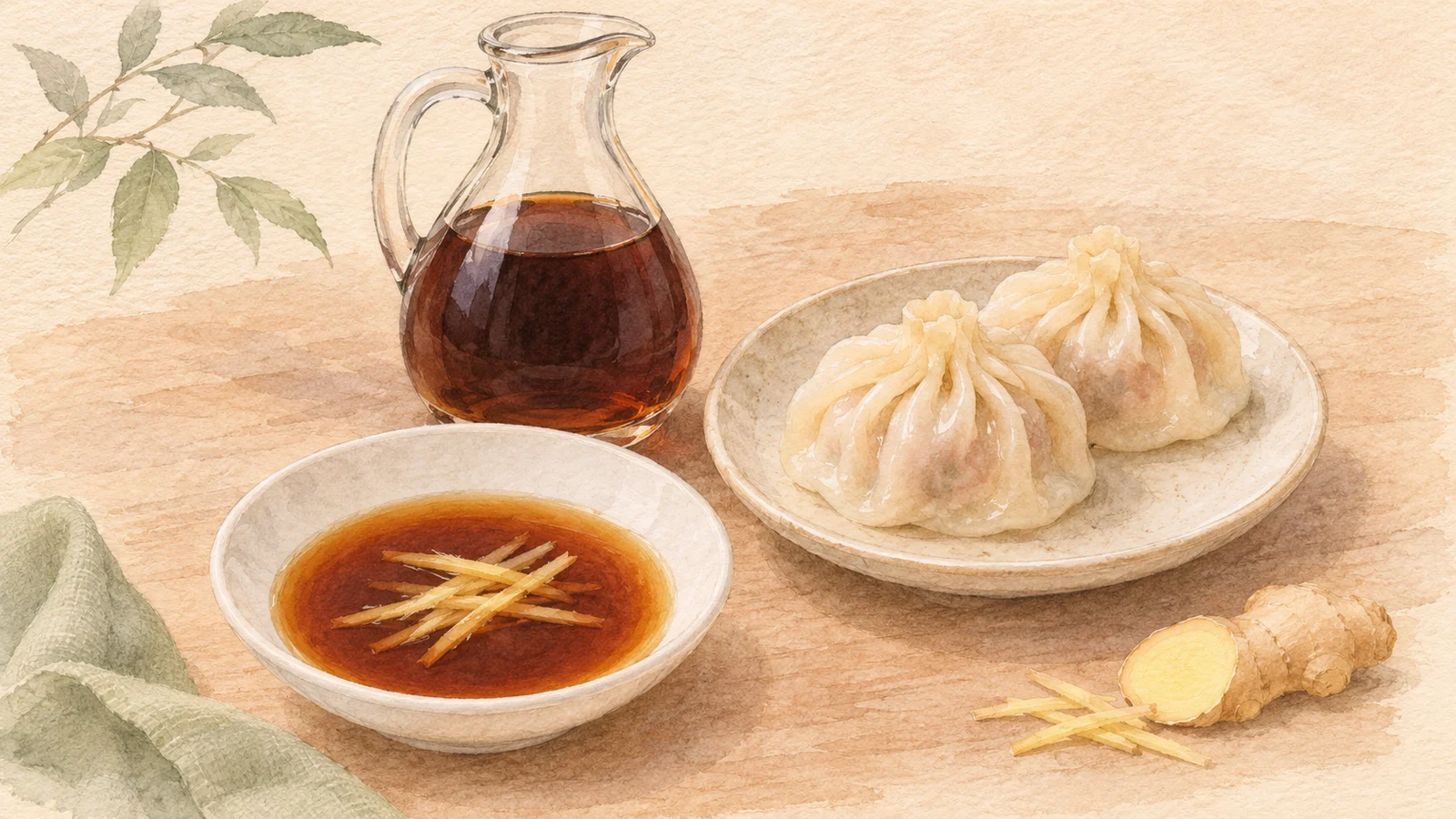
Dark brown in the bottle, Chinese black vinegar brings more than sourness to a dipping dish. Its malty, sometimes smoky character can sit alongside ginger, garlic and chile without disappearing behind them. A little beside a dumpling tastes different from the same amount stirred through a bowl of noodles: the food, salt and other seasonings all change the balance.
Start by finding the vinegar your recipe names. “Black vinegar” is a family of ingredients, not a guarantee that every dark bottle will taste the same.
Look for Chinkiang or Zhenjiang on the label
Chinkiang is an older spelling of Zhenjiang, the city associated with this familiar Chinese black vinegar. You may also see 镇江香醋 on the bottle. Maggie Zhu’s Chinkiang vinegar guide describes a rice-based vinegar with a dry, tart flavor and malty, woody notes. If a recipe asks for Chinkiang vinegar, that name is more useful than choosing solely by the darkest color on the shelf.
Read the ingredients as well as the front label. Rice-based does not mean rice-only: wheat and other grains may be involved. The Woks of Life’s black-vinegar guide describes that variation. Do not assume a bottle is suitable for someone avoiding wheat or gluten. Use the product’s labeling and manufacturer information to resolve a dietary question before serving it.
Choose the vinegar itself when the recipe calls for vinegar. A prepared dumpling sauce can already contain soy sauce, sugar or other seasonings; it changes more than acidity when you pour it into a dish. Keep the ingredient list in view if you are comparing two bottles with similar English names.
Let the dish decide how you use it
Black vinegar works in both hot and cold food. The Woks of Life lists cold appetizers, braises, noodles and dipping sauces among its uses. That gives you several ways into a bottle without treating it as a universal finishing sauce.
- Beside dumplings: put a small amount in an individual dipping dish. Fine ginger strips are a familiar partner for soup dumplings. Taste a bite with the vinegar before adding soy sauce automatically; the filling and wrapper are part of what you are seasoning.
- Through cold vegetables or noodles: mix the dressing separately so you can taste its sourness against the other ingredients. The smashed-cucumber recipe gives you a complete starting point instead of asking you to guess a dressing from scratch.
- In a braise or cooked sauce: follow the recipe’s quantity and addition point. A vinegar used during cooking has a different job from a little served at the table; neither is a reason to double the amount without tasting.
For an unfamiliar bottle, try a small portion of food first. You can compare that dressed portion with an undressed bite before committing the entire bowl. This is especially useful when the dish already contains a salty sauce: more vinegar may change the balance, but it does not remove the salt.
A substitute changes the character
Plain rice vinegar can supply sourness when black vinegar is unavailable, but it will not supply the same dark, malty flavor. The difference matters more in a simple dipping dish than in a sauce with several strong ingredients. Our rice-vinegar guide also distinguishes plain vinegar from seasoned versions that bring their own sugar and salt.
Balsamic vinegar is sometimes suggested because it is dark, but sweetness and thickness vary widely. Maggie Zhu cautions that its flavor differs from Chinkiang vinegar; The Woks of Life notes that balsamic can be too syrupy and sweet. A thick balsamic glaze is a particularly different ingredient. Color alone is a poor substitution rule.
If black vinegar is central to the dish, finding the specified bottle may give you a better result than stacking several substitutes. If you only need a small sour accent, use the recipe’s suggested alternative and taste before adding more. There is no single replacement ratio that accounts for every brand and every sauce.
Keep the bottle and the dipping dish separate
Store the original bottle tightly closed in a cool, dark place, following any more specific label directions. Maggie Zhu recommends keeping it away from heat and sunlight. Pour out what you need and keep food-contaminated dipping vinegar out of the bottle; storage advice for plain vinegar does not describe a sauce mixed with fresh ingredients.
Do not carry these flavor substitutions into home canning. The National Center for Home Food Preservation warns against changing vinegar, food and water proportions or using vinegar of unknown acidity. Follow a tested preservation recipe’s specified vinegar and strength. For dinner, keep experimenting in small portions; for a sealed pantry jar, the tested formula controls the choice.