Ingredients
Asian Pears Are Ripe While They’re Crisp
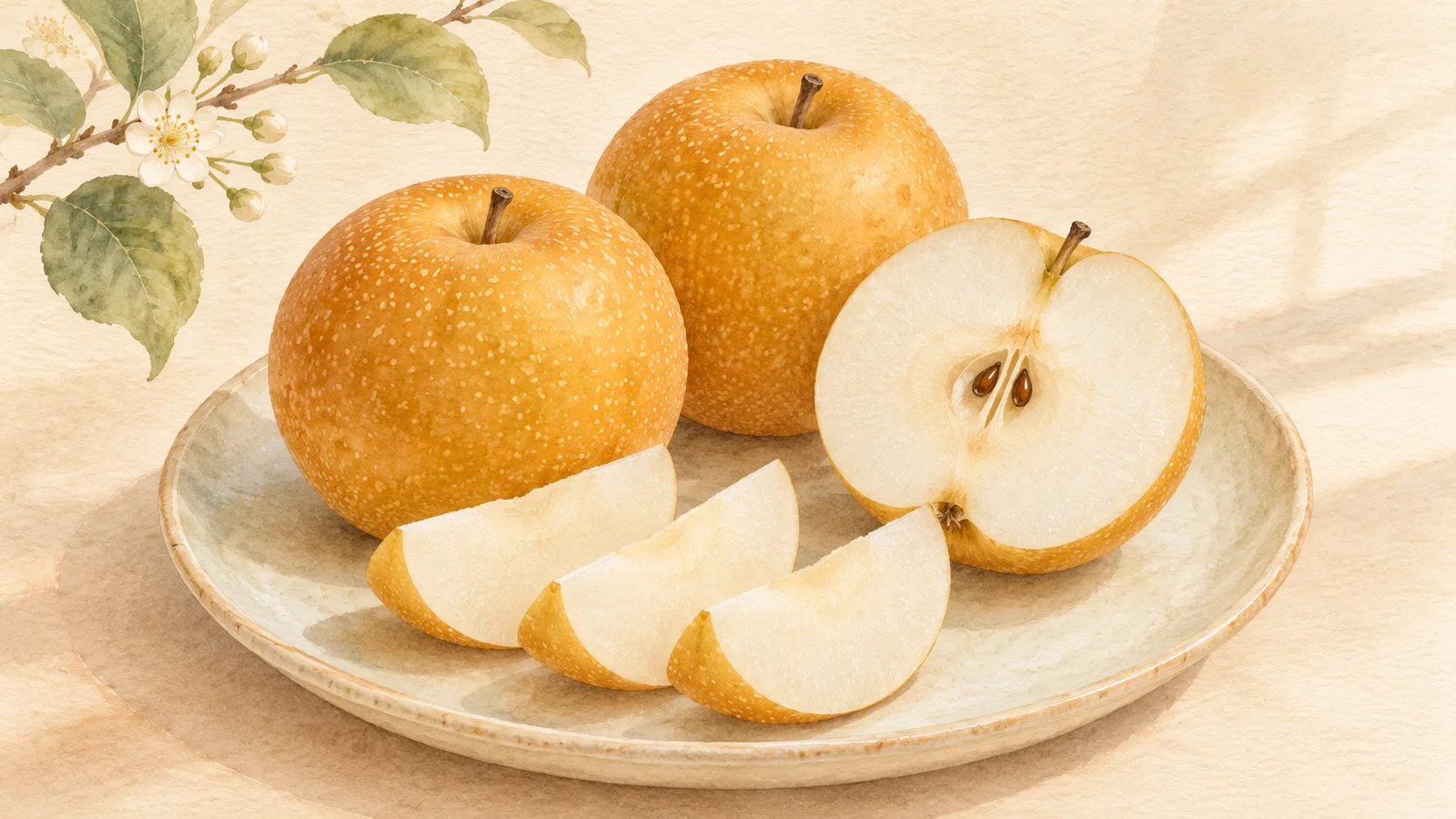
A ripe Asian pear can be firm enough to crunch loudly. Waiting for it to soften like a Bartlett pear can mean waiting past the moment you wanted to eat it. If the fruit in your hand is an Asian pear, start with its variety and condition, then plan for crisp slices rather than a melting bite.
Firm does not mean unripe
Asian pears reach their best eating quality on the tree and are usually sold ready to eat. Clemson Extension contrasts their crisp, juicy flesh with European pears, which are commonly harvested green and ripened after picking. Do not use a soft neck as your target for both fruits.
The name “apple pear” describes a resemblance, not a cross between an apple and a pear. Many Asian pears are round, but some Chinese varieties are more oval or pear-shaped. Skin can be yellow-green or russet brown, depending on the variety. A brown-skinned pear is not automatically overripe, and a pale one is not automatically underripe.
Choose sound fruit without bruises or damaged skin. Handle it gently rather than pressing hard to test it. The protective sleeves and padded trays often used for Asian pears are useful: Oregon State Extension notes that the fruit bruises easily. Keep a heavy can or melon from rolling onto it on the trip home.
Rinse first, then decide on the peel
Wash the whole pear under plain running water and dry it with a clean towel before cutting, even if you intend to remove the skin. The FDA’s produce guidance explains why: a knife can carry contamination from the surface into the flesh. Soap and produce detergent are unnecessary.
Use a clean board and knife. Cut the pear into quarters, remove the stem and firm core from each quarter, then slice to suit the plate. Leave the skin if you enjoy its texture, or peel for a smoother bite. Cut away a small bruised area before eating; discard fruit that looks rotten rather than trying to hide it in a sauce.
For a simple fruit plate, leave the wedges substantial enough to pick up. For a salad or noodle topping, cut finer slices that can mingle with the other ingredients. Prepare only what you need and refrigerate the cut remainder in a clean covered container. Keep ready-to-eat fruit and its utensils away from raw meat juices.
Use the crunch—or grate it into a marinade
Cool slices are an easy place to begin. Their juicy bite works beside a savory meal without needing a syrup or a cooking step. A fine slice and a thick wedge give different textures, so choose the cut before dressing a salad.
Korean pear, called bae, also appears in sauces and marinades. Sue Pressey’s ingredient guide describes using the sweet fruit to help tenderize meat. When a recipe calls for grated or puréed pear, measure that prepared amount instead of assuming every pear is the same size. Follow the recipe’s marinating time; extra fruit and a longer soak are not automatic improvements.
A soft European pear will not provide the same crisp topping. If you are substituting in a marinade, use an alternative specified by that recipe. Texture, sweetness and water all matter, so a substitution that suits one dish need not suit another.
Keep the rest cold and cushioned
Store whole pears in a paper or plastic bag in the refrigerator, protected from bumps. Oregon State gives ripe Asian pears an approximate room-temperature life of a week and refrigerator potential of up to three months. That upper limit is not a promise for fruit with an unknown storage history. Check what you bought and use the most vulnerable fruit first; a bruised pear does not gain a long life merely by going into the crisper.
Keep the refrigerator at 40°F (4°C) or below, and buy precut fruit only when it is refrigerated or on ice. Put cut fruit back in the refrigerator promptly instead of treating it like an intact pear on the counter.
If you have a whole box to preserve, use tested Asian-pear canning directions. These pears can be too low in acid for ordinary pear-canning substitutions and require the specified acidification. A splash of lemon juice added by taste is not a canning method. For tonight, take out one sound pear, rinse it and cut a wedge: crispness is the point.