Scale Insects on Houseplants: How to Spot and Eliminate These Sneaky Pests
The first time I had scale on a plant, I did not even know it. My ficus had these small brown bumps along the stems and I figured they were just part of the bark. Normal plant stuff, right? It was not until I noticed the leaves getting sticky and a few turning yellow that I looked closer, tried to scrape one off with my fingernail, and realized something was very wrong.
That is the thing about scale insects. They do not look like bugs. They do not crawl around like spider mites or fly in your face like fungus gnats. They just sit there, disguised as harmless little bumps, quietly sucking the life out of your plant. By the time most people figure out what is going on, the infestation has spread.
The good news is that scale is totally beatable. It takes patience and consistency - about 4 to 6 weeks of regular treatment - but you can save your plants. Here is everything I have learned from dealing with these weirdly camouflaged pests.
What Are Scale Insects?
Scale insects are sap-sucking pests in the superfamily Coccoidea. There are over 8,000 species worldwide, but for houseplant owners, you really only need to know about two groups: soft scale and armored scale.
Soft scale insects are the ones you will most likely encounter indoors. They are about 1/8 to 1/4 inch long, convex shaped, and covered by a waxy coating that is actually part of their body. The most common culprit on houseplants is brown soft scale (Coccus hesperidum), which looks like small, flat, oval brown bumps. Soft scale produces honeydew - a sticky, sugary excretion - which is often your first real clue that something is wrong.
Armored scale insects are smaller and flatter, with a hard protective shell that is not attached to their body. If you lift the shell, the tiny insect underneath is separate from the cover. Armored scale does not produce honeydew, which makes them even harder to detect. Fern scale is a common armored species on houseplants, appearing as small oyster-shell-shaped covers in white (males) and brown (females).
Life cycle basics: Female soft scale can produce several hundred eggs, which hatch into tiny mobile “crawlers.” These crawlers are the stage that spreads to new plants and new feeding sites. Once they settle down and start feeding, they develop their protective covering and become the stationary bumps you see. The whole cycle takes 1 to 3 months depending on temperature, and warm indoor conditions speed things up.
How to Identify Scale (Before It Gets Out of Hand)
Scale is genuinely one of the trickiest pests to spot because it just does not look like a pest. Here is what to watch for:
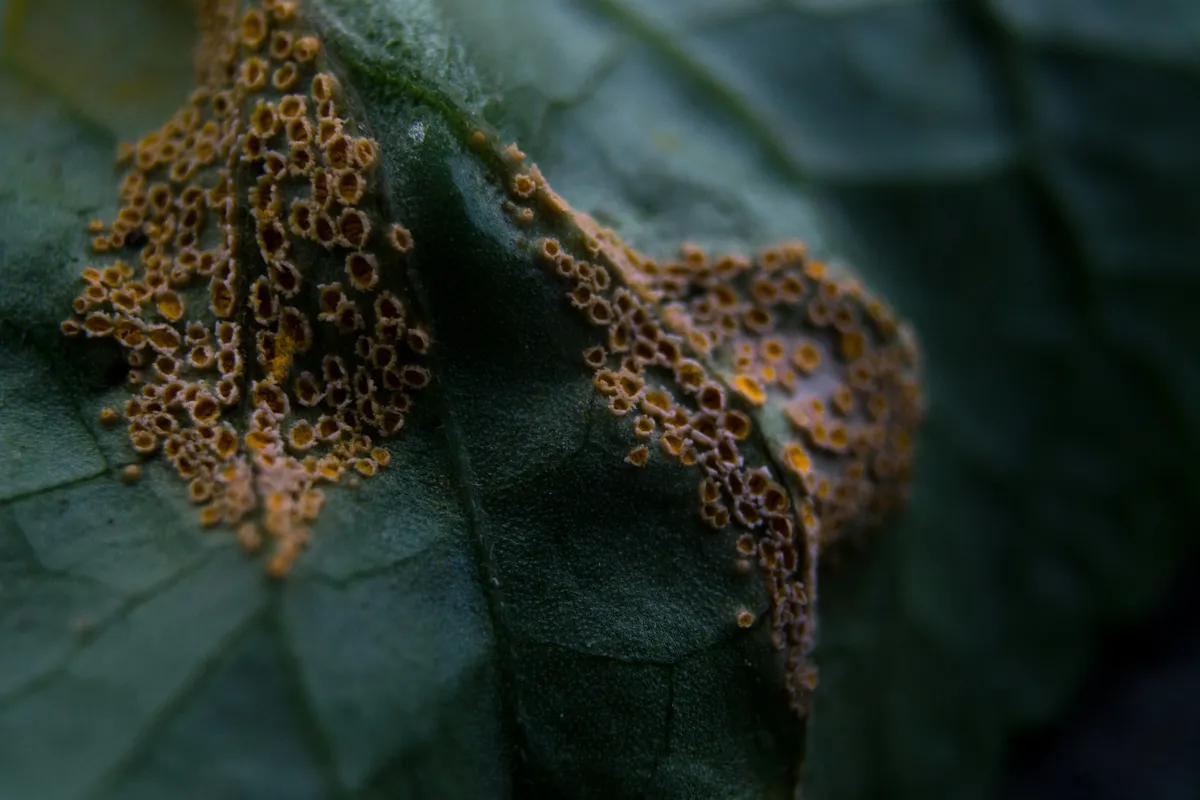
Small raised bumps on stems, leaf undersides, and along leaf veins. They are usually brown, tan, or sometimes greenish, and roughly the size of a sesame seed. If you can scrape one off with your fingernail and see a wet smear or a tiny insect underneath, that is scale.
Sticky residue on leaves or surfaces below the plant. This is honeydew from soft scale. If your plant shelf or windowsill feels tacky, inspect the plant above it immediately. I have caught infestations early just by noticing a sticky spot on my desk.
Black sooty mold on leaves. A dark, powdery mold that grows on honeydew. It does not directly damage the plant, but it blocks light and looks rough.
Yellowing leaves, stunted growth, or leaf drop. As scale feeds on sap, the plant gradually weakens. If your plant is declining and you have ruled out watering and light issues, check the stems closely.
Ants visiting your plant. Just like with mealybugs and aphids, ants love honeydew and will actively protect scale insects to keep their food source going.
How to check: During your regular watering routine, run your fingers along the main stems and flip a few leaves over. Scale tends to cluster along the midrib on leaf undersides and at stem junctions. A quick feel-and-look takes 30 seconds per plant and catches problems early. I do this every Sunday morning - my kids think I am petting the plants, which honestly is not entirely wrong.
Which Houseplants Are Most Vulnerable?
Scale is not picky, but certain plants seem to attract it more than others. In my experience and based on what I hear from other plant parents, the most common targets include:
Ficus species (rubber plants, fiddle leaf figs, weeping figs) top the list. Something about their smooth stems and dense foliage makes them scale magnets. Ferns are another common victim, especially Boston ferns and maidenhair ferns. Citrus trees, schefflera, and palms round out the most-affected group.
Other plants that frequently get scale include hoyas, orchids, bird of paradise, dracaenas, and ivy. Basically, if a plant has woody or semi-woody stems, scale loves it.
One thing worth noting: scale can spread between plants that are touching or very close together. The crawler stage is mobile and can walk (slowly) from plant to plant. They can also be carried on your hands, tools, or clothing. So if you find scale on one plant, check its neighbors right away.
Treatment: How to Get Rid of Scale
Here is where I need to be upfront with you - treating scale is a multi-week commitment. That protective covering makes them resistant to single applications of just about anything. You need to treat repeatedly to catch new crawlers as they hatch. Here is the approach I use:
Step 1: Isolate the Plant
Move the infested plant away from your other plants immediately. Even across the room is better than nothing. Scale crawlers can travel, and you do not want to fight this battle on multiple fronts.
Step 2: Physical Removal
This is the most important step and the one people skip. Before you spray anything, manually remove as many scale insects as you can. Use your fingernail, an old toothbrush, or a cotton swab dipped in rubbing alcohol (70% isopropyl) to scrape and dab individual scale off.
For light infestations, this alone can solve the problem if you are thorough. For heavier infestations, it dramatically reduces the population so your follow-up treatments are more effective.
Pay special attention to stem junctions, leaf undersides along the midrib, and any woody parts of the plant. Check the pot rim and the top of the soil line too - crawlers sometimes hang out there.
Step 3: Rubbing Alcohol Treatment
After physical removal, go over the plant again with a cotton swab or cotton ball soaked in 70% isopropyl alcohol. The alcohol dissolves the waxy coating on soft scale and kills them on contact. It also takes care of any crawlers you might have missed.
For larger plants where dabbing every inch is not practical, you can mix a spray solution: 1 cup of rubbing alcohol, 1 teaspoon of liquid dish soap (not antibacterial), and 1 quart of water. Spray the entire plant, focusing on stems and leaf undersides. Test a leaf first and wait 24 hours - some sensitive plants like ferns can get leaf burn from alcohol.
Step 4: Neem Oil Follow-Up
After the initial alcohol treatment, follow up with neem oil every 7 to 10 days for the next 4 to 6 weeks. Mix 2 teaspoons of cold-pressed neem oil and 1 teaspoon of liquid Castile soap (or mild dish soap) with 1 quart of lukewarm water. Shake well and spray thoroughly.
Neem oil works in two ways - it suffocates existing scale under an oily film, and the active compound azadirachtin disrupts the growth and reproduction of insects that ingest it. It is effective on crawlers and juvenile scale that have not fully developed their protective covering.
Apply neem oil in the evening or on cloudy days, as neem plus direct sunlight can burn leaves. Make sure to coat the stems well, not just the foliage.
Step 5: Horticultural Oil (For Stubborn Cases)
If neem oil is not cutting it after 2 to 3 applications, step up to horticultural oil (also called dormant oil or ultrafine oil). It works by smothering scale at all life stages, including armored scale which is harder to treat. Follow the label dilution rate - usually about 2 tablespoons per gallon for houseplants.
A few cautions: do not apply horticultural oil to plants that are drought-stressed (water them first). Ferns can be sensitive, so keep treated ferns out of direct light until the oil dries completely. And never mix horticultural oil with sulfur-based products.
Step 6: Systemic Insecticide (Nuclear Option)
For severe infestations that are not responding to other treatments, a systemic insecticide containing imidacloprid can be applied as a soil drench. The plant absorbs it through the roots and it kills scale when they feed on the sap. This is effective but I consider it a last resort for a few reasons: it takes 2 to 4 weeks to reach full effectiveness, it kills beneficial insects too (not ideal if your plant goes outdoors), and it is toxic to pollinators. Use it only when you have tried everything else and the plant is worth saving.
Important: Do not use systemic insecticides on any edible plants - herbs, fruit trees, or vegetables.
The Treatment Schedule That Actually Works
Consistency matters more than which product you use. Here is the schedule I follow:
Week 1: Isolate the plant. Do thorough physical removal with rubbing alcohol. Spray with neem oil.
Week 2: Inspect carefully. Remove any new scale you find with alcohol. Spray with neem oil again.
Week 3: Same as week 2. By now you should see fewer new scale appearing.
Week 4: Continue neem oil treatment. Check neighboring plants for any spread.
Weeks 5-6: One more round of neem oil even if you think they are gone. Scale eggs can take a while to hatch.
After 6 weeks: If you have not seen new scale for 2 weeks, you are probably in the clear. Keep the plant in isolation for another 2 weeks just to be safe, and continue weekly inspections during your watering routine.
Prevention: Keeping Scale Away
Once you have fought scale, you never want to deal with it again. Here are the prevention habits that have kept my collection mostly scale-free:
Inspect new plants thoroughly before bringing them home. Run your fingers along the stems. Check leaf undersides. Look at the soil line. This is the number one way scale enters your collection. I keep all new plants quarantined for at least 2 weeks before they join the rest of my plants. My wife calls this the plant holding cell. I call it responsible parenting.
Give plants a preventive neem oil spray once a month during spring and summer. This is when pest pressure is highest. A light spray during your regular care routine only takes a few minutes.
Keep plants healthy. Strong, well-cared-for plants are more resistant to pests and recover faster from infestations. Good light, proper watering, and occasional fertilizing go a long way.
Clean up dropped leaves promptly. Scale can survive on dead plant material for a while, so keeping the area around your plants tidy reduces hiding spots.
Wash your hands and tools between plants if you have been handling an infested plant. This is one I had to learn the hard way - I spread scale from my ficus to my schefflera because I pruned them back-to-back without washing my scissors.
Common Mistakes to Avoid
Spraying once and calling it done. This is the biggest reason people fail to eliminate scale. One treatment will not get them all. You need multiple applications over weeks to catch each new generation of crawlers.
Ignoring honeydew. If you see sticky residue, do not just wipe it off and move on. Find the source. Honeydew means soft scale is actively feeding somewhere on that plant.
Using too much rubbing alcohol on sensitive plants. Test first. Ferns, calatheas, and some thin-leaved plants can get alcohol burn. For these, skip the alcohol spray and go straight to neem oil or horticultural oil.
Not checking nearby plants. Scale crawlers move. If you treat one plant but ignore the ones sitting next to it, you will be fighting the same battle forever.
Throwing away the plant too soon. Scale looks scary when it is bad, but most plants can bounce back with consistent treatment. I have saved plants that were covered in scale - they looked rough for a while, but new growth came in clean and healthy. Give it the full 6-week treatment before deciding to let go.
When to Let Go
That said, sometimes a plant is too far gone. If the stems are heavily encrusted, most of the leaves have dropped, and the plant shows no new growth after 6 weeks of treatment, it may be time to move on. It is not a failure - it is pest triage. Protecting the rest of your collection is more important than saving one severely infested plant.
My rule of thumb: if treating the plant puts my other plants at risk and it is not recovering, I compost it and move on. There is no shame in it. I have composted plants I really loved because it was the right call for the rest of the family (the plant family, that is).
What to Do Next
If you are currently dealing with scale, start with isolation and physical removal today. Grab some rubbing alcohol and cotton swabs and get scraping. The sooner you start, the easier the fight.
If you have not had scale yet, keep up those weekly inspections during watering. Prevention really is the best approach here. And if you are about to bring home a new plant from the nursery, give it the full once-over before it joins your collection. Your future self will thank you.
For more on houseplant pests, check out our guides on dealing with mealybugs, spider mites, thrips, and fungus gnats. Knowing what you are up against is half the battle.