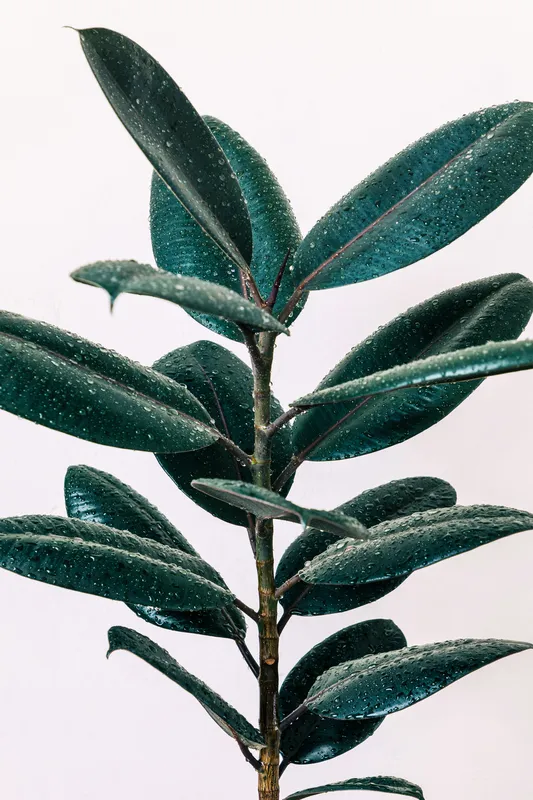
Rubber Plant Care: How to Keep Ficus Elastica Happy Indoors
Rubber plants are the clean, glossy, confident plants of the houseplant world.
They also have a reputation for being picky, mostly because they hate sudden change. If you treat them like a stable roommate instead of a seasonal decoration, they do great. Ficus elastica can grow into an impressive indoor tree over time, reaching six to ten feet tall in the right conditions. The key is consistency.
Quick Care Summary
- Light: Bright, indirect light
- Water: When the top 2 inches are dry
- Soil: Chunky, well-draining mix
- Humidity: Normal household levels are fine
- Growth rate: Moderate, faster in spring and summer
- Biggest issue: Overwatering and low light
Light
Rubber plants want more light than most beginners expect.
- Best: Bright, indirect light near a window. An east-facing window or a few feet back from a south-facing window is ideal.
- Can handle: Gentle morning sun for a couple of hours. Some varieties like Burgundy and Tineke actually develop better coloring with some direct morning light.
- Avoid: Deep shade. In low light, rubber plants grow leggy, drop lower leaves, and lose their signature gloss.
If the plant is reaching toward the window or dropping lower leaves, increase light. Rotate the pot a quarter turn every couple of weeks so it grows evenly on all sides.
Watering
Let the top two inches of soil dry before watering. Rubber plants are more tolerant of underwatering than overwatering. Their thick leaves store some moisture, so they can handle a missed watering better than soggy roots.
How I check:
- Finger test two inches down — if it still feels damp, wait
- Or lift the pot. A lighter pot means drier soil.
When you water:
- Water fully until it drains out the bottom
- Empty the saucer after 15 to 20 minutes
- Never let the plant sit in standing water
In winter, rubber plants slow down and need less water. You may go from watering every week to every two weeks or longer depending on your home temperature and humidity.
Soil and Pot
A rubber plant is happier in a chunkier mix that drains quickly and allows air to reach the roots.
Simple mix:
- 2 parts standard potting mix
- 1 part perlite
- Optional: a handful of orchid bark for extra drainage
Always use a pot with drainage holes. Terracotta works well because it breathes and helps the soil dry out between waterings. If you prefer a decorative cache pot, keep the plant in a nursery pot inside it and remove the nursery pot to water.
Repot every one to two years in spring, or when roots start circling out the drainage holes. Go up only one pot size at a time — rubber plants do better slightly snug than swimming in too much soil.
Temperature and Humidity
- Temperature: 65 to 85 degrees Fahrenheit. Rubber plants are tropical and do not tolerate cold well.
- Humidity: Normal home humidity is fine for most rubber plants. They are not as humidity-dependent as calatheas or ferns.
Keep it away from cold drafts, heating vents, and air conditioning units. Rubber plants notice environmental shifts quickly and may respond by dropping leaves. If you move one to a new spot, expect a brief adjustment period.
Cleaning and Leaf Care
Dust blocks light and makes the leaves look dull. Rubber plant leaves are large and smooth, which makes them easy to clean but also easy dust magnets.
- Wipe leaves with a damp cloth once a month, supporting each leaf from underneath with your hand
- For stubborn buildup, mix a tiny amount of mild dish soap in water
- Do not use commercial leaf shine products. They can clog the leaf pores (stomata) and interfere with gas exchange.
Clean leaves photosynthesize better, so this is not just cosmetic.
Pruning and Branching
Rubber plants naturally grow as a single tall stem. If you want a bushier plant:
- Prune the top growth in spring when the plant is actively growing
- Cut just above a leaf node with clean, sharp shears
- New branches often form below the cut, sometimes two or three at once
- The milky white sap (latex) is normal. It can irritate skin, so wear gloves if you are sensitive. Wipe sap away with a damp cloth.
You can also propagate the cutting you remove. Rubber plant stem cuttings root well in water or moist perlite.
Popular Varieties
- Burgundy: Deep, almost black-red leaves. Needs good light to keep its dark color.
- Tineke: Variegated green, cream, and pink. Requires brighter light than solid green varieties.
- Ruby: Pink and red variegation. Striking but needs consistent bright light.
- Robusta: Classic dark green with extra-large leaves. The most forgiving variety.
All varieties follow the same basic care. Variegated types need more light because the lighter portions of the leaf produce less chlorophyll.
Common Problems
Leaf drop
Most common causes:
- Change in location or light
- Low light over a long period
- Overwatering
Fix: Give it brighter indirect light, check soil dryness before every watering, and be consistent with its environment. Moving a rubber plant too often causes repeated stress.
Brown edges
Often caused by:
- Dry air plus inconsistent watering
- Fertilizer burn from too-strong solutions
Fix: Water more consistently, keep it away from heating vents, and dilute fertilizer to half strength.
Yellowing lower leaves
A single yellow leaf on the bottom occasionally is normal aging. Multiple yellowing leaves usually means overwatering. Check the roots for signs of rot — mushy, brown roots need to be trimmed, and the plant should be repotted in fresh dry soil.
Fertilizing
Feed with a balanced liquid fertilizer diluted to half strength every four to six weeks during spring and summer. Stop fertilizing in fall and winter when growth slows. Over-fertilizing causes salt buildup in the soil, which leads to brown leaf tips.
What To Do Next
- If you want another bold plant: try monstera deliciosa for big architectural leaves
- If you want a lower-light option: Chinese evergreen is easier and more forgiving
- If you keep losing leaves, move it closer to a bright window, slow down watering, and stop moving the plant around