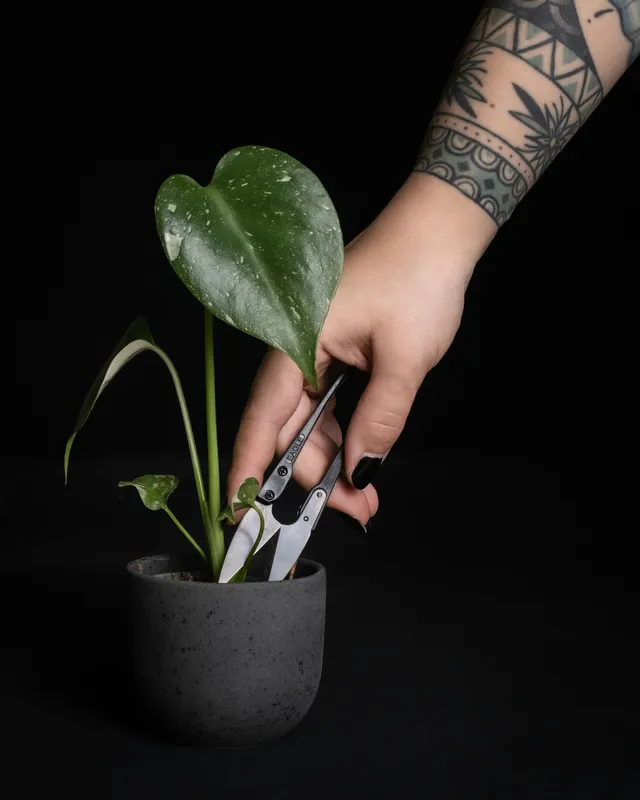
How to Prune Your Houseplants (Without Having a Panic Attack)
I am going to be real with you. The first time I pruned a houseplant, my hands were shaking like I was performing surgery. It was a pothos that had gotten so leggy it looked like a sad green fishing line dangling off the shelf. I knew it needed a trim. I had read that pruning was “good for the plant.” But actually holding scissors to a living vine and snipping? That felt like betrayal.
My daughter walked by and asked why I was staring at a plant with scissors. Fair question.
Here is the thing - pruning is not punishment. It is the plant equivalent of a haircut. You are not hurting it. You are helping it grow back fuller, healthier, and bushier. And once you do it a few times, you will wonder why you waited so long.
Why Bother Pruning at All?
If your plant looks great and is growing the way you want, you do not have to prune it. No one is making you. But if any of these sound familiar, it is time to reach for the scissors:
Your plant is leggy. Long stretches of bare stem between leaves usually mean the plant is reaching for more light. Pruning those leggy stems encourages the plant to branch out from lower nodes, creating a fuller shape.
It is lopsided. Plants grow toward light, so one side often gets bushier than the other. Pruning the longer side helps balance things out.
Dead or yellow leaves are piling up. Removing dead foliage is not just cosmetic. It lets the plant redirect energy to healthy growth instead of trying to save leaves that are already gone.
It has outgrown its space. Sometimes a plant is perfectly healthy but has taken over your entire bookshelf. A good trim keeps things manageable without needing a bigger apartment.
You want more plants. This is the secret bonus. Every cutting you take is a potential new plant. Pruning and propagation go hand in hand.
When to Prune
Timing matters more than most people realize.
Best time: Late winter through early spring. This is when most houseplants are waking up from their winter slowdown and entering active growth. Pruning now gives the plant a full growing season to recover and fill back in. For me in New York, that means late February through April.
Acceptable time: During the growing season (spring and summer). You can absolutely prune during these months. The plant is actively growing and will bounce back quickly.
Worst time: Late fall and winter. Most houseplants slow down when days get shorter. Pruning during dormancy means the plant takes longer to recover, and you might end up with bare stems staring at you for months. The exception is removing dead or diseased leaves - do that whenever you see them regardless of season.
Flowering plants: After they bloom. If you have a flowering houseplant like a hoya, Christmas cactus, or African violet, wait until flowers are spent before pruning. Cutting before or during flowering removes buds you have been waiting months for. Ask me how I know.
Tools You Actually Need
You do not need a lot of fancy equipment. Here is what works:
Sharp scissors or pruning shears. This is the most important thing. Dull blades crush and tear stems instead of making clean cuts. Crushed tissue heals slower and invites disease. If your kitchen scissors struggle to cut paper cleanly, they are too dull for plants.
Rubbing alcohol or hydrogen peroxide. Wipe your blades before and between plants. This prevents spreading disease from one plant to another. It takes ten seconds and saves you a lot of heartache.
Your fingers. For soft, tender growing tips - like the new growth on a coleus or basil - you can literally pinch them off between your thumb and forefinger. This is called “pinching” and it is the gentlest form of pruning.
That is it. You do not need specialized gardening gloves, Japanese pruning saws, or whatever Instagram is selling this week. Scissors, alcohol, hands.
How to Actually Do It
Here is the step-by-step that nobody made clear to me when I started:
Step 1: Assess the plant
Stand back and look at the whole plant. Where is it leggy? Where is it lopsided? Are there dead leaves or bare stems? Identify what you want to change before you start cutting. I like to turn the plant slowly and look at it from all angles. My wife says I look like I am judging it. I am.
Step 2: Start with the obvious stuff
Remove anything dead, yellow, or brown first. This is zero risk. The plant has already given up on those leaves. Snip them off at the base of the leaf stem where it meets the main stem. If a whole stem is dead and brown, trace it back to where it meets healthy tissue and cut just above a node.
Step 3: Find the nodes
This is the single most important concept in pruning. A node is the little bump or joint on a stem where leaves emerge. When you cut just above a node, new growth will sprout from that point. If you cut in the middle of an internode - the bare stretch between nodes - you get a dead stub that does nothing.
Look for a node, position your scissors just above it (about a quarter inch), and make a clean cut at a slight angle. The angle helps water roll off instead of sitting on the cut surface.
Step 4: Follow the one-quarter rule
As a general guideline, do not remove more than about one-quarter of the plant’s foliage at one time. This keeps enough leaves to photosynthesize and feed the plant while it recovers. If your plant needs more aggressive pruning, do it in stages over a few weeks.
The exception: if you have a severely leggy plant that is basically all bare stem with a few leaves at the tips, you can cut it back harder. Some people go as far as removing 75 percent of a very leggy pothos or tradescantia. These vigorous growers can handle it, especially in spring. But if you are new to pruning, start conservatively. You can always cut more later.
Step 5: Step back and assess again
After your first round of cuts, step back and look at the shape. Is it more balanced? Does it look like the plant you want? Make small adjustments. Pruning is like getting a haircut - it is easier to take more off than to put it back.
Plant-Specific Tips
Not all plants respond the same way to pruning. Here are some common houseplants and what to know:
Pothos and philodendrons: These are the most forgiving plants to practice on. Cut anywhere above a node and they will sprout new growth. If they are leggy, do not be shy about cutting them back to a few inches from the soil. They will come back bushier.
Monsteras: Prune sparingly. Each stem only produces one new leaf at the growth point, so cutting back does not create bushiness the way it does with pothos. Remove damaged leaves and aerial roots that bother you, but do not go overboard.
Rubber plants and fiddle leaf figs: These will branch where you cut, which is great if you want a bushier tree shape. Cut just above a node and expect to see one or two new branches emerge below the cut. Wear gloves - the milky sap is irritating.
Calatheas and prayer plants: These grow from a central rhizome, not from stems that branch. Pruning a leaf does not encourage branching. Just remove dead or damaged leaves at the base. The plant will send up new leaves from the soil on its own schedule.
Succulents: Most succulents can be pruned, but they handle it differently. Cut leggy succulents and let the cutting dry for a day or two before propagating. The original plant will often sprout new rosettes near the cut.
Palms, orchids, and Norfolk Island pines: Do NOT prune the main growing tip on these plants. They grow from a single terminal point, and if you cut it, you kill the plant’s ability to produce new growth. You can remove dead fronds or flower spikes, but leave the central crown alone.
The Mistakes I Have Made So You Do Not Have To
Using dull scissors. I used to grab whatever scissors were in the kitchen junk drawer. The cuts were ragged, and I noticed more browning and dieback on those stems afterward. Sharp blades make a huge difference.
Pruning in winter. I once gave my fiddle leaf fig a major trim in November because it was blocking the window. It sat there looking like a sad hat rack until March. Lesson learned.
Not propagating the cuttings. For the first year of my plant journey, I threw away every cutting. Every single one. That is dozens of free plants I just tossed. If you are pruning healthy stems with nodes, stick them in water. Most common houseplants root easily from cuttings.
Being too timid. My pothos used to have these long, leggy vines with leaves only at the very tips. I would trim one inch and call it a day. Nothing changed. When I finally worked up the nerve to cut them back to six inches, the plant exploded with new growth within weeks. Sometimes plants need a real haircut, not just a trim.
Forgetting to clean my tools. I pruned a plant that had a fungal issue, then immediately moved on to the next plant without wiping my shears. Guess which plant got a fungal issue next. Clean between plants. Always.
What to Do After Pruning
Once you have finished, there are a few things that help the plant recover:
Give it good light. Not direct scorching sun, but bright indirect light helps the plant photosynthesize efficiently and push out new growth faster.
Hold off on fertilizer for a week or two. The plant is healing, and strong fertilizer can stress fresh cuts. Resume your normal fertilizing schedule after you see new growth emerging.
Water normally. Some people reduce watering after pruning because there are fewer leaves transpiring. That makes sense in theory, but in practice, just water when the soil dries out like you normally would. The plant will tell you if something is off.
Save those cuttings. Seriously. Drop them in a jar of water on the kitchen windowsill. In a few weeks, you will have roots and a whole new plant to give to a friend, a neighbor, or that coworker who keeps asking about your plants.
The Bigger Picture
Pruning changed my relationship with my plants. Before I started, I treated every plant like a museum piece - something to admire from a distance and never touch. I was terrified of damaging them. But plants are not fragile glass figurines. They are living things that respond to being shaped and tended.
My daughter helps me prune now. She is six, and she takes it very seriously. She holds the leaf while I cut, then carefully carries each cutting to the propagation jars like she is transporting something precious. Which, to be fair, she is.
That is what I love about plant parenthood. It is one of those rare hobbies where cutting something back helps it grow. There is a metaphor in there somewhere, but I will leave that to you.
Now go grab some sharp scissors and give your leggy pothos the haircut it has been begging for.