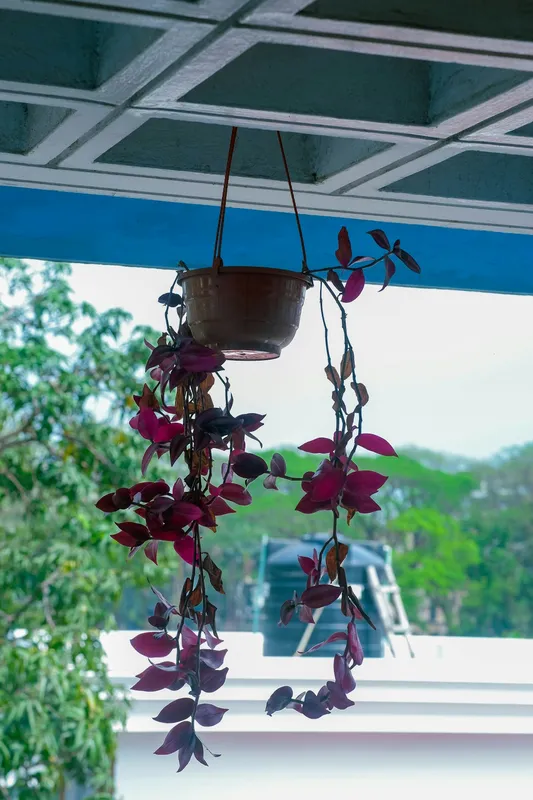
How to Propagate Tradescantia Zebrina: Free Plants in Two Weeks
If there is one plant in my collection that genuinely wants to be shared, it is Tradescantia zebrina. This thing roots so eagerly that I have accidentally propagated it by dropping a broken stem into a cup of water I forgot about on the counter. Two weeks later - roots. My wife found it before I did and just shook her head.
Also known as inch plant (or silver inch plant, if you want to sound fancy), Tradescantia zebrina is the gateway drug of plant propagation. If you have never propagated anything before, start here. The success rate is absurdly high, the process is dead simple, and you will have new plants to give away within a couple of weeks. Your neighbors will think you are generous. Really, you just ran out of windowsill space.
Why Tradescantia Zebrina Is Perfect for Propagation
Before we get into the how, let me sell you on the why. Tradescantia zebrina has a few things going for it that make propagation almost foolproof.
First, it roots incredibly fast. We are talking visible roots within five to seven days in water, sometimes sooner. Compare that to a hoya cutting that might take a month or more to show signs of life, and you will understand why this plant is the confidence booster every new plant parent needs.
Second, the parent plant actually benefits from being cut back. Tradescantia has a tendency to get leggy over time - the stems stretch out, the older growth near the base gets sparse, and the whole plant starts looking a bit sad. Regular pruning encourages bushier growth, and every cutting you take is a future plant. It is win-win.
Third, this plant is not picky about rooting medium. Water, soil, perlite, damp paper towel - I have seen people root it in all of these with success. It just wants to grow.
What You Will Need
The supply list for this project is almost embarrassingly simple:
- A healthy Tradescantia zebrina with stems long enough to cut (at least 4 to 6 inches)
- Clean, sharp scissors or pruning shears
- A clear glass or jar (for water propagation) or a small pot with drainage (for soil)
- Well-draining potting mix if going the soil route
- A spot with bright, indirect light
That is it. No rooting hormone needed - this plant does not require convincing. No heat mats, no humidity domes, no special equipment. Just scissors and a jar. My kind of project.
Understanding Where to Cut
This is the only part that trips people up, so pay attention. You need to cut just below a node. Nodes are the small bumps or joints along the stem where leaves emerge. They are the growth points - roots will sprout from the nodes, not from random spots on the stem.
Look at your Tradescantia and find a healthy stem. Follow it down and count the nodes. You want your cutting to be about 4 to 6 inches long with at least two or three nodes on it. More nodes means more potential root sites, which means a stronger start.
Make your cut about half an inch below the lowest node you want to keep on the cutting. Use clean, sharp scissors - a ragged cut invites rot.
Once you have your cutting, strip the leaves from the bottom two or three nodes. These are the nodes that will be submerged in water or buried in soil, and you do not want leaves rotting down there. Leave the top two or three sets of leaves intact. They will keep photosynthesizing and feeding the cutting while it roots.
Method 1: Water Propagation
Water propagation is my favorite method for Tradescantia because you get to watch the roots grow in real time. There is something deeply satisfying about checking your cuttings every morning and seeing the progress.
Step 1: Fill a clear glass or jar with room-temperature water. Tap water is fine - I have never had issues with it, though if your tap water is heavily chlorinated, you can let it sit out overnight.
Step 2: Place your cuttings in the water so that the stripped nodes are submerged but the remaining leaves stay above the waterline. If your jar is too wide and the cuttings keep falling in, you can stretch a piece of plastic wrap over the top, poke holes in it, and thread the stems through. Works like a charm.
Step 3: Set the jar in a spot with bright, indirect light. A kitchen windowsill is perfect. Avoid direct afternoon sun, which can heat the water and cook the stems.
Step 4: Change the water every three to five days, or whenever it starts looking cloudy. Fresh water prevents bacteria buildup, which is the main enemy of water propagation.
Step 5: Wait. But not long. You should see tiny white root nubs within five to seven days. Within two weeks, those roots will be an inch or two long - plenty for transferring to soil.
When to transfer: Do not leave cuttings in water forever. Once roots are about one to two inches long, pot them up. The longer they stay in water, the harder they adapt to soil later. I have found that the sweet spot is around two weeks - long enough for good roots, short enough that the transition is smooth.
Method 2: Soil Propagation
If you are the type of person who does not want to deal with the water-to-soil transition (which can sometimes cause a brief sulk), you can skip straight to soil propagation. It works just as well - you just cannot watch the roots grow, which is less fun but equally effective.
Step 1: Fill a small pot (4-inch is ideal) with a well-draining potting mix. I use my standard mix of regular potting soil, perlite, and orchid bark in roughly equal parts. The key is drainage - Tradescantia roots rot quickly in soggy soil.
Step 2: Moisten the soil so it is damp but not soaking. Think wrung-out sponge.
Step 3: Poke a hole in the soil with a pencil or chopstick (we have plenty in this household) and insert your cutting so the stripped nodes are buried. Firm the soil gently around the stem.
Step 4: You can plant multiple cuttings in the same pot for a fuller look. I usually do three to five cuttings per 4-inch pot, spaced evenly. This gives you an instantly bushy plant instead of one sad stem.
Step 5: Place the pot in bright, indirect light and keep the soil lightly moist for the first two weeks while roots establish. After that, water when the top inch of soil dries out.
How to tell if it worked: After about two weeks, give the cutting a very gentle tug. If you feel resistance, roots have formed. If it slides right out, give it more time.
The Secret Third Method: Just Stick It Back in the Pot
Here is what I actually do most of the time. When I prune my Tradescantia and end up with a handful of cuttings, I just stick them right back into the same pot as the mother plant. Poke some holes around the edges of the pot, tuck in the cuttings, water everything, and walk away.
Within a couple of weeks, those cuttings root and the pot looks fuller and bushier than ever. No extra pots, no jars of water cluttering the kitchen counter, no fuss. My dad would approve of this approach - minimum effort, maximum result. That is the Chinese dad way.
Common Mistakes to Avoid
Even with a plant this forgiving, there are a few ways to mess things up.
Cutting too short. Cuttings shorter than three inches often do not have enough energy stored to push out roots. Give yourself at least four inches to work with.
Skipping the leaf removal. Leaves submerged in water or buried in soil will rot. That rot can spread to the stem and kill the cutting. Always strip those lower leaves.
Forgetting to change the water. Stagnant water breeds bacteria. If your water looks cloudy or smells funky, change it immediately. This is the number one reason water-propagated cuttings fail.
Too little light. Tradescantia cuttings need energy to grow roots, and that energy comes from light. A dark corner is not going to cut it. Bright, indirect light is the sweet spot.
Potting water-rooted cuttings in bone-dry soil. When you transfer from water to soil, keep that soil moist for the first week or so. The roots need time to adapt to their new medium. Going from water to dry soil is a shock they do not always recover from.
When to Propagate
Tradescantia is so vigorous that you can propagate it year-round, but you will get the fastest results in spring and summer when the plant is actively growing. Cuttings taken in winter will still root - they just take longer and may be a bit weaker.
I like to do a big pruning and propagation session in early spring. It refreshes the mother plant, gives me a batch of new plants, and by the time summer rolls around, everything is growing like crazy.
What to Do With All These Plants
This is the problem nobody warns you about. Tradescantia propagates so easily and grows so fast that you will quickly have more plants than you can handle. Here are some ideas:
Gift them. Seriously, a rooted cutting in a small pot makes a great low-key gift. I have brought them to dinner parties, given them to my daughter’s teachers, and handed them to the mail carrier. Everyone likes a free plant.
Use them to fill out arrangements. Tradescantia looks beautiful trailing out of a hanging basket or cascading over a shelf edge. Multiple cuttings in one pot create an instant lush display.
Trade with other plant people. If you are in any local plant swap groups, Tradescantia cuttings are always welcome as trade material. They are not rare, but everyone appreciates a well-rooted cutting.
Teach your kids. My daughter did her first propagation with Tradescantia cuttings at four years old. She stuck them in a jar, watched the roots grow, and planted them herself. If you want to get kids interested in plants, this is the one to start with. The fast results keep their attention, which, if you have a toddler, you know is no small feat.
Wrapping Up
Tradescantia zebrina is the ultimate beginner propagation plant. It is fast, forgiving, and almost impossible to fail at. If you have one in your collection, you really have an unlimited supply of new plants just waiting to happen. All you need is a pair of scissors and a glass of water.
And if you do not have one yet, ask around. Someone in your life definitely has a Tradescantia they would love to share a cutting from. That is how I got mine - a neighbor gave me three stems in a ziplock bag, and now I have plants in every room. The circle of plant life continues.
Now go give your Tradescantia a haircut. It will thank you for it.