How to Propagate String of Pearls: Free Jewelry for Your Shelves
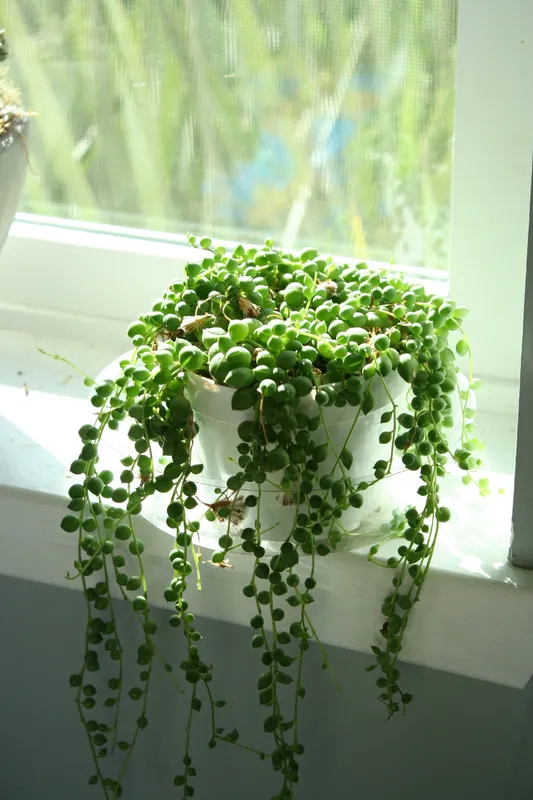
String of pearls (Curio rowleyanus, formerly Senecio rowleyanus) is one of those plants that looks like it was designed by a jewelry maker, not nature. Those perfect little green spheres dangling from thin stems - it is almost too pretty to be real.
The good news? Propagating string of pearls is surprisingly straightforward. If you can keep the mother plant alive (and I know that is a bigger “if” than it sounds), you can make more of them for free. I have turned one small pot from the nursery into five hanging planters scattered around our apartment. My wife says it is too many. She is wrong.
Here is everything you need to know to multiply your string of pearls collection.
When to Propagate
Timing matters more than you might think. Spring and early summer are your best window - roughly March through June. The plant is actively growing during this period, so cuttings root faster and the mother plant recovers more quickly from being trimmed.
Can you propagate in fall or winter? Technically, yes. But everything takes longer, the success rate drops, and you will spend weeks staring at cuttings wondering if they are doing anything. Ask me how I know.
If you are in a heated apartment with decent light (hello, fellow New Yorkers), you can stretch the window a bit. But spring is still ideal.
What You Will Need
Before you start snipping, gather your supplies. Nothing fancy here:
- Sharp, clean scissors or pruning shears
- A small pot with drainage holes
- Well-draining succulent or cactus mix
- Perlite or pumice (to mix into the soil for extra drainage)
- A spray bottle
- Optional: rooting hormone powder (helpful but not required)
- Optional: bobby pins or small floral pins for the layering method
That is it. No special equipment, no grow lights, no PhD in botany.
Choosing the Right Cuttings
Not all stems are created equal. Here is what to look for:
Pick healthy, plump strands where the pearls are round and firm - not shriveled or mushy. You want stems that are actively growing, not ones that are already struggling. If a strand looks thin, discolored, or has dried-out pearls, skip it.
Cut pieces that are 3 to 5 inches long. You can go shorter (2 inches minimum), but longer cuttings give you more nodes to work with, which means more potential roots. Use clean, sharp scissors and make your cut just below a node - that is the tiny bump where a pearl meets the stem.
One thing I have learned the hard way: do not take cuttings from a dehydrated plant. Water your string of pearls a day or two before you plan to propagate. Plump, well-hydrated cuttings root much better than stressed ones.
Method 1: The Soil Coil (Best for Beginners)
This is my favorite method and the one I recommend to everyone who asks. It has the highest success rate and feels the most natural.
Step 1: Take your 3-5 inch cuttings and gently remove the pearls from the bottom 2-3 inches of each cutting. You want bare stem with exposed nodes at the bottom.
Step 2: Let the cuttings sit out on a paper towel for 24-48 hours. This allows the cut ends to callous over, which helps prevent rot when they hit the soil. I usually do this on the kitchen counter overnight. Yes, it looks weird. No, my toddler has not tried to eat them yet. (Knock on wood.)
Step 3: Mix your potting soil - about two parts succulent mix to one part perlite or pumice. Fill a small pot with drainage holes.
Step 4: Here is the trick that changed everything for me: instead of poking the cutting straight down into the soil, coil the bare stem portion on top of the soil surface. Lay it so the nodes make contact with the soil. Roots grow from every node that touches the soil, so more contact means faster, fuller growth.
Step 5: Gently press the stem into the soil surface. If it will not stay put, use bobby pins or small floral pins to hold it in place.
Step 6: Give it a light misting with your spray bottle. Not a full watering - just enough to dampen the top layer of soil.
Step 7: Place in bright, indirect light. A spot that gets a couple hours of gentle morning sun is perfect. Avoid harsh afternoon sun, which can fry the delicate cuttings.
Expect roots in about 3-4 weeks. You will know it is working when you gently tug on a strand and feel resistance. Once rooted, transition to a normal watering schedule - let the soil dry out completely between waterings, just like the mother plant.
Method 2: Water Propagation
Water propagation is popular because you can actually watch the roots grow. It is satisfying in a way that soil propagation is not. But I will be honest - in my experience, the transition from water roots to soil can be tricky with string of pearls. Water roots are more fragile than soil roots, and the plant sometimes sulks for a while after transplanting.
That said, it absolutely works. Here is how:
Step 1: Take your cuttings and strip the pearls from the bottom 2-3 inches, just like the soil method.
Step 2: Let the cuttings callous for a day.
Step 3: Place the cuttings in a small jar or glass so that the bare nodes are submerged in water, but the pearls stay above the waterline. A narrow-mouthed jar works well for keeping everything in position.
Step 4: Use room-temperature filtered water if possible. Change the water every 3-4 days to keep it fresh and prevent bacterial growth.
Step 5: Place in bright, indirect light and wait. You should see small white roots emerging from the nodes within 2-3 weeks.
Step 6: Once roots are about an inch long, transplant to well-draining succulent soil. Be gentle - water roots are delicate. Water lightly right after transplanting, then let the soil dry before watering again.
The biggest mistake people make with water propagation is waiting too long to transplant. If the roots get long and tangled, they are harder to transition to soil. An inch of root length is the sweet spot.
Method 3: Layering (The Lazy Way)
This is the method for people who do not want to cut anything. I respect that energy.
If your string of pearls has long strands that are getting unwieldy, you can propagate without removing them from the mother plant.
Step 1: Place a small pot filled with succulent mix right next to the mother plant.
Step 2: Take a long strand and lay a section of it across the surface of the new pot. Make sure several nodes are in contact with the soil.
Step 3: Pin it down with bobby pins or small pieces of bent wire so it stays in contact with the soil.
Step 4: Mist the soil lightly and keep it slightly damp (not wet).
Step 5: In 3-4 weeks, the strand will develop its own roots in the new pot. Once you feel resistance when you tug gently, snip the strand from the mother plant.
This method has the highest success rate because the cutting continues to receive nutrients from the mother plant while it roots. It is basically a risk-free way to propagate. The downside is that you need the pots to sit next to each other, which is not always practical.
Common Mistakes (And How to Avoid Them)
Overwatering the cuttings. This is the number one killer. String of pearls cuttings need barely-damp soil, not wet soil. Mist lightly. Let the surface dry between mistings. If you see any mushiness or discoloration at the base, you are watering too much.
Not enough light. Cuttings need bright, indirect light to put energy into root growth. A dark corner will not cut it. But direct afternoon sun will cook them. Find the middle ground.
Skipping the callous step. I know it is tempting to stick cuttings straight into soil or water. But that fresh cut is an open invitation for rot. Give it a day to seal over. Your patience will be rewarded.
Using heavy soil. Regular potting mix holds too much moisture for these guys. Always amend with perlite or pumice. A 2:1 ratio of succulent mix to perlite works great.
Propagating from a struggling plant. If the mother plant is already dropping pearls or looking thin, fix those problems first. Propagate from strength, not desperation.
After They Root: What Next?
Once your cuttings have established roots (usually 4-6 weeks), you can start treating them like adult string of pearls plants. A quick care refresher:
Give them bright light with some direct morning sun. Water only when the soil is completely dry - the pearls will start to look slightly less round when they are thirsty, which is a helpful visual cue. Feed with a diluted liquid succulent fertilizer once a month during the growing season.
String of pearls grow faster than you might expect once they are established. Within a few months, you will have strands long enough to propagate again. The cycle of free plants never ends.
The Best Part About Propagating String of Pearls
Honestly, the best part is giving them away. String of pearls cuttings make fantastic gifts - pop a few rooted cuttings into a cute pot and you have a thoughtful present that costs you almost nothing.
My mom was skeptical when I gave her a small pot of string of pearls last Mother’s Day. She is used to the jade plants and lucky bamboo that live in every Chinese household. But she put it in her kitchen window, and now she calls me every few weeks to report on how long the strands are getting. Last time she said it looked like “plant noodles.” I am still not sure if that was a compliment.
Either way, she has not killed it yet. And if she can keep string of pearls alive in her drafty Flushing apartment, there is hope for all of us.
Happy propagating.