Why Propagate Your Monstera?
Let me paint a picture. Your Monstera deliciosa has been going strong for a couple years. It is climbing up that moss pole you finally installed, throwing out beautiful fenestrated leaves, and generally being the crown jewel of your living room. Then it starts getting leggy. Or a friend visits and says, “I would love one of those.” Or your kid accidentally snaps a stem while chasing the cat.
All roads lead to propagation.
The good news is that Monstera deliciosa is one of the easiest tropical plants to propagate. You do not need special equipment, a greenhouse, or a botany degree. You need a sharp blade, a glass of water, and a little patience. I have propagated more Monsteras than I can count at this point, and I still get a little thrill watching those first roots appear.
Understanding Nodes: The One Thing You Cannot Skip
Before you grab scissors, you need to understand one concept: the node. This is the slightly bumpy area on the stem where leaves emerge. It is also where aerial roots tend to grow - those brown, rope-like appendages that make your Monstera look like it is reaching for something.
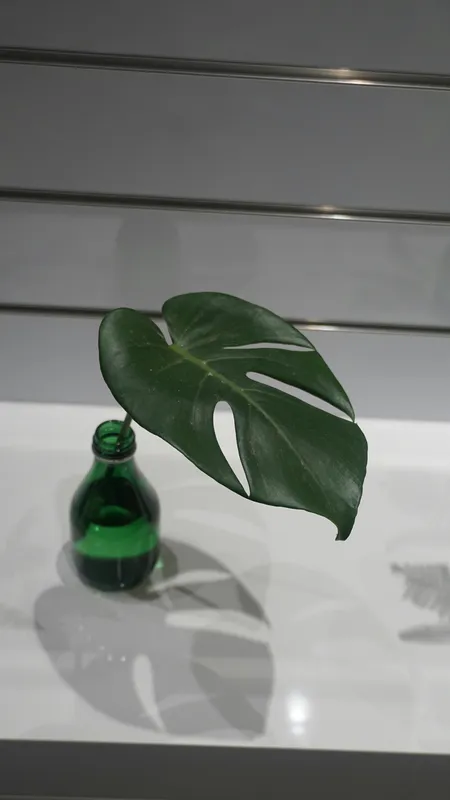
Here is the critical part: new roots and new growth only come from nodes. If you cut a beautiful leaf with its petiole but no node attached, you will have a lovely decoration in a vase for a few weeks, but it will never become a new plant. I learned this the hard way with my very first attempt. Had a gorgeous leaf sitting in water for two months wondering why nothing was happening.
Look for these signs of a healthy node:
- A visible bump or ring on the stem
- An aerial root (brown, sometimes fuzzy) growing from that area
- A small dormant bud that looks like a tiny nub (this is the axillary bud that will become new growth)
The more developed the aerial root, the faster your cutting will establish itself.
When to Propagate
You can technically take cuttings any time of year, but spring and early summer give you the best results. The plant is actively growing, hormones are flowing, and roots develop faster. I have done winter propagations that worked fine, but they took roughly twice as long to root.
If your Monstera is healthy and putting out new leaves regularly, it is ready to share some of itself with the world.
How to Take the Perfect Cutting
Gather your supplies first:
- Clean, sharp pruning shears or a knife (sterilize with rubbing alcohol)
- A glass jar or clear container
- Fresh water (filtered or tap that has sat out overnight)
- Optional: rooting hormone powder
Now find your cutting spot. You want a section of stem that has at least one node and one to two healthy leaves. Ideally, there is already an aerial root at that node. Cut about a quarter to half inch below the node at a slight angle.
A few tips from experience:
- One node per cutting is enough, but two nodes give you a safety margin
- Do not take more than a third of the parent plant at once - it needs leaves to photosynthesize and recover
- If the stem is thick and woody, a serrated knife works better than bypass pruners
- Let the cut end sit in open air for an hour to callus slightly before putting it in water
After cutting, wipe your blade with rubbing alcohol again. Monstera sap can spread disease between plants if you are not careful.
Method 1: Water Propagation (The Classic)
This is the method I recommend for beginners because you can literally watch the roots grow. There is something deeply satisfying about checking your cutting every morning and seeing progress.
Setup: Place your cutting in a clear glass jar with the node and any aerial roots submerged. Keep the leaves above the waterline. Set it somewhere with bright, indirect light - not direct sun, which will cook your cutting and encourage algae growth.
Ongoing care:
- Change the water every three to four days. Stagnant water breeds bacteria and can rot your cutting
- If you notice the water getting cloudy or smelly between changes, swap it immediately
- Room temperature water is ideal. Do not use ice-cold tap water
- A tiny drop of hydrogen peroxide in the water can help prevent rot (seriously tiny - we are talking a few drops per glass)
Timeline: You should see small white root nubs within two to three weeks. Actual roots that are a couple inches long usually develop in four to six weeks. I have had cuttings that were faster and some that tested my patience for eight weeks, so do not panic if yours is a slow starter.
When to pot up: Once roots are two to three inches long and you see a few of them branching, it is time to move to soil. Do not wait until you have a massive root system in water - the longer roots stay in water, the harder they adapt to soil. This is probably the most common mistake I see. People get attached to watching the roots and wait too long.
Method 2: Soil Propagation (Skip the Middleman)
If you would rather just get the cutting into soil from the start, that works too. Some growers actually prefer this because the roots develop adapted to soil from day one, avoiding the water-to-soil transition shock.
Setup: Fill a small pot (4-inch is perfect) with a chunky, well-draining mix. I like equal parts potting soil, perlite, and orchid bark. Plant the cutting with the node buried about an inch deep and the leaf sticking up. If there is an aerial root, tuck that into the soil too.
Ongoing care:
- Keep the soil consistently moist but not soggy. Think wrung-out sponge
- Cover with a clear plastic bag or place in a humid spot to maintain moisture around the cutting
- Mist the inside of the bag if it dries out
- Keep in bright, indirect light
Timeline: You will not see root development happening (which is the downside of this method), but you will know it worked when you see new leaf growth. This usually takes four to eight weeks. A gentle tug on the stem - if there is resistance, roots have formed.
Method 3: Sphagnum Moss (The Middle Ground)
This has become my go-to method and honestly, I think it gives the best results. Sphagnum moss holds moisture without staying waterlogged, and it is easy to see when roots start developing.
Setup: Soak a handful of sphagnum moss in water, then squeeze out the excess until it is damp but not dripping. Wrap it around the node and aerial root of your cutting, then place the whole thing in a clear container or zip-lock bag (poke a few air holes).
Ongoing care:
- Check moisture every few days and mist if the moss feels dry
- The clear container lets you monitor root growth like water propagation
- Keep warm (65-80 degrees) and in bright, indirect light
Timeline: Roots typically appear within two to four weeks. Once they are a couple inches long, pot up into soil.
Common Mistakes That Kill Cuttings
After helping friends and family propagate more Monsteras than I can remember, these are the mistakes I see over and over:
No node on the cutting. This is the number one killer. A leaf without a node will never root. Period. Always double-check before you cut.
Not changing the water. Stagnant water is a breeding ground for bacteria. If you can smell the water, you have already waited too long. Set a recurring reminder on your phone if you need to.
Too much direct sun. Your cutting does not have a root system yet. It cannot handle the stress of intense light on top of trying to grow roots. Bright indirect light is the sweet spot.
Potting up too late from water. Those long, flowing water roots look impressive, but they struggle to adapt to soil. Transition when roots are two to three inches, not twelve.
Using a dull blade. A ragged cut damages the stem tissue and invites infection. Your cutting is starting life as an open wound - make it a clean one.
Overwatering soil propagation. There is a fine line between keeping the soil moist and drowning a cutting that has no roots to drink with. When in doubt, mist the top rather than dumping water in.
What to Do After Your Cutting Roots
Once your propagated Monstera is in soil and showing signs of new growth, treat it like a juvenile plant:
- Water when the top inch of soil dries out
- Give it bright, indirect light (an east or north-facing window is great)
- Hold off on fertilizing for the first month to avoid burning tender new roots
- A small stake or chopstick can support a wobbly cutting until it establishes itself
- Expect smaller leaves at first. Fenestrations (the iconic splits and holes) come with maturity
Within a few months, your cutting will be an independent plant putting out its own leaves on its own schedule. And you will have earned serious bragging rights.
The Best Part: Sharing
My favorite thing about propagating Monsteras is giving them away. I have handed off cuttings to neighbors, coworkers, my kid’s teachers, and pretty much anyone who compliments the plant. There is something about growing a plant from a cutting and passing it along that feels genuinely good in a world where everything is disposable.
My daughter helped me pot up a cutting last spring and presented it to her teacher as an end-of-year gift. The teacher sent us a photo three months later of this thriving little Monstera on her desk. That photo is still on our fridge.
So go ahead, take that cutting. Your Monstera can handle it, and someone out there would love to have a piece of your plant family.