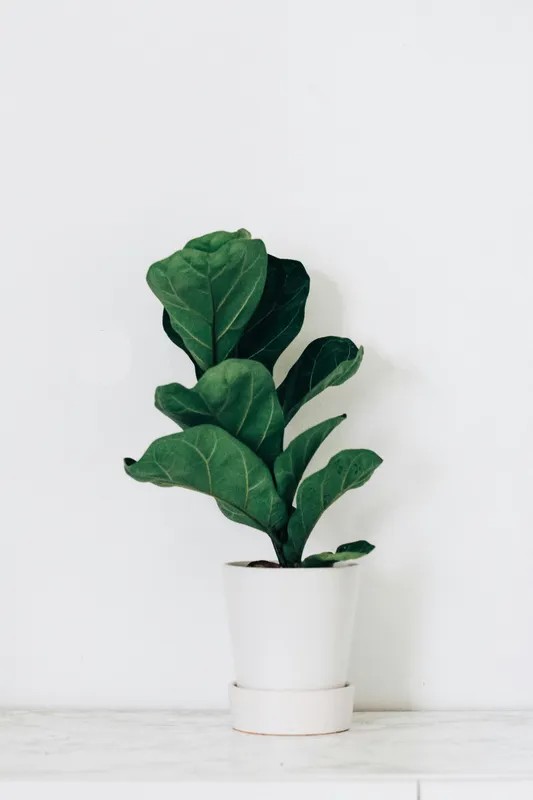
The Case for Propagating Your Fiddle Leaf Fig
Here is a scenario you might recognize. Your fiddle leaf fig (Ficus lyrata) is doing great - finally - after months of careful watering, strategic light placement, and whispering words of encouragement when nobody is watching. Then it starts getting leggy at the bottom. Or it is growing lopsided toward the window. Or your sister-in-law visits and drops the not-so-subtle hint that she would love one just like it.
All of these are excellent reasons to propagate.
I will be honest with you: I avoided propagating my fiddle leaf fig for a long time. These plants have a reputation for being fussy, and the idea of cutting into a healthy one felt like performing surgery on a friend. But once I finally tried it, I realized the process is way more forgiving than I expected. Now I have three fiddle leaf figs in my apartment, all from the same parent plant, and my sister-in-law has one too. Everyone wins.
Before You Cut: What You Need to Know
Fiddle leaf figs are woody tropical trees in the Ficus family, closely related to rubber plants and weeping figs. This matters for propagation because woody plants root a bit differently than soft-stemmed tropicals like pothos or tradescantia. They take longer, they benefit from rooting hormone, and they need a node to produce new growth.
The node is non-negotiable. Every cutting must include at least one node - that slightly raised ring or bump on the stem where a leaf attaches. This is where new roots and new branches will emerge. A leaf without a node will sit in water looking pretty for weeks but will never become a new plant. Trust me, I have tried.
Timing matters too. Spring and early summer are the best times to propagate, when your plant is actively growing and has the energy to push out new roots. You can try in fall or winter, but expect it to take significantly longer - sometimes double the time.
Gathering Your Supplies
You do not need much, but having everything ready before you make the cut helps avoid panic:
- Sharp, clean pruning shears or a razor blade (sterilize with rubbing alcohol)
- Rooting hormone powder or gel (optional but strongly recommended for fiddle leaf figs)
- A clean glass jar or propagation vessel
- Fresh, well-draining potting mix (if going the soil route)
- A small pot with drainage holes
- A clear plastic bag (for the humidity dome method)
- Paper towels for the sap (fiddle leaf figs are in the Ficus family, so they produce milky white latex sap when cut - it can irritate skin, so wear gloves if you are sensitive)
Method 1: Water Propagation
This is the most popular method for beginners because you can watch the roots develop in real time. There is something deeply satisfying about checking your cutting every morning and seeing tiny white root nubs appear.
Step 1: Choose your cutting. Look for a healthy stem with 2-3 leaves and at least one visible node. The stem should be about 12-18 inches long and thicker than a pencil. Avoid stems that are brand new and green - slightly woody stems root more reliably.
Step 2: Make the cut. Cut about half an inch below a node at a 45-degree angle. The angled cut increases the surface area for water absorption and root growth. Remove the bottom leaf or leaves, keeping 1-2 at the top. This reduces the energy the cutting spends on maintaining foliage and redirects it toward rooting.
Step 3: Let it callous (briefly). Set the cutting aside for about 30 minutes to let the cut end dry slightly and the sap stop flowing. This helps prevent rot once you place it in water.
Step 4: Apply rooting hormone. Dip the cut end and the exposed node area in rooting hormone. For fiddle leaf figs, I really do recommend this step. Woody cuttings are slower to root, and the hormone gives them a meaningful head start.
Step 5: Place in water. Put the cutting in a clean glass jar with room temperature water. The node should be submerged, but keep the leaves above the water line. Place it in bright, indirect light - not direct sun, which will cook the cutting and promote algae growth.
Step 6: Wait and refresh. Change the water every 5-7 days to keep it oxygenated and prevent bacterial growth. If the water gets cloudy or smells funky, change it immediately. You should start seeing tiny white root bumps within 3-4 weeks, with substantial roots (2-3 inches long) forming by 6-8 weeks.
Step 7: Transition to soil. Once roots are 2-3 inches long, plant the cutting in a small pot with well-draining potting mix. Water it well and keep the soil consistently moist (but not soggy) for the first few weeks as the water roots adapt to soil. This transition period is critical - water roots are more fragile than soil roots, so be gentle.
Method 2: Soil Propagation
Some growers prefer rooting directly in soil because it skips the awkward water-to-soil transition. The roots that form are stronger and better adapted from the start. The downside is you cannot see what is happening underground, which requires more patience and faith.
Step 1: Prepare the cutting the same way as the water method - healthy stem, 12-18 inches, at least one node, bottom leaves removed.
Step 2: Apply rooting hormone generously to the cut end and node area.
Step 3: Pre-drill your hole. Use a pencil or chopstick to make a hole in your moistened potting mix. This prevents you from scraping off the rooting hormone when you insert the cutting. It is a small detail that makes a real difference.
Step 4: Insert and firm. Place the cutting in the hole so the node is buried about 1-2 inches deep. Gently press the soil around the stem so it stands upright.
Step 5: Create a humidity dome. This is the secret weapon for soil propagation. Place a clear plastic bag over the cutting, using chopsticks or pencils to keep the bag off the leaves. This traps moisture and creates a mini greenhouse effect. Mist the inside of the bag every day or two and open it briefly for air circulation.
Step 6: Provide warmth and light. Keep the cutting in bright, indirect light. If you have a heat mat, placing the pot on it can significantly speed up rooting - warm soil encourages root development.
Step 7: Test for roots. After 6-8 weeks, give the cutting a very gentle tug. If you feel resistance, roots have formed. If it slides right out, give it more time. Once rooted, gradually remove the humidity dome over a week to acclimate the new plant to normal conditions.
Method 3: Air Layering (The Pro Move)
Air layering has the highest success rate because the cutting stays attached to the parent plant while it roots. It gets water, nutrients, and energy from the mother plant throughout the process. The trade-off is it takes a bit more setup and looks a little odd hanging off your plant for a few weeks.
Step 1: Choose your spot. Select a healthy section of stem with a node, ideally where you would want the parent plant to branch anyway (since pruning there will encourage branching).
Step 2: Wound the stem. Using a clean, sharp blade, make a shallow cut about one-third through the stem at the node. Some people prefer to remove a small ring of bark about half an inch wide. The goal is to interrupt the flow of nutrients and signal the plant to produce roots at that spot.
Step 3: Apply rooting hormone to the wound.
Step 4: Wrap with sphagnum moss. Take a generous handful of pre-moistened sphagnum moss and wrap it around the wound. Then wrap the moss in plastic wrap, securing the top and bottom with twist ties or string. The moss should stay moist but not dripping. It should look like a little burrito on your plant stem.
Step 5: Wait and monitor. Check the moss every few days to make sure it stays moist - mist it if it dries out. Within 4-8 weeks, you should see white roots growing through the moss and pressing against the plastic.
Step 6: Separate and pot. Once you have a solid network of roots (at least 2-3 inches), cut the stem just below the root ball. Remove the plastic wrap but leave the moss around the roots. Plant the whole thing in a pot with fresh, well-draining soil. Water thoroughly.
Common Mistakes That Doom Cuttings
After a few rounds of propagation - some successful, some not - here are the mistakes I see most often.
Cutting without a node. Cannot stress this enough. No node means no roots, ever. If you are unsure what a node looks like, it is the slight bump or ring where a leaf meets the stem.
Using dull or dirty tools. A ragged cut creates more surface area for bacteria. A dirty blade introduces pathogens. Clean, sharp tools give your cutting the best chance from the very first moment.
Skipping rooting hormone. For pothos or tradescantia, rooting hormone is optional. For fiddle leaf figs and other woody plants, it makes a meaningful difference in success rate and speed.
Too much direct sun. Cuttings without roots cannot regulate their water intake like an established plant. Direct sun causes them to lose moisture through their leaves faster than they can absorb it. Bright, indirect light is the sweet spot.
Forgetting to change the water. Stagnant water breeds bacteria. Set a weekly reminder on your phone if you need to - it takes 30 seconds and dramatically improves your success rate.
Transplanting too early. I know it is tempting to pot up your water-rooted cutting the second you see roots. But wait until they are at least 2-3 inches long. Tiny roots are fragile and may not survive the transition.
What Happens to the Parent Plant?
This was my biggest worry the first time I propagated. Would my fiddle leaf fig look butchered? Would it recover?
Here is the good news: pruning actually benefits fiddle leaf figs. When you remove the top of a stem, the plant responds by pushing out new growth from the nodes below the cut. Often you will get two new branches where there was one, which makes the plant bushier and fuller over time.
Give the parent plant a few weeks to recover. You might notice some leaf drop right after pruning - that is normal drama queen behavior. Keep your care routine consistent, and new growth should appear within 4-6 weeks during the growing season.
My Favorite Approach
After trying all three methods, I have settled on a combination. I use air layering for my main fiddle leaf fig when I want to create a substantial new plant with a head start. For smaller cuttings from pruning, I root them in water because I genuinely enjoy watching the roots develop over my morning coffee.
Either way, the process is more forgiving than the fiddle leaf fig’s dramatic reputation would suggest. The worst that happens is a cutting does not take, and you try again. No big deal.
If you have been thinking about propagating your fiddle leaf fig but putting it off out of nervousness, just go for it. Your plant will be fine. You will end up with more plants. And your sister-in-law will finally stop dropping hints about yours.
Quick Reference
- Best time: Spring through early summer
- Rooting time: 4-8 weeks depending on method
- Minimum cutting size: 12 inches with 1-2 leaves and at least one node
- Light for cuttings: Bright, indirect (no direct sun)
- Water change frequency: Every 5-7 days
- Rooting hormone: Strongly recommended
- Success rate: Air layering is highest, then soil, then water
- Parent plant recovery: 4-6 weeks for new growth to appear