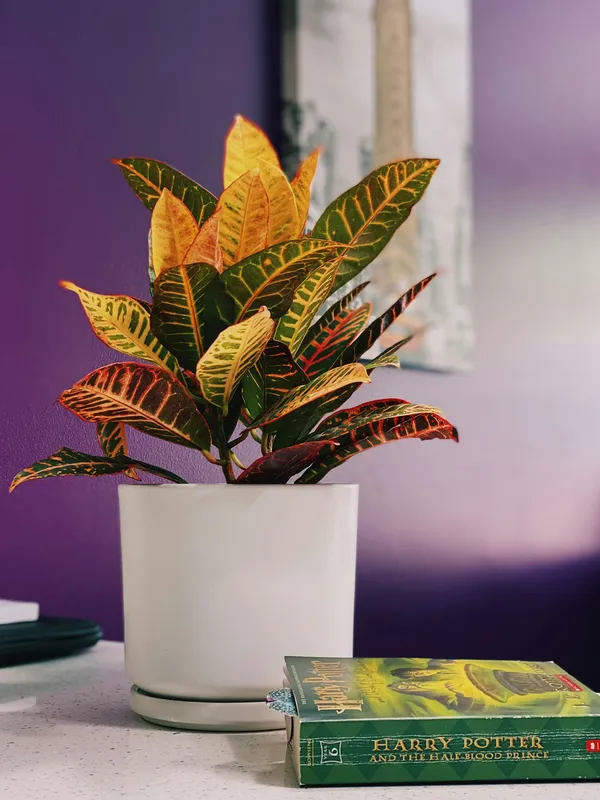
How to Propagate Croton from Stem Cuttings
Here is something nobody tells you about crotons: once you have one that is actually thriving - leaves colorful, no dramatic leaf drops, just vibing in its sunny corner - you are going to want more of them. That is just how it works. You will walk past it on a Tuesday morning and think, “What if I had three of these?”
The good news is that propagating crotons from stem cuttings is totally doable, even if you have never propagated anything before. The bad news is that crotons are, well, crotons. They have opinions about everything, and they will let you know if you mess up.
I have propagated maybe a dozen croton cuttings over the past few years. Some rooted beautifully. A few turned into sad, leafless sticks. Here is everything I have learned so you can skip the sad stick phase entirely.
When to Take Your Cuttings
Timing matters more than you might think. The best window for croton propagation is late spring through early summer, when the plant is in active growth mode and the days are long and warm. Crotons are tropical plants native to Southeast Asia and the Pacific Islands, so they want heat and humidity to push out new roots.
Can you take cuttings in winter? Technically yes, but your success rate will drop significantly. The plant is semi-dormant, temperatures are lower, and everything just moves slower. I tried it once in January because I am impatient like that. Two out of five cuttings survived. In June, I got four out of five. Do with that information what you will.
What You Will Need
Before you start cutting, gather your supplies. There is nothing worse than having a fresh cutting oozing sap while you dig through the garage looking for rooting hormone.
- A healthy, mature croton plant (at least a year old with plenty of growth)
- Clean, sharp pruning shears or scissors (sterilize with rubbing alcohol first)
- Rooting hormone powder or gel (optional but highly recommended)
- Small pots with drainage holes, or clear jars for water propagation
- Well-draining potting mix (perlite and peat moss work great)
- Plastic bags or a clear plastic container for a humidity dome
- Rubber gloves (seriously, do not skip these)
That last item deserves its own paragraph. Crotons produce a milky white sap called latex when you cut them. This sap can irritate your skin and is mildly toxic if ingested. It stained my favorite t-shirt, too. Wear gloves, work on a surface you do not care about, and keep the cuttings away from curious kids and pets.
How to Take the Perfect Cutting
Look for a healthy stem with vibrant, colorful leaves. Avoid any stems that look leggy, yellowed, or stressed - you want the cutting to start from a position of strength.
Step 1: Choose your spot. Find a section of stem that is 4 to 6 inches long with at least 3 to 5 healthy leaves. You want at least two nodes on the cutting (those little bumps where leaves attach to the stem). Roots will grow from these nodes.
Step 2: Make your cut. Cut at a 45-degree angle just below a node. The angled cut gives you more surface area for root development. Make sure your shears are sharp so you get a clean cut rather than a crushed stem.
Step 3: Remove the lower leaves. Strip off the bottom 2 to 3 leaves, leaving only 2 or 3 leaves at the top. This reduces moisture loss through the leaves while the cutting focuses its energy on growing roots.
Step 4: Let the sap dry. Set the cutting aside for about 30 minutes to let the milky sap stop flowing and the cut end callous slightly. This helps prevent rot when you plant it.
Step 5: Apply rooting hormone. Dip the cut end in rooting hormone powder or gel. Tap off any excess. This step is optional, but in my experience it cuts rooting time by a week or more and improves your success rate noticeably.
Method 1: Soil Propagation
This is my preferred method because the roots that develop in soil do not need to transition later, which means less transplant shock.
Fill a small pot (4-inch is perfect) with a light, well-draining mix. I use roughly equal parts perlite and peat moss, or you can use a standard potting mix with extra perlite mixed in. Pre-moisten the soil so it is damp but not waterlogged.
Poke a hole in the center with a pencil or chopstick (any Asian household has chopsticks to spare). Slide the cutting in about 1 to 2 inches deep, making sure at least one node is buried. Firm the soil gently around the base.
Now here is the critical part: humidity. Croton cuttings need consistently high humidity to root successfully. Without it, the leaves will dry out and drop before roots have a chance to form. The easiest solution is to slip a clear plastic bag over the pot, using chopsticks or pencils as tent poles so the bag does not touch the leaves. You can also use a clear plastic storage container as a humidity dome.
Place the whole setup in bright, indirect light. Direct sun through plastic will cook your cutting. Aim for temperatures between 70 and 80 degrees Fahrenheit. If your house is cooler, a heat mat underneath the pot makes a huge difference.
Mist the cutting every few days and open the bag for a few minutes to let fresh air circulate. This prevents mold and fungal issues.
Method 2: Water Propagation
Water propagation is simpler to set up and lets you watch the roots develop in real time, which is honestly pretty satisfying. My kids love checking the jars on the windowsill to see if new roots have appeared.
Place your prepared cutting in a clean glass jar filled with room-temperature water. Make sure the bottom node (or two) is submerged, but keep the remaining leaves above the waterline. Leaves sitting in water will rot, and rotting leaves will ruin your water quality fast.
Set the jar in a warm spot with bright, indirect light. Change the water every 5 to 7 days - this is the step most people skip, and it is why their water propagation attempts fail. Stagnant water breeds bacteria and fungus. Fresh water keeps things clean and oxygenated.
The downside of water propagation is that water roots are different from soil roots. They are more delicate and have to adapt when you eventually transplant to soil. This transition can cause some leaf drop (because of course it can - we are talking about crotons). To ease the transition, gradually add small amounts of soil to the water over a week or two before the final transplant.
How Long Does Rooting Take?
Patience is the hardest part. Croton cuttings typically take 3 to 5 weeks to develop roots, assuming conditions are warm and humid. In cooler or drier conditions, it could take 6 to 8 weeks or more.
You will know roots are developing in soil when you give the cutting a very gentle tug and feel resistance. Do not yank on it - just a light touch. In water, you will see small white nubs appear at the nodes first, then gradually extend into proper roots. Wait until roots are at least 2 inches long before transplanting water-rooted cuttings to soil.
During this waiting period, some leaf drop is normal. Crotons gonna croton. As long as the stem stays firm and green, you are fine. If the stem turns mushy or brown, the cutting has rotted and you should start over with a fresh one.
Common Mistakes (I Have Made Them All)
Not enough humidity. This is the number one reason croton cuttings fail. The cutting has no roots to absorb water, so it relies on the moisture in the air. Skip the humidity dome at your own peril.
Too much direct sun. Mature crotons love bright light, but cuttings in a plastic bag or jar of water need indirect light. Direct sun creates a greenhouse effect that can literally cook the cutting.
Forgetting to change the water. With water propagation, old water becomes a breeding ground for bacteria. Set a reminder on your phone if you have to. Every 5 to 7 days, no exceptions.
Using a dull blade. A crushed stem is more prone to rot and infection than a clean cut. Sharp, sterilized shears make a real difference.
Being too impatient. I once pulled a cutting out of soil after two weeks because “nothing was happening.” There were tiny root nubs just starting to form. I ruined it. Leave your cuttings alone and let them do their thing.
Aftercare: Once Roots Are Established
When your cutting has a healthy root system (you will feel firm resistance when you gently tug, or see 2-plus inches of roots in water), it is time to pot it up properly.
Use a well-draining potting mix in a pot with drainage holes. Do not go too big on the pot - a container just slightly larger than the root ball is ideal. Oversized pots hold too much moisture and can lead to root rot.
Place the newly potted cutting in bright, indirect light for the first week or two, then gradually move it to brighter conditions. Crotons need lots of light to maintain their spectacular colors - without it, new growth will come in mostly green.
Water when the top inch of soil feels dry. These are tropical plants that like consistent moisture but hate sitting in soggy soil. It is a balance, but you will get a feel for it.
Expect some adjustment leaf drop when you transplant. This is normal. Your croton is just being dramatic. Give it consistent conditions - same spot, same watering schedule, no random moves - and it will bounce back with colorful new growth within a few weeks.
Why Bother Propagating?
Aside from the obvious benefit of free plants, propagating crotons lets you share these gorgeous plants with friends and family. They make fantastic gifts, especially when you can say “I grew this one myself.” My mom has three croton cuttings from my Petra that now live on her kitchen windowsill. She says they remind her of me, which I choose to take as a compliment about my colorful personality rather than my dramatic tendencies.
Propagation is also a great way to manage a croton that has gotten too tall or leggy. Instead of just pruning and tossing the cuttings, you are turning one plant into several. That is the kind of math I can get behind.
What to Try Next
If you have successfully propagated your croton, you have got the skills to try stem cuttings on other tropical houseplants too. Pothos, philodendrons, and rubber plants all propagate from stem cuttings using very similar methods. Check out our guides on propagating pothos and philodendrons for your next project.
And if your croton cutting does not make it on the first try, do not sweat it. Take another cutting, adjust your approach, and try again. That is what plant parenting is all about - learning as you go and celebrating the wins when they come.