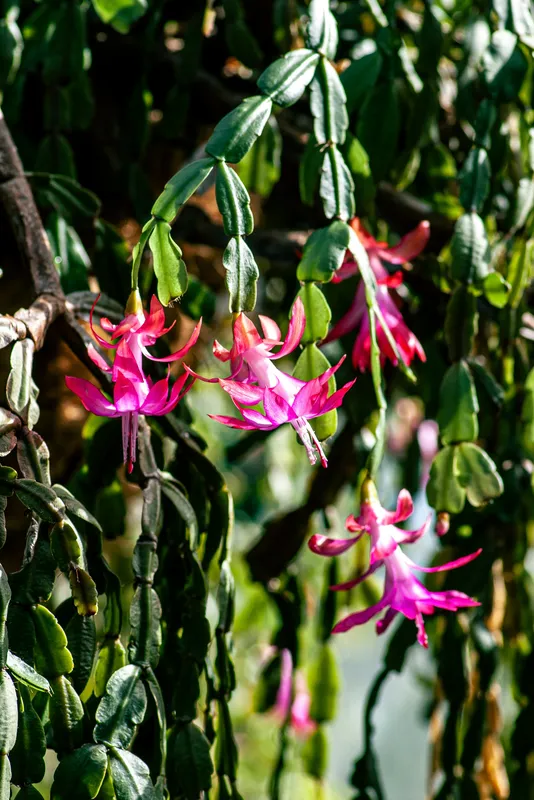
Why Propagate Your Christmas Cactus?
Here is a confession: I have never bought a Christmas cactus in my life. Every single one I own came from a cutting someone handed me - my mom, my aunt, a coworker who was “thinning out” her monster of a plant in the break room. That is kind of the magic of Christmas cactus (Schlumbergera). They are one of the easiest houseplants to propagate, and sharing cuttings is practically a holiday tradition.
If you have a healthy Christmas cactus that has been growing well, you can turn it into five, ten, or twenty new plants with nothing more than a clean twist of the wrist and a little patience. These make incredible gifts, too - hand someone a rooted cutting in a cute pot and you have just given them a plant that might outlive both of you. My mom’s original Christmas cactus is pushing 30 years old, and every cutting she has ever shared is still going strong in someone’s home.
Let us walk through the whole process, step by step.
First Things First: Is It Actually a Christmas Cactus?
Before we get into propagation, here is a fun fact that blew my mind the first time I learned it. Most plants sold as “Christmas cactus” at big box stores are actually Thanksgiving cactus (Schlumbergera truncata). The true Christmas cactus is Schlumbergera x buckleyi, and it is less common in stores.
How to tell the difference? Look at the edges of the stem segments. Thanksgiving cactus has pointy, claw-like teeth along the edges - people sometimes call it “crab cactus” because of this. True Christmas cactus has smooth, scalloped, rounded edges with no points. There is also Easter cactus (Rhipsalidopsis gaertneri), which has more rounded segments with tiny bristles at the joints and blooms in spring.
The good news: the propagation method is exactly the same for all three. So whatever holiday cactus you have on your windowsill, this guide has you covered.
When to Take Cuttings
Timing matters more than you might think. The best time to propagate Christmas cactus is late spring through early summer - roughly May through June. This is when the plant is coming out of its post-bloom rest period and gearing up for active growth. Cuttings taken during this window root faster and establish more quickly.
You can technically take cuttings any time of year except when the plant is actively blooming or in its fall bud-setting phase (September through November). But spring gives you the best odds, and it lines up nicely with the natural pruning the plant benefits from after flowering season.
I usually combine propagation with a light pruning session. My Christmas cactus tends to get a bit leggy over winter, so trimming it back in spring keeps it bushy and gives me a pile of cuttings to work with. Win-win.
How to Take Cuttings
This is the easiest part of the whole process.
Each cutting should be two to five stem segments long. Those flat, leaf-like sections connected at joints - those are your segments. You want at least two for a good cutting, but three or four is the sweet spot.
To take a cutting, gently grasp a stem segment and twist it at the joint where two segments connect. It should snap off cleanly with a slight twisting motion. You can also use clean, sharp scissors or pruning shears if you prefer, but honestly, the twist-and-snap method works perfectly and is how my mom taught me to do it.
A few tips for taking cuttings:
- Choose healthy stems with no signs of damage, mushiness, or discoloration
- Avoid stems that are currently producing buds or flowers
- Take more cuttings than you think you need - not every one will root, and extras make great gifts
- If you are pruning anyway, collect cuttings from the tips where growth is most vigorous
The Callusing Step (Do Not Skip This)
After you take your cuttings, resist the urge to stick them straight into soil. This is the step most beginners skip, and it is the number one reason cuttings rot instead of rooting.
Set your cuttings on a paper towel or plate in a cool, dry spot out of direct sunlight. Leave them there for two to three days. During this time, the cut end will dry out and form a thin, slightly hardened callus. This protective layer prevents moisture from entering the wound and causing rot when you plant the cutting.
I usually just leave mine on the kitchen counter, away from the window. My kids have learned not to touch “dad’s plant stuff on the counter” - mostly because I made the mistake of explaining the whole callusing process in excruciating detail once, and now they find it deeply boring. Parenting win.
Method 1: Rooting in Soil (Recommended)
Soil rooting is my preferred method because it produces stronger root systems and you skip the awkward water-to-soil transition step. Here is how to do it.
What you need:
- Small pots with drainage holes (4-inch pots work great)
- Well-draining potting mix - a 50/50 blend of regular potting soil and perlite is perfect, or you can use a cactus/succulent mix
- A spray bottle for misting
Steps:
- Fill your pots with the moistened potting mix. It should be damp but not soggy - think “wrung-out sponge” level of moisture.
- Poke a small hole in the soil about an inch deep.
- Insert the callused end of your cutting into the hole, burying the bottom segment about a quarter to halfway.
- Gently firm the soil around the cutting so it stands upright. If it wants to flop over, you can prop it against the edge of the pot or use a small stick for support.
- Place the pot in bright, indirect light. An east-facing window is ideal.
- Mist the soil lightly every few days to keep it barely moist - not wet, just slightly damp on top.
You should see roots developing in three to six weeks. You can test by giving the cutting a very gentle tug. If you feel resistance, congratulations - you have roots. If it slides right out, give it more time and check again in a week.
Method 2: Rooting in Water
Water rooting is a great option if you want to watch the roots develop in real time. Kids love this method, and honestly, so do I. There is something deeply satisfying about watching those tiny white roots emerge.
Steps:
- Fill a small glass or jar with room-temperature water. The container should be narrow enough that the cutting can rest with its bottom segment submerged while the rest stays above the waterline.
- Place your callused cutting so that just the bottom segment is in the water.
- Set the container in bright, indirect light.
- Change the water every three to four days to prevent bacterial buildup. Fresh water is important - stagnant water is the enemy.
- Roots should appear within two to four weeks.
Once the roots are about an inch long, it is time to transfer to soil. Be gentle during this transition - water roots are more fragile than soil roots. Plant the rooted cutting in a well-draining mix, keep the soil slightly moist for the first couple weeks, and let it adjust to its new growing medium.
One downside of water rooting: the roots that develop in water are structurally different from soil roots. The plant needs to grow a second set of roots adapted to soil, which can cause a brief period of stress during the transition. This is totally normal, and the plant will bounce back, but it is one reason I generally recommend soil rooting when possible.
Aftercare: Helping Your New Plants Thrive
Once your cuttings are rooted and growing, here is how to set them up for long-term success.
Light: Bright, indirect light is the sweet spot. A few hours of gentle morning sun is fine, but avoid harsh afternoon sun, which can scorch the segments. These are tropical forest plants in the wild - they grow in the dappled shade beneath tree canopies.
Water: Let the top inch of soil dry out between waterings. Christmas cactus likes more moisture than your typical desert cactus, but it does not want to sit in wet soil. Water more frequently in spring and summer when the plant is actively growing, and cut back in fall and winter.
Humidity: These plants appreciate some humidity since they are native to the cloud forests of southeastern Brazil. If your home is dry (hello, winter heating), misting occasionally or placing the pot on a tray of pebbles with water can help.
Fertilizer: Once new growth appears - usually a few months after rooting - you can start feeding with a balanced liquid fertilizer diluted to half strength. Feed once a month during the growing season (spring and summer) and stop in fall and winter.
Repotting: Christmas cactus actually likes being a little snug in its pot. Do not rush to repot into a larger container. Wait until the plant has filled its current pot and you see roots coming out of the drainage holes.
Common Mistakes (And How I Learned the Hard Way)
Overwatering freshly planted cuttings. This is the biggest killer. The cutting does not have roots yet, so it cannot absorb much water. Soggy soil equals rot. Keep it barely moist, not wet.
Skipping the callusing step. I tried planting fresh cuttings directly into soil exactly once. Out of eight cuttings, six turned to mush within a week. Lesson learned.
Too much direct sun. New cuttings are vulnerable. Strong direct light can stress them out before they have established roots. Stick to indirect light until the plant is actively growing.
Taking cuttings during bloom season. The plant is putting all its energy into flowers during November and December. Taking cuttings at this time stresses the parent plant and gives you weaker cuttings that are less likely to root.
Using heavy soil. Regular potting soil straight from the bag holds too much moisture. Always amend with perlite, pumice, or coarse sand to improve drainage.
The Gift That Keeps on Giving
One of my favorite things about Christmas cactus is the tradition of passing them along. My mom gave me my first cutting when I moved into my first apartment after college. It was three segments long, tucked into a yogurt cup with some soil. That cutting is now a sprawling plant that fills a 10-inch pot, and I have given away probably 30 cuttings from it over the years.
There is something really special about a plant that carries a piece of its history with it. Every cutting is genetically identical to the parent - a living connection to whoever shared it with you. My kids are still a little young to appreciate this, but I am already planning to send them off to college with cuttings from the same plant my mom started for me. Circle of life, plant dad edition.
So go ahead - twist off a few segments, let them callus, stick them in some soil, and wait. In a few weeks, you will have brand new plants ready to grow, bloom, and eventually be shared with the next person who admires the flowers on your windowsill.
Quick Reference
- Best time to propagate: Late spring to early summer (May-June)
- Cutting size: 2-5 stem segments
- Callusing time: 2-3 days in a cool, dry spot
- Rooting time: 3-6 weeks in soil, 2-4 weeks in water
- Light needs: Bright, indirect light
- Soil: Well-draining mix (50/50 potting soil and perlite)
- Watering: Keep barely moist until rooted, then water when top inch is dry