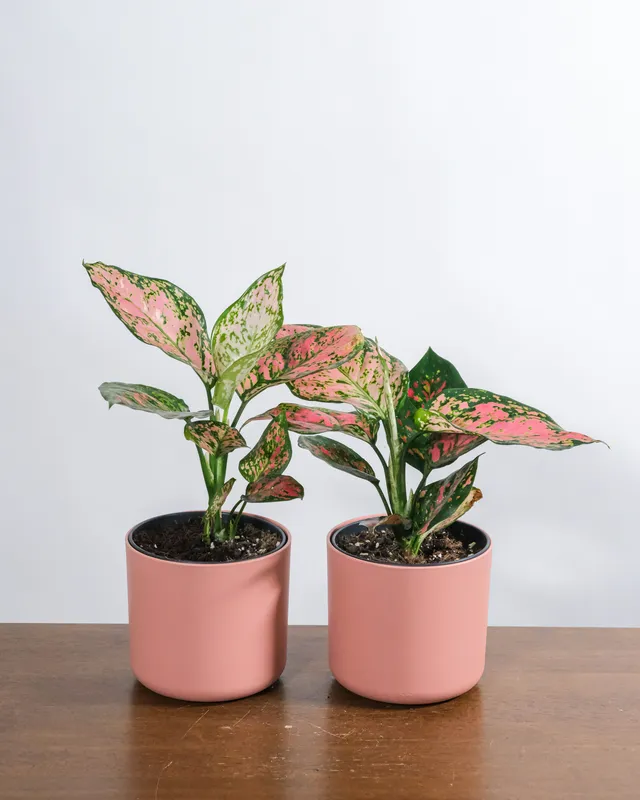
How to Propagate Chinese Evergreen (Aglaonema): Three Methods That Actually Work
My Chinese Evergreen was the first plant I ever kept alive for more than a year. I bought it from a grocery store clearance rack for four dollars, mostly because it looked impossible to kill. That was five years ago. It has survived a cross-country move, a toddler who thought it was a drum, and at least two extended periods where I completely forgot it existed.
So when it finally got big enough to split, I felt weirdly emotional about it. Like, this plant had been through things with me. But it was also getting crowded in its pot, pushing out babies left and right, and clearly ready to become more than one plant. The circle of life, houseplant edition.
If you have got an Aglaonema that is outgrowing its space - or you just want more of a good thing - propagation is surprisingly simple. Chinese Evergreens are forgiving plants, and they propagate well through a few different methods. Here is what actually works, what sort of works, and what I would skip entirely.
When to Propagate
Timing matters more than you might think. Spring and early summer are your best bet - the plant is actively growing, days are getting longer, and it has the energy to recover from being divided or cut.
Can you propagate in winter? Technically, yes. Should you? Probably not, unless you enjoy watching cuttings sit in water for three months doing absolutely nothing. I have tried it. The cutting survived, but it took so long to root that I genuinely forgot what plant it was supposed to be.
The ideal time is when you are already repotting your Aglaonema in spring. You are going to have the root ball exposed anyway, so you might as well check if there are any natural divisions waiting to happen.
Method 1: Division (The Easiest and Best Method)
Division is the hands-down winner for Chinese Evergreen propagation. It is the fastest, the most reliable, and it gives you plants that are already established with their own root systems. If your Aglaonema has multiple stems growing from the base - and most mature ones do - this is the way to go.
What You Need
- Your overgrown Aglaonema
- A clean, sharp knife or your hands (seriously, sometimes you can just pull them apart)
- Fresh potting mix (something well-draining - regular potting soil with perlite mixed in works great)
- Pots with drainage holes for each division
- Watering can
Step by Step
Unpot the plant. Water it a day before you plan to divide it. This makes the soil easier to work with and reduces stress on the roots. Tip the pot sideways and gently slide the whole root ball out. If it is stuck, squeeze the sides of a plastic pot or run a butter knife around the inside edge.
Assess the situation. Look at the root ball and identify natural groupings. Most mature Chinese Evergreens have multiple stems coming up from separate root clusters. You are looking for spots where you can separate these clusters without ripping through a ton of roots.
Separate the divisions. For loosely connected clusters, you can often just gently pull them apart with your hands while teasing the roots free. If they are tangled or connected by a thick rhizome, use a clean knife to cut between them. Each division should have at least two or three stems and a healthy chunk of roots.
Pot them up. Plant each division in fresh, well-draining potting mix at roughly the same depth it was growing before. Water thoroughly until it drains from the bottom.
Aftercare. Keep your new plants in medium indirect light (no direct sun - they will be stressed enough already) and keep the soil lightly moist for the first couple of weeks. They might droop a bit for a few days. This is normal. Do not panic-water them. They will perk up.
I divided my original grocery store Aglaonema into three plants two years ago. All three are thriving. One lives at my desk at work, one went to my mom (who immediately gave it a Chinese name and started talking to it), and the original is still going strong in the living room. It honestly looks better than it did before the split because it is not so crowded anymore.
Method 2: Stem Cuttings in Soil
Stem cuttings work well for Chinese Evergreen, especially if your plant has gotten leggy or you want to use trimmings from a pruning session rather than waste them.
What You Need
- Sharp, clean scissors or pruning shears
- A small pot with drainage holes
- Well-draining potting mix (perlite-heavy is good)
- Rooting hormone (optional but it helps)
- A clear plastic bag or humidity dome
Step by Step
Choose your stem. Pick a healthy stem that is at least 4 to 6 inches long with a few leaves. Look for a visible node - that slightly swollen area where a leaf meets the stem. This is where roots will develop.
Make the cut. Snip just below a node at a slight angle. If you are taking multiple cuttings, you can cut a longer stem into segments, each with at least one node and one leaf.
Apply rooting hormone. This step is optional but genuinely helpful with Aglaonema. Dip the cut end in rooting powder and tap off the excess. It speeds things up noticeably - we are talking weeks faster in my experience.
Plant the cutting. Poke a hole in moist potting mix with a pencil (so you do not wipe off the rooting hormone by shoving the stem straight in) and insert the cutting about two inches deep. Firm the soil gently around it.
Create humidity. Chinese Evergreens root faster with some extra humidity. Pop a clear plastic bag over the pot, supported by a chopstick or pencil so it does not touch the leaves. This makeshift greenhouse keeps moisture in without suffocating the cutting.
Wait patiently. Keep the soil lightly moist and the cutting in warm, indirect light. Roots typically develop in 4 to 6 weeks. You will know it is working when you see new growth emerging from the top. Give it a very gentle tug - if there is resistance, roots have formed.
The Honest Truth About Stem Cuttings
Stem cuttings have a lower success rate than division. I would say I get about 70 to 80 percent of my Aglaonema stem cuttings to root successfully, compared to essentially 100 percent with division. The ones that fail usually rot at the base because the soil was too wet. If you err on the drier side and make sure your pot has good drainage, your odds go way up.
Method 3: Water Propagation
I know, I know. Water propagation is satisfying because you can watch the roots grow. There is something deeply rewarding about checking on a cutting every morning and seeing tiny white roots emerging. But I am going to be honest with you - water propagation is my least favorite method for Chinese Evergreen.
Why I Am Not a Huge Fan
Chinese Evergreen does root in water. It will send out these delicate white roots over a few weeks, and it looks great in a cute glass jar on your windowsill. The problem is the transition back to soil. Water roots and soil roots are structurally different, and Aglaonema does not handle the switch as gracefully as, say, pothos or philodendron. I have lost a few cuttings during the soil transition that rooted perfectly well in water.
If You Want to Try It Anyway
Take a stem cutting as described above. Place it in a clean jar of room-temperature water with the node submerged and leaves above the waterline. Change the water every 3 to 4 days. Roots should appear in 2 to 4 weeks.
When roots are about 2 inches long, transfer to a very loose, well-draining potting mix. Keep the soil consistently moist (more than you normally would for an Aglaonema) for the first couple of weeks while the water roots adapt. Do not let it dry out during this period.
Some tips to improve your success rate with the soil transition: use a really chunky mix with lots of perlite so the roots get airflow, keep the pot on the smaller side, and gradually reduce watering over 2 to 3 weeks to help the roots adapt.
Common Mistakes to Avoid
Dividing a plant that is too small. If your Aglaonema only has one or two stems, it is not ready to divide. Wait until it has at least four or five stems so each division has enough to sustain itself.
Propagating a stressed plant. If your Chinese Evergreen is already dealing with pests, root rot, or has been recently repotted, give it time to recover before propagating. Adding more stress to a struggling plant is a recipe for losing both the parent and the cutting.
Overwatering after propagation. This is the number one killer. New cuttings and divisions need moisture, but they also need oxygen around their roots. Soggy soil leads to rot faster than you think. Water when the top inch of soil is dry and make sure the pot drains freely.
Skipping the humidity for stem cuttings. Aglaonema cuttings without a humidity setup dry out quickly. That plastic bag trick looks silly, but it makes a real difference.
Using a pot that is too big. When potting up divisions or rooted cuttings, go with a pot that is just slightly larger than the root mass. A huge pot holds too much moisture around small root systems, and that is a one-way ticket to root rot city.
Caring for Your New Plants
Once your propagated Chinese Evergreens have established themselves (usually 3 to 4 weeks for divisions, 6 to 8 weeks for cuttings), you can treat them like any other Aglaonema:
Light. Medium to low indirect light. These are famously low-light tolerant, which is part of why they are so popular. They will grow faster in brighter conditions, but direct sun will scorch the leaves.
Water. Let the top inch or two of soil dry between waterings. Aglaonema are more forgiving of underwatering than overwatering. When in doubt, wait another day.
Soil. A standard well-draining potting mix works great. I use regular potting soil mixed with about 30 percent perlite.
Temperature. Keep them above 60 degrees Fahrenheit. They are tropical plants and they get cranky in the cold. Keep them away from drafty windows and AC vents.
Humidity. Average household humidity is fine for established plants. They appreciate higher humidity but they do not demand it the way calatheas do.
Which Method Should You Choose?
If your plant has multiple stems and you are repotting anyway, go with division. It is the fastest route to a fully established new plant with the highest success rate.
If you are pruning a leggy plant and want to use the cuttings, go with stem cuttings in soil. It takes longer than division but it is reliable.
If you just want one cutting to root in a pretty jar on your desk and you accept the risk of the soil transition, water propagation works. Just manage your expectations.
Personally, I have gotten the most joy out of division. There is something special about taking a plant that has been with you for years, splitting it into pieces, and watching each piece thrive independently. My mom’s division of my original plant is now bigger than mine. She will not let me forget it.
Whatever method you choose, remember that Chinese Evergreen is one of the more forgiving houseplants out there. Even if a cutting does not make it, the parent plant will bounce back from the trimming with no hard feelings. That is the beauty of Aglaonema - they are tough, they are patient, and they are always ready to give you another chance.