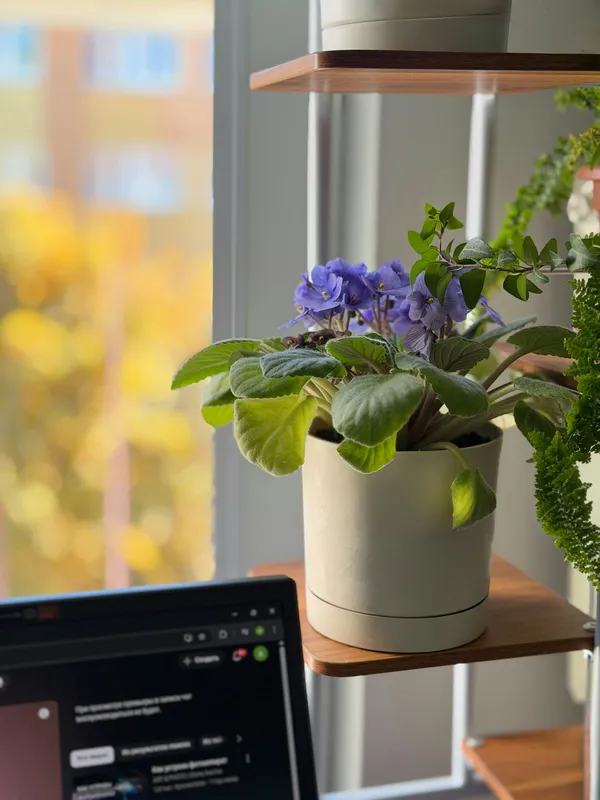
How to Propagate African Violets from Leaf Cuttings
My wai po had three African violets on her kitchen windowsill in Queens. By the time I was in college, half the aunties in her building had African violets too. I always assumed she bought them as gifts. Turns out she was propagating them from single leaves and handing out baby plants like candy at Chinese New Year.
It took me embarrassingly long to learn this trick. African violets are one of the easiest houseplants to propagate, and you don’t need rooting hormone, a humidity dome, or any fancy equipment. One healthy leaf, some soil, and a few weeks of patience - that’s it.
If you’ve been paying $12 for African violets at the garden center when you already have one on your shelf, this guide is about to save you a lot of money.
Why Leaf Propagation Works So Well
Most houseplant propagation relies on stem cuttings with a node. African violets are different. Each leaf has the ability to produce entirely new plantlets from the cut end of its petiole (that’s the stem connecting the leaf to the plant). One leaf can produce multiple baby plants, which means a single mother plant can eventually become five, ten, or twenty new violets.
This is how collectors end up with entire shelves of African violets. It starts innocently enough. You try one leaf cutting. It works. You try three more. Suddenly you’re that person at the farmers market giving away plants from a cardboard box. (No judgment. My wai po was that person, and she was beloved for it.)
When to Propagate
You can propagate African violets any time of year since they’re indoor plants, but spring and early summer tend to give the fastest results. The slightly longer days and warmer temperatures speed up root development and plantlet growth.
Avoid propagating from a plant that’s stressed, recently repotted, or recovering from pest issues. You want the mother plant to be healthy and actively growing so the leaf cutting has the best possible start.
Choosing the Right Leaf
This is the most important step, and it’s where a lot of people go wrong. Don’t grab the newest tiny leaf from the center of the plant, and don’t pick the oldest, toughest leaf from the outer ring either.
Go for the middle row. Count from the center of the rosette outward - the third or fourth row of leaves is your sweet spot. These leaves are mature enough to have the energy reserves for producing babies, but young enough to still be vigorous.
What to look for:
- A firm, healthy leaf with no brown spots, yellowing, or pest damage
- Good color - a rich, consistent green
- A sturdy petiole (leaf stem) that isn’t limp or mushy
- No signs of rot or soft spots
If you’re choosing between two good candidates, pick the one that looks the most vibrant. The healthier the leaf, the faster it’ll produce plantlets.
Method 1: Soil Propagation (Recommended)
Soil propagation is the method I recommend for most people. It’s more hands-off than water propagation, and the baby plants don’t need to transition from water to soil later.
What you’ll need:
- A healthy leaf cutting
- A clean, sharp knife or razor blade
- A small pot (2-3 inches) with drainage holes
- A light, airy potting mix (equal parts perlite and vermiculite works great, or use a commercial African violet mix)
- A clear plastic bag or small container for humidity (optional but helpful)
- A pencil or chopstick
Step-by-step:
-
Cut the leaf. Using a clean, sharp blade, cut the leaf from the mother plant. Leave about 1 to 1.5 inches of the petiole attached to the leaf. Cut the petiole at a 45-degree angle - this increases the surface area where roots and plantlets will form.
-
Let it callus. Set the cutting aside on a paper towel for about 30 minutes to an hour. This lets the cut end dry slightly and helps prevent rot when you stick it in soil. Don’t skip this step. I skipped it the first time and lost two cuttings to mushiness.
-
Prepare your pot. Fill your small pot with pre-moistened potting mix. The soil should be damp but not dripping - squeeze a handful and if water runs out, it’s too wet.
-
Plant the cutting. Use a pencil or chopstick to make a small hole in the soil at a 45-degree angle. Insert the petiole so it’s about half an inch to an inch deep. Gently firm the soil around it so the leaf stays upright. The leaf blade should be resting just above the soil surface.
-
Create humidity (optional). Place a clear plastic bag loosely over the pot or use a clear plastic container as a dome. This keeps humidity up around the cutting, which helps with root development. Poke a few holes in the bag for airflow - you don’t want a sealed, stagnant environment.
-
Find the right spot. Place the pot in bright, indirect light. An east-facing window is ideal. Avoid direct sun, which can cook the cutting through the plastic. Keep the temperature between 70 and 78 degrees Fahrenheit.
-
Water carefully. Keep the soil consistently moist but never soggy. Water from the bottom by setting the pot in a shallow dish of water for 15-20 minutes, then draining the excess. Bottom watering prevents water from sitting on the leaf and causing rot.
Method 2: Water Propagation
Water propagation is fun because you can watch the roots develop in real time. It’s a little more hands-on, and the plantlets will eventually need to transition to soil, but it’s satisfying if you like seeing the process.
What you’ll need:
- A healthy leaf cutting (prepared the same way as above)
- A small glass, jar, or bottle
- Plastic wrap or a small piece of foil
- Fresh water (room temperature)
Step-by-step:
-
Prepare the leaf. Cut a healthy leaf with about 1.5 inches of petiole, angled at 45 degrees. Let it callus for 30 minutes.
-
Set up the glass. Fill a small glass with room-temperature water. Cover the top with plastic wrap and poke a hole in the center, or use a narrow-necked bottle. The goal is to keep the leaf blade above the water while the petiole dips into it.
-
Position the cutting. Thread the petiole through the hole so it hangs in the water. The leaf itself should stay dry and above the waterline.
-
Maintain the water. Change the water every 5-7 days to keep it fresh and prevent bacterial growth. Top it off as needed so the petiole stays submerged.
-
Wait for roots. You should see tiny white roots forming within 2-4 weeks. Keep going until the roots are about an inch long and you see the beginning of tiny plantlets (small clusters of baby leaves) at the base.
-
Transition to soil. Once plantlets have a few leaves each, carefully plant the whole thing in a small pot with African violet potting mix. Water gently and keep humidity high for the first week or two while the roots adapt.
The Waiting Game
Here’s the part nobody warns you about: propagating African violets is slow. I don’t mean spider-plant-pup slow. I mean genuinely, test-your-patience slow.
Expected timeline:
- Weeks 1-3: Roots begin forming at the cut end of the petiole. You won’t see anything above the soil line. This is the “did I kill it?” phase. You probably didn’t. Leave it alone.
- Weeks 4-8: Root system develops and anchors the cutting. The mother leaf might look a little tired. That’s normal - it’s feeding the babies forming underground.
- Weeks 8-14: Tiny plantlets (called “babies” or “pups”) emerge at the base of the petiole. They’ll look like a miniature cluster of African violet leaves poking out of the soil. This is the moment you’ve been waiting for.
- Months 4-6: Plantlets grow large enough to separate and pot individually. Each one should have at least 3-4 leaves and its own root system before you separate it.
The whole process from cutting to independent plant takes roughly 4-8 months. Yes, months. My first attempt, I checked the pot every single day for two months and saw nothing. I was ready to compost the whole thing when suddenly three tiny plantlets appeared overnight. Patience pays off.
Separating the Babies
Once your plantlets have 3-4 leaves each and are about an inch tall, they’re ready to leave the nest.
-
Gently unpot the whole cluster. Tip the pot on its side and ease out the soil and root mass. Be gentle - the roots are delicate.
-
Tease the plantlets apart. Each baby will have its own small root system attached to the base of the mother leaf’s petiole. Carefully separate them, using your fingers or a clean knife if they’re tangled. Try to keep as many roots intact as possible.
-
Pot each baby individually. Use small 2-inch pots with fresh African violet mix. Plant each baby at the same depth it was growing before. Water gently.
-
Give them the VIP treatment. Keep the newly potted babies in bright indirect light, maintain consistent moisture, and avoid fertilizing for the first 2-3 weeks while they establish.
The mother leaf can sometimes produce a second or even third round of plantlets if it’s still healthy. If it looks spent and yellowed after the first batch, it’s done its job - compost it with gratitude.
Common Mistakes and How to Avoid Them
The petiole rots before rooting. This usually means the soil is too wet or you skipped the callusing step. Make sure your potting mix is well-draining and only moist, not saturated. Always let the cut end dry before planting.
Nothing happens for months. Welcome to African violet propagation. If the leaf is still firm and green, it’s probably working underground. Resist the urge to dig it up and check. The most common reason for failure is impatience leading to disturbance.
The mother leaf dies before plantlets appear. Sometimes a leaf doesn’t have enough energy to produce babies. It happens. Try again with a different, healthier leaf. Propagation success rates are typically around 80-90%, so the occasional failure is normal.
Plantlets are leggy and reaching. They’re not getting enough light. Move them closer to a window or supplement with a small grow light. African violet plantlets need bright, indirect light to grow compact and healthy.
Mold on the soil surface. Too much humidity with not enough airflow. Remove the humidity dome, let the soil surface dry slightly, and make sure the pot has drainage. A tiny fan nearby can help with air circulation.
Tips From a Recovering Plant Hoarder
Once you get good at this, the temptation to propagate every leaf is real. Here are some things I wish someone had told me before I ended up with 30 African violets and no windowsill space:
- Start with 2-3 leaves at a time. Each leaf can produce multiple plantlets. Three successful cuttings can easily give you 10 or more new plants.
- Label your varieties. If you’re propagating from different colored violets, label the pots. Trust me. They all look the same as babies, and you won’t remember which is which six months later.
- Give them away. African violet babies make genuinely great gifts. Pot them up in cute small containers and give them to friends, neighbors, and coworkers. My wai po was onto something with her building-wide violet distribution program.
- Different varieties root at different speeds. Some cultivars produce plantlets in 6 weeks. Others take 4 months. Don’t compare across varieties.
What to Do Next
If this is your first time propagating African violets, start with the soil method - it’s the most forgiving. Pick your best-looking leaf today, make the cut, and set yourself a calendar reminder for 8 weeks from now to check for babies.
If you don’t have an African violet yet, check out our care guide to get started with your mother plant first. Once she’s happy and established, come back here and start multiplying.
And if you end up with more African violets than you know what to do with? Congratulations. You’ve officially achieved grandma status. Wear it with pride.