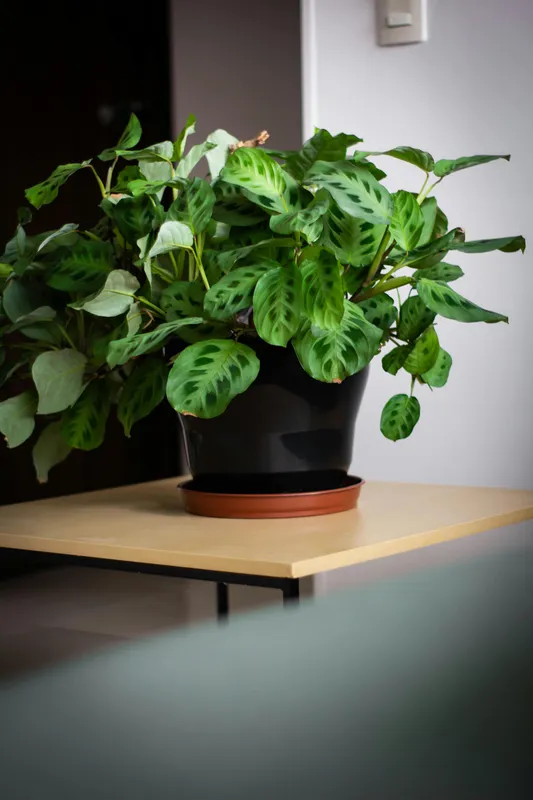
Prayer Plant Care: Why Maranta Folds Its Leaves at Night (And How to Keep It Happy)
The first time I saw a prayer plant close its leaves at sunset, I thought something was wrong. I panicked, googled “prayer plant dying leaves closing,” and prepared to add another name to my plant casualty list. Turns out the plant was just… going to sleep.
Maranta leuconeura, commonly called the prayer plant, folds its leaves upward every evening like little hands pressed together - hence the name. In the morning, the leaves unfold flat again to catch the light. It is one of the coolest things you will ever see a houseplant do, and it never gets old. My four-year-old calls it “the plant that does bedtime” and honestly, that is a better name than anything the botanists came up with.
If you have been eyeing a prayer plant at your local nursery or scrolling past those gorgeous patterned leaves on Instagram, here is everything you need to know to actually keep one alive. Spoiler: they are not as difficult as the internet makes them sound.
Meet the Maranta Family
Before we get into care, let’s talk varieties. When people say “prayer plant,” they almost always mean Maranta leuconeura, but there are a few popular versions you will run into.
Red Prayer Plant (var. erythroneura) - This is the one you have probably seen everywhere. Deep green leaves with striking red veins that create a herringbone pattern. It is the most popular variety for good reason - those veins look like someone hand-painted them.
Rabbit’s Foot (var. kerchoveana) - Light green leaves with dark brown spots between the veins that supposedly look like rabbit tracks. I see it. Kind of. If you squint. Either way, it is a handsome plant with a slightly more muted look than the red variety.
Lemon Lime - A showstopper with bright yellow-green variegation and pale yellow veins on dark green leaves. This one really pops on a shelf or side table and has been getting more popular in the last couple years.
Black Prayer Plant (var. massangeana) - Dark, almost black-looking leaves with silver markings along the midrib. This one is harder to find but worth hunting down if you like dramatic foliage.
All of these have the same basic care needs, so everything below applies regardless of which variety catches your eye.
A Quick Note on the Calathea Confusion
If you already have Calatheas, Stromanthes, or Ctenanthes, you might notice they also fold their leaves at night. That is because they are all in the same family - Marantaceae. Think of them as cousins. Marantas are generally considered the most forgiving of the bunch, which is great news if you have tried and failed with a Calathea before. Same cool leaf movement, slightly less drama.
Light: Bright but Not Direct
Prayer plants are understory plants in their native tropical forests of Brazil, which means they evolved to thrive in dappled, filtered light - not direct sun blasting through a south-facing window.
Here is what works:
- A north-facing window is basically perfect
- An east-facing window where they get gentle morning sun is also great
- A few feet back from a south or west window, or behind a sheer curtain
- They tolerate low light better than most patterned plants, but the leaf colors and patterns will be more vibrant with bright indirect light
What to avoid: direct afternoon sun. Those beautiful patterned leaves will fade and can actually scorch. I learned this the hard way when I put mine on a west-facing windowsill during summer. The leaves looked like they got a sunburn, because they literally did.
Water: The Goldilocks Approach
Watering is where most people either over-love or under-love their prayer plant. You want the soil consistently moist but never soggy. Think of a wrung-out sponge - damp, not dripping.
When to water: Stick your finger about an inch into the soil. If it feels dry, water thoroughly until it drains out the bottom. If it still feels damp, check again in a day or two. During winter, you will water less frequently since the plant slows down its growth.
Water quality matters (seriously). This is the one thing that catches a lot of people off guard. Prayer plants are sensitive to the chemicals in tap water - chlorine, fluoride, and mineral salts can all cause brown leaf tips over time. You have two easy options:
- Let tap water sit out in an open container overnight so the chlorine evaporates
- Use filtered water from a basic pitcher filter
I keep a gallon jug of water on my kitchen counter that I refill from the tap and let sit. Is it a little extra? Maybe. But my prayer plant stopped getting crispy tips once I switched, so I am not going back.
Humidity: This Is the Big One
If there is one thing that separates thriving prayer plants from sad, crispy ones, it is humidity. These are tropical plants that want 50-65% humidity at minimum, and they are happiest closer to 60-70%.
Most homes, especially in winter with the heat running, sit around 30-40% humidity. That is a problem.
Here is what actually works:
A small humidifier - This is the gold standard. Put a cool-mist humidifier near your plant cluster and run it during the day. This is what finally made the difference for my Marantas. If you have multiple tropical houseplants, a humidifier pays for itself in reduced plant drama.
Grouping plants together - Plants release moisture through transpiration, so clustering your tropicals together creates a little microclimate with higher humidity. Is it as effective as a humidifier? No. Does it help? Absolutely.
Pebble tray - Fill a tray with pebbles, add water to just below the top of the pebbles, and set your pot on top. As the water evaporates, it humidifies the air right around the plant. Low-effort and surprisingly effective.
Bathroom placement - If your bathroom gets decent light, it is basically a free humidity boost. The steam from showers creates the tropical conditions Marantas love. I keep one on the bathroom shelf and it is legitimately my healthiest specimen.
Misting - Look, I will be real: misting is the most popular advice and probably the least effective option. You would need to mist several times a day to meaningfully raise humidity, and wet leaves sitting in stagnant air can invite fungal problems. It is not harmful in small doses, but do not rely on it as your sole humidity strategy.
Soil and Potting
Prayer plants want well-draining soil that retains some moisture without getting waterlogged. Here is a simple mix that works great:
- 1 part regular potting mix
- 1 part peat moss (or coco coir if you prefer a more sustainable option)
- 1 part perlite
This gives you the moisture retention the plant wants without the sogginess that leads to root rot. Prayer plants have relatively shallow root systems, so they do not need deep pots. A standard pot that is one size up from the nursery pot is perfect when it is time to repot.
Speaking of repotting, these are not fast growers. You will probably only need to repot every two years or so, and spring is the best time to do it. If you see roots circling the bottom of the pot or poking out of drainage holes, it is time.
One more thing: make sure your pot has drainage holes. I know, I say this in every care guide. But with a plant that wants consistent moisture, the temptation to skip drainage is real, and root rot is not a drama you want to deal with.
Temperature: Keep It Comfortable
If you are comfortable in your home, your prayer plant probably is too. They like temperatures between 65-80 degrees Fahrenheit (18-27 degrees Celsius) and do not appreciate sudden changes.
Watch out for:
- Cold drafts from windows or exterior doors in winter
- Hot, dry air from heating vents
- Air conditioning blowing directly on the plant
Basically, do not put your prayer plant in the path of any vent or drafty spot. They are drama-free about a lot of things, but cold air will make them sulk.
Feeding
During spring and summer, feed your prayer plant once a month with a balanced liquid fertilizer diluted to half strength. In fall and winter, stop fertilizing entirely - the plant is resting and does not need the extra nutrients.
Over-fertilizing is worse than under-fertilizing with these plants. Too much fertilizer causes salt buildup in the soil, which burns those delicate shallow roots and shows up as - you guessed it - brown leaf tips. If you have been heavy-handed with the fertilizer, flush the soil by running water through the pot for a few minutes to wash out excess salts.
Propagation: Free Plants for Friends
One of the best things about prayer plants is how easy they are to propagate. You have two main options.
Division (the easy way): When you repot in spring, gently pull apart the root ball into sections. Each section should have a few stems and a healthy chunk of roots. Pot each division into its own container with fresh soil, water well, and keep humidity high for a few weeks while they settle in. This is by far the easiest and most reliable method.
Stem cuttings (also pretty easy): Cut a stem just below a node - that is the little bump where leaves and roots emerge. Make sure your cutting has at least two or three leaves. You can root it in water (change the water every few days) or directly in moist soil. Roots should appear in two to four weeks. I usually go the water route because watching roots grow is weirdly satisfying and makes good entertainment when the kids are bored.
Common Problems and How to Fix Them
Brown leaf tips - Almost always a humidity or water quality issue. Increase humidity and switch to filtered water. Cut off the brown tips with clean scissors if they bother you - the damage will not spread and trimming them is purely cosmetic.
Curling leaves - Usually means the plant is too dry, either the soil or the air. Check if the soil has dried out completely and water thoroughly. If the soil is moist, the air humidity is probably too low.
Yellowing leaves - Could be overwatering, especially if the soil stays soggy. Check the roots for rot - healthy roots are white and firm, rotted roots are brown and mushy. If you catch it early, repot into fresh dry soil and back off the watering.
Fading leaf patterns - Not enough light. Move the plant to a brighter spot with indirect light and those patterns should come back with new growth.
Leaves not closing at night - If the plant seems healthy otherwise, it might be getting light at night from lamps or screens. The folding behavior responds to light cues, so a dark room at night helps. That said, some older leaves just stop closing and that is normal.
Why I Think Every Plant Parent Should Try One
I will admit I was intimidated by prayer plants for a long time. All the care guides I read online made them sound like high-maintenance divas that would throw a tantrum if you looked at them wrong. But after a year with my first one, I can tell you: they are way more forgiving than their reputation suggests.
Yes, they want humidity. Yes, they prefer filtered water. But they also tolerate lower light than most beautiful foliage plants, they are completely non-toxic to cats and dogs (a huge deal in our house with two curious cats), and they give you that incredible leaf-folding show every single night for free.
My advice? Start with a Red Prayer Plant. They are the most widely available, usually affordable, and the red herringbone veining is spectacular. Put it somewhere with decent indirect light, keep the humidity reasonable, and do not overthink the watering. You will be fine.
And the first time you catch those leaves closing up at sunset, you will understand why plant people get obsessed with these things. It is like having a tiny piece of the Brazilian rainforest in your living room - one that puts itself to bed before your kids do.