Ponytail Palm Care: The Unkillable Plant That Looks Like It Has Better Hair Than You
I bought my first ponytail palm at a sidewalk sale in Chinatown about four years ago. The guy running the stand had it tucked between some lucky bamboo and a stack of ceramic cats, and something about its wild cascade of curly leaves caught my eye. It looked like a tiny tree having the best hair day of its life.
I brought it home, set it on a shelf near a south-facing window, and then - I am being completely honest here - I forgot about it for about three weeks. When I finally noticed it again, it looked exactly the same. Maybe even a little better. That was the moment I knew this plant and I were going to get along just fine.
If you are someone who loves plants but also forgets they exist sometimes - if you travel, if your weekends are chaos, if you have a toddler who requires 97% of your attention - the ponytail palm might be the most rewarding houseplant you can own.
What Even Is a Ponytail Palm?
Despite the name, the ponytail palm (Beaucarnea recurvata) is not actually a palm at all. It is a member of the asparagus family (Asparagaceae), native to the semi-desert regions of southeastern Mexico. In the wild, these things can grow over 15 feet tall with a trunk several feet wide. Indoors, they stay much more manageable - usually topping out at about 3 to 4 feet over many years.
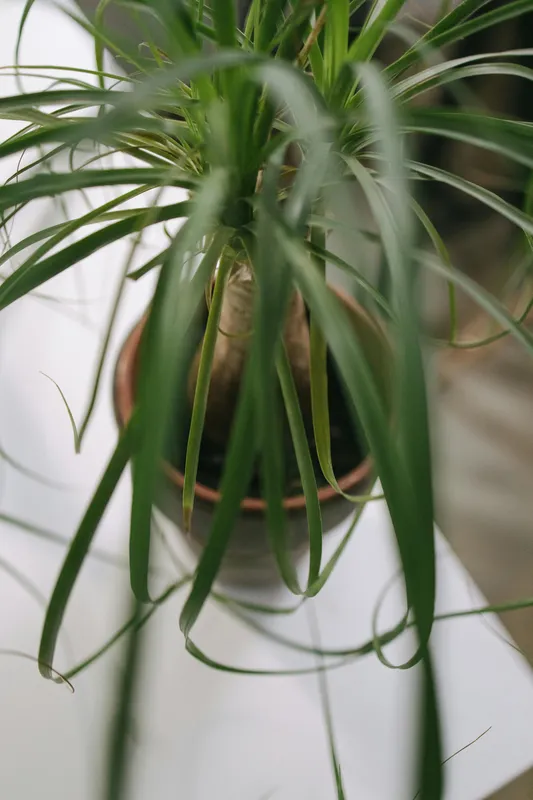
The defining feature is that big, bulbous base. That swollen trunk is called a caudex, and it stores water like a camel’s hump. This is why the plant is so drought-tolerant - it has literally evolved to keep its own water supply on hand. The long, thin leaves cascade from the top like a green fountain, which is where the “ponytail” name comes from.
You might also see it sold as the elephant foot tree, which honestly is a more accurate name. That bulging base really does look like a big gray foot.
Light Requirements
The ponytail palm wants bright light. Lots of it. A south-facing or west-facing window is ideal. It can handle direct sunlight, which makes it unusual among popular houseplants - most of the trendy ones melt if you look at them too hard in summer.
That said, it will survive in medium light. It just will not thrive. In lower light, growth slows to almost nothing (and it is already slow), the leaves get a bit floppy, and the overall look becomes less dramatic. If you only have a north-facing window, this is not the plant for you. Try a pothos instead - we have a whole article about those.
During summer, you can put your ponytail palm outside on a patio or balcony. Just introduce it gradually over a week or two so the leaves do not get sunburned. Yes, plants can get sunburned. I learned this the hard way with a fiddle leaf fig, but that is another story.
Watering: Less Is More (Seriously)
Here is the number one rule of ponytail palm care: when in doubt, do not water it.
That caudex is not just decorative - it is a water storage tank. This plant evolved in arid Mexican scrubland where rain is seasonal and unpredictable. It is built to go long stretches without water. Overwatering is the single most common way people kill this plant.
Here is what I do: I stick my finger about two inches into the soil. If it is dry all the way down, I water thoroughly until water runs out the drainage hole. Then I do not water again until it is bone dry. In summer, this works out to roughly every two to three weeks. In winter, I water maybe once a month, sometimes even less.
Signs you are overwatering:
- The caudex feels soft or squishy (this is bad - it means rot)
- Leaf tips turn yellow
- Leaves get droopy and mushy
- The soil smells funky
Signs you are underwatering:
- Leaf tips turn brown and crispy
- Leaves start to curl inward
- The caudex starts to look a bit wrinkled
The good news is that an underwatered ponytail palm will bounce back easily. An overwatered one with root rot is much harder to save. So always err on the side of too dry.
Soil and Potting
This is a desert plant at heart, so it needs soil that drains fast and does not hold a lot of moisture. A standard cactus and succulent mix works great. If you want to make your own, combine regular potting soil with coarse sand and perlite in roughly equal parts.
The pot matters too. Always use a pot with drainage holes - no exceptions. Terra cotta is ideal because it is porous and wicks away extra moisture. I know those cute ceramic pots without holes look tempting, but they are a recipe for root rot with this particular plant.
Size-wise, go smaller than you think. The ponytail palm actually likes being a bit rootbound, and a pot that is too large holds too much moisture around the roots. When you repot - which you will only need to do every two to three years because this plant grows so slowly - go up only one pot size.
My four-year-old ponytail palm is still in an 8-inch terra cotta pot. It is happy. I am happy. We are both fine.
Temperature and Humidity
The ponytail palm likes it warm and dry, which is convenient because most of our apartments and houses are warm and dry. Ideal temperatures are between 65 and 80 degrees Fahrenheit. It can tolerate down to about 50 degrees for short periods, but anything colder and you are pushing your luck.
Humidity? It does not care. This is not a calathea that throws a tantrum if the humidity drops below 60%. The ponytail palm is perfectly happy with normal household humidity, even in the dead of a New York winter when the air in my apartment could probably cure jerky.
Keep it away from cold drafts near windows in winter, and do not put it right next to a heating vent. Otherwise, it is extremely unfussy about its environment.
Fertilizing
The ponytail palm is a light feeder. During spring and summer, I give mine a half-strength balanced liquid fertilizer (like a 10-10-10) about once a month. From fall through winter, I skip fertilizing entirely. The plant barely grows during those months anyway, so feeding it is like offering dinner to someone who just ate Thanksgiving lunch. They do not want it and it will not end well.
Overfertilizing can cause brown leaf tips and salt buildup in the soil. If you notice white crusty deposits on the surface of the soil, that is mineral and fertilizer salt accumulation. You can flush it out by running water through the pot for a few minutes, letting it drain completely.
Common Problems and How to Fix Them
Brown leaf tips. The most common complaint. This can mean a few things: underwatering, overfertilizing, low humidity, or mineral buildup in the soil from tap water. Try watering more consistently, back off the fertilizer, and consider using filtered water if your tap water is very hard. You can snip off the brown tips with clean scissors at an angle for a more natural look.
Yellowing leaves at the base. Some bottom leaves yellowing and dying off is totally normal - the plant sheds its oldest leaves as it grows. Just peel them off. If a lot of leaves are yellowing all at once, that usually points to overwatering.
Soft, mushy caudex. This is an emergency. It means root rot has set in. Unpot the plant immediately, remove any rotting roots (they will be dark and mushy instead of white and firm), let the plant dry out for a day or two, and repot in completely fresh, dry soil. Reduce watering going forward. If the rot has gone deep into the caudex, the plant may not be salvageable, but it is worth trying.
Leaves losing their curl. Ponytail palm leaves should have a nice, relaxed curl to them. If they are going limp and straight, the plant probably needs more light. Move it to a brighter spot and the new growth should come in curlier.
Pests. The ponytail palm is not especially pest-prone, but spider mites and mealybugs can show up, especially in dry winter conditions. Check the undersides of leaves occasionally. If you spot webbing (spider mites) or white cottony clusters (mealybugs), wipe the leaves down with a damp cloth and treat with neem oil or insecticidal soap.
Growth Rate and What to Expect
I need to set your expectations here: the ponytail palm grows slowly. Like, really slowly. We are talking maybe a few inches of new growth per year under ideal conditions. This is a plant that teaches patience, which, as a parent of a three-year-old, is something I could always use more of.
The upside of slow growth is that this plant can live for decades. There are ponytail palms that have been passed down through generations. Your grandmother might have had one. Someday, your kid might inherit yours. That is pretty cool when you think about it.
New leaves emerge from the very center of the top rosette, slowly unfurling like green ribbons. The older outer leaves will eventually brown and can be peeled away, which keeps the plant looking tidy. The caudex will gradually get larger over time, which is one of the most satisfying things to watch - even if it happens at the speed of continental drift.
Why This Plant Is Perfect for New Plant Parents
I recommend the ponytail palm to almost everyone who asks me what plant they should start with, especially if they identify as “someone who kills every plant they touch.” Here is why:
It tolerates neglect. Forgot to water for a month? It is fine. Went on vacation? It does not care. Got busy with life and completely ignored your plants? The ponytail palm will be sitting there, looking fabulous, waiting patiently.
It does not need humidity. Unlike so many popular houseplants that need misting, pebble trays, or humidifiers, this one genuinely does not care about humidity. One less thing to worry about.
It is non-toxic to cats and dogs. The ASPCA lists Beaucarnea recurvata as non-toxic, which is a huge deal if you have pets. My cat has nibbled on the leaves exactly once, decided they were not interesting, and never bothered again.
It looks cool. That bulging trunk and cascading leaves give it a sculptural quality that works in basically any room. It looks great on a shelf, on a plant stand, or just sitting on the floor if it is big enough. It has a mid-century modern vibe that works with almost any decor.
Quick Care Cheat Sheet
- Light: Bright, direct or bright indirect. South or west window ideal.
- Water: Every 2-3 weeks in summer, once a month in winter. Let soil dry completely between waterings.
- Soil: Fast-draining cactus mix. Add extra perlite if needed.
- Pot: Terra cotta with drainage. Keep slightly rootbound.
- Temperature: 65-80 degrees Fahrenheit. No cold drafts.
- Humidity: Normal household humidity is perfect.
- Fertilizer: Half-strength balanced fertilizer monthly in spring and summer only.
- Toxicity: Non-toxic to cats and dogs.
- Growth rate: Slow. Very slow. Embrace it.
Wrapping Up
The ponytail palm is proof that you do not need a high-maintenance diva of a plant to have something beautiful in your home. It asks for bright light and the occasional drink of water, and in return, it gives you years - potentially decades - of that wild, wonderful hair.
If you are just starting your plant journey, or if you have been burned by finicky plants one too many times, give this one a shot. Set it in your brightest window, water it when you remember, and enjoy watching it do its thing at its own pace.
Sometimes the best relationships are the low-maintenance ones. My ponytail palm and I have been happily coexisting for four years on what amounts to cheerful mutual neglect, and honestly, it is one of the healthiest relationships in my life.