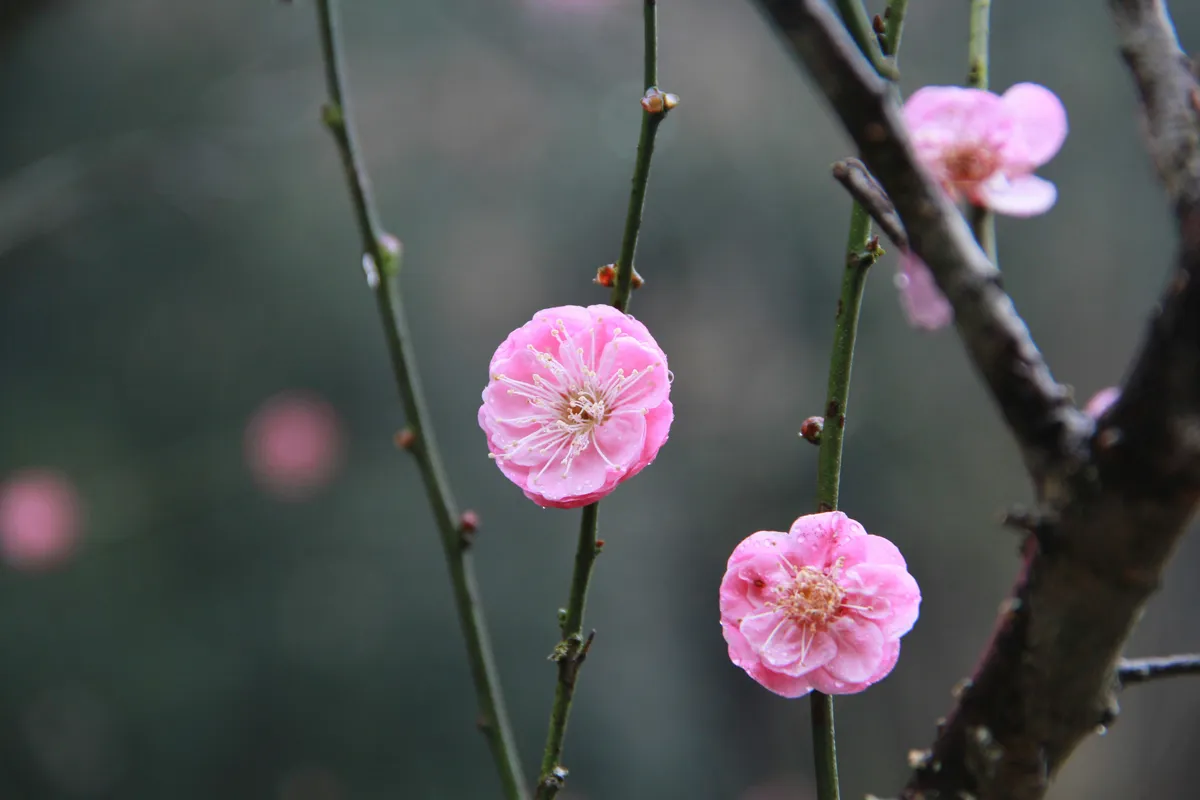
Plum Blossoms in February - What Mei Hua Taught Me About Patience
My dad had a plum blossom tree in our backyard in Queens. It was not a big tree - maybe seven feet tall on a good day - and for about eleven months of the year, it looked like a stick someone had forgotten to throw away. No leaves worth admiring. No fruit worth eating. Just this scraggly little thing next to the fence that my mom kept threatening to replace with something useful, like a lemon tree.
Then February would come. And while every other plant in the neighborhood was still hibernating under a gray New York sky, that stubborn little tree would explode into pale pink flowers. No leaves yet - just hundreds of delicate blossoms on bare branches, like someone had decorated a skeleton for a party. The whole backyard smelled sweet, almost honeyed, and for about two weeks, that ugly stick was the most beautiful thing on our block.
My dad would stand on the back porch with his tea, looking at it like he had personally invented spring. “Mei hua,” he would say, like that explained everything. And honestly, it kind of did.
Why Mei Hua Matters
If you grew up in a Chinese household, you have seen plum blossoms everywhere - on paintings, on porcelain, embroidered on fabric, printed on those red envelopes at Lunar New Year. The plum blossom (mei hua, or Prunus mume) is one of the most culturally loaded plants in Chinese tradition. It is one of the Four Gentlemen (si jun zi) - alongside orchid, bamboo, and chrysanthemum - plants that represent the highest Confucian virtues.
Each of the Four Gentlemen represents a season. The plum blossom gets winter. And that is the whole point. This tree blooms in the coldest, harshest part of the year, when everything else has given up. In Chinese culture, that makes it a symbol of resilience, perseverance, and the quiet strength it takes to keep going when conditions are terrible.
The plum blossom has shown up in Chinese art and poetry for over a thousand years, going back to the Song Dynasty. Poets wrote about its fragrance drifting through snow. Painters spent entire careers trying to capture the way its branches twist against a winter sky. It is not dramatic like a cherry blossom or showy like a peony. It is understated, tough, and a little bit defiant. Which, now that I think about it, describes most of the Chinese dads I know.
My dad never explained any of this to me directly. He was not the type to sit down and give a lecture on Confucian symbolism. But he chose that tree for our yard, and he took care of it with a seriousness he did not apply to much else in the garden. I think for him, the mei hua was a quiet statement about the kind of person he wanted to be - someone who could bloom in hard conditions.
The Tree Itself - What Is Prunus Mume?
Prunus mume goes by a lot of names in English - Chinese plum, Japanese apricot, flowering apricot, mume. None of them quite capture what this tree is, which is probably why most people who grow up with it just call it mei hua.
It is native to southern China and has been cultivated for over three thousand years, making it one of the oldest deliberately grown ornamental trees in the world. It is deciduous, losing its leaves in fall and blooming on bare wood in late winter to early spring - usually January through March, depending on your climate. The flowers can be white, pink, or deep red, and they are intensely fragrant. Some varieties produce small, sour fruits that are used to make preserved plums (hua mei) and plum wine.
Botanically, Prunus mume is more closely related to apricots than to the plums you find at the grocery store. It is hardy in USDA zones 6 through 9, which means it can handle a decent amount of cold - down to about minus ten degrees Fahrenheit. That cold tolerance is actually important for flowering. Like many fruit trees, mei hua needs a certain number of chill hours (usually 300 to 500 hours below 45 degrees F) to set flower buds properly.
The tree typically grows 15 to 25 feet tall at maturity, though there are dwarf varieties and it responds well to pruning. The bark develops a beautiful gnarled, twisted character as the tree ages, which is part of why it looks so striking in winter - those dark, angular branches covered in delicate flowers create incredible contrast.
Growing Mei Hua at Home
If you want to grow your own plum blossom tree, here is what you need to know. Fair warning: this is not a plant for the impatient. But then, that is kind of the point.
Light
Full sun is ideal - at least six hours of direct sunlight per day. Prunus mume can tolerate partial shade, but flowering will be reduced. My dad’s tree was in the sunniest corner of the yard, and it still took a couple of years before it really put on a show.
Soil
Well-draining soil is non-negotiable. Prunus mume does not like wet feet, and soggy soil in winter is a fast track to root rot. The ideal pH is slightly acidic to neutral - around 6.0 to 7.0. If your soil is heavy clay, amend it with compost and sand to improve drainage, or consider planting in a raised bed.
Watering
Water regularly during the growing season, especially in the first few years while the tree is establishing. Once established, Prunus mume is reasonably drought-tolerant. The key is consistent moisture without waterlogging. I would rather let it dry out slightly between waterings than keep it constantly wet.
Pruning
This is where things get important. Prunus mume blooms on the previous year’s wood, meaning the flower buds form during the growing season before they actually open. If you prune at the wrong time, you will cut off next year’s flowers. The best time to prune is right after flowering in early spring. Shape the tree, remove dead or crossing branches, and thin out congested growth. But do not go overboard - part of the tree’s charm is its natural, slightly wild branch structure.
Fertilizing
Feed with a balanced fertilizer in early spring after flowering, and again in early summer. Nothing too heavy on nitrogen, which will give you lots of leaves but fewer flowers. A slow-release granular fertilizer or a couple of applications of fish emulsion work well.
Cold and Chill Hours
If you live in zones 6 through 9, you are in the sweet spot. The tree needs winter cold to flower properly, so this is not a tropical plant. But it also does not love harsh, drying winds, especially when in bloom. A spot with some protection from wind - near a south-facing wall or fence - is ideal. My dad’s tree was right next to our wooden fence, which probably gave it a little extra warmth and shelter.
Common Mistakes
Pruning at the Wrong Time
This is the number one mistake people make with mei hua. If you prune in fall or winter, you are cutting off the flower buds that were set during summer. Prune right after flowering ends in spring, and you will be fine.
Overwatering
Prunus mume is tougher than it looks. It handles drought better than it handles constantly wet soil. If your tree’s leaves are yellowing or the roots feel mushy, you are watering too much.
Expecting Instant Results
A young Prunus mume may not flower heavily for the first two or three years. Grafted trees from nurseries will bloom sooner than seed-grown ones, but either way, you need patience. My dad’s tree did almost nothing its first spring. He just shrugged and said, “Next year.” And he was right.
Planting in Too Much Shade
A mei hua in deep shade will grow leggy and produce few flowers. Give it the sunniest spot you can.
Container Growing
If you do not have yard space - and I know a lot of us apartment dwellers in the city are working with a balcony at best - you can grow Prunus mume in a large container. Use at least a 15-gallon pot with good drainage holes, and a well-draining potting mix. Container trees will stay smaller, which is actually a plus in tight spaces. You will need to water more frequently since containers dry out faster, and bring the pot to a sheltered spot if temperatures drop below zero. Bonsai practitioners have been growing mei hua in containers for centuries, so there is plenty of precedent.
What My Dad’s Tree Taught Me
My dad planted that tree the year after we moved to Queens. I was five. We had just come from an apartment in Manhattan’s Chinatown where the closest thing to a garden was the fire escape with some green onions in a coffee can. Having a backyard was a big deal. And the first thing my dad planted was not tomatoes, not bok choy, not anything edible. It was a mei hua tree.
At the time, I thought it was a weird choice. Why would you plant something that only looks good for two weeks? But as I got older, I started to understand. That tree was my dad’s way of saying we were staying. You do not plant a tree that takes years to mature if you are planning to leave. And you do not plant a mei hua unless you believe that the hard seasons are temporary - that something beautiful is coming, even if you have to wait through a long, cold stretch to see it.
My dad never said any of this out loud. He is not a words guy. But every February, when he stood on the porch with his tea, watching those pink blossoms against the gray sky, I think he was looking at proof that he had made the right call.
I do not have a yard now - my wife and I are in a two-bedroom in Brooklyn, and our outdoor space is a fire escape that gets approximately three hours of good light. But I have a small Prunus mume in a container on that fire escape. It is about three feet tall, and so far it has produced exactly six flowers. Six. My daughter counted them.
Next year, there will be more. That is the whole lesson of mei hua. You show up, you endure the cold, and eventually, you bloom.
Getting Started
If you want to try growing your own plum blossom tree, here is what I would recommend:
- Buy grafted, not seed-grown. Grafted trees from a reputable nursery will flower years sooner. Look for named varieties like ‘Peggy Clarke’ (double pink flowers) or ‘Dawn’ (large pink blooms).
- Check your zone. Zones 6-9 are ideal. If you are colder than zone 6, container growing with winter protection is your best bet.
- Be patient. Your tree may not flower the first year, or even the second. That is normal. Keep it healthy, prune at the right time, and the blooms will come.
- Enjoy the wait. Honestly, the anticipation is part of the experience. When those first flowers finally open on a cold February morning, you will understand why poets have been writing about this tree for a thousand years.
And if nothing else, you will have a really good excuse to stand on your porch with a cup of tea, looking smug. That alone is worth the price of the tree.