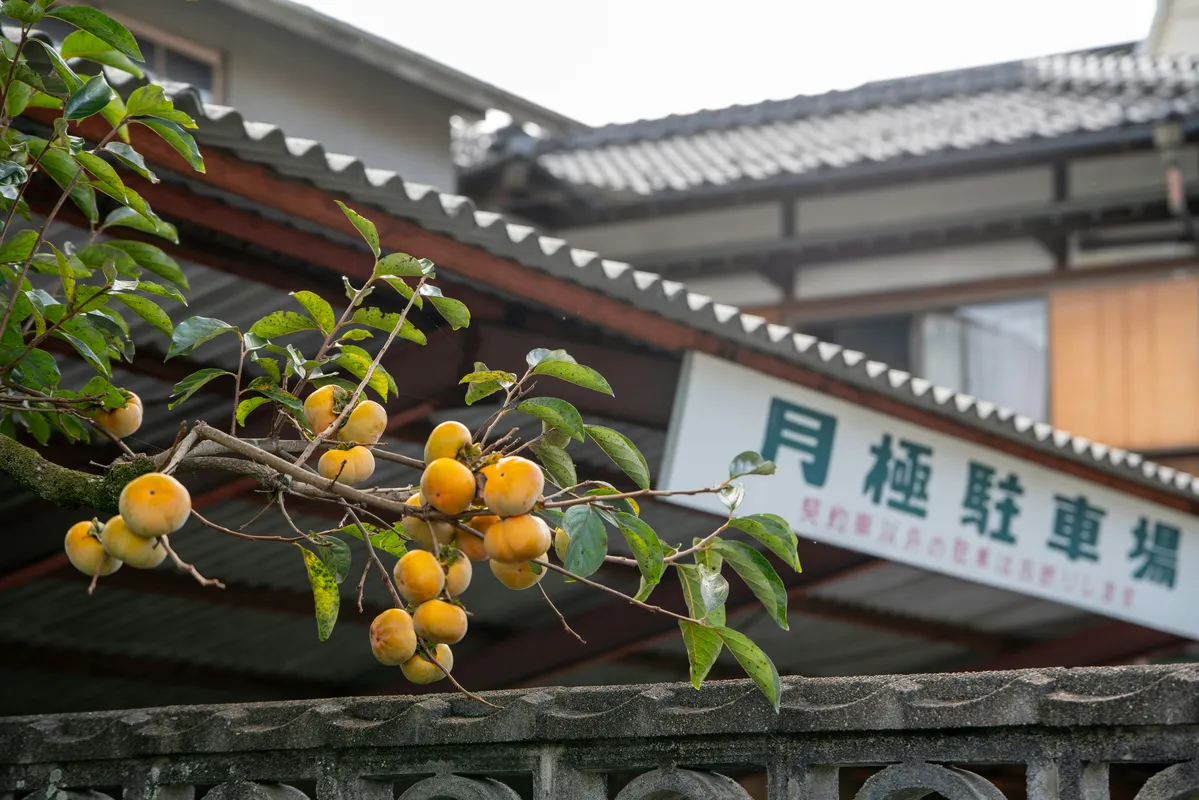
The Persimmon Tree in Every Asian Garden - And Why You Need One Too
If you grew up in a Chinese household - or really, any East Asian household - there is a decent chance someone in your family had a persimmon tree. Maybe it was your grandparents. Maybe it was the aunty down the street who gave your mom a bag of them every November. Maybe you remember them drying on a rack on someone’s balcony, slowly turning into that chewy, sugary snack your dad ate while watching the evening news.
For me, it was my grandmother’s backyard in Flushing. She had a Hachiya persimmon that she babied like a fourth grandchild. Every fall, she would carefully pick each fruit, wrap them individually in newspaper, and line them up on the kitchen counter to ripen. You were not allowed to touch them until she said they were ready. And she always knew exactly when they were ready.
I did not appreciate that tree when I was a kid. Now, at 35, with my own yard and my own kids, I think about it constantly.
More Than Just a Fruit Tree
In Chinese culture, the persimmon carries a weight that goes way beyond its flavor. The Chinese word for persimmon is shi, which sounds exactly like the word for “matters” or “affairs.” So a persimmon tree in your garden is not just producing fruit - it is symbolically bringing good fortune to everything you do.
That is why you see persimmons exchanged as gifts during Lunar New Year. That is why they show up in traditional paintings and pottery. That is why families plant them near the front of the house, not hidden in the back. The tree is making a statement: good things happen here.
My grandmother never explained any of this to me directly. She just had the tree. She just wrapped the fruit. She just made sure we ate them at the right time. The meaning was in the doing.
Two Types You Need to Know About
Before you go buying a persimmon tree, you need to understand the two main types, because mixing them up leads to one of the worst taste experiences in the fruit world.
Fuyu - The Easygoing One
Fuyu persimmons are squat and flat-bottomed, shaped a bit like a tomato. They are non-astringent, which means you can eat them while they are still firm. Slice one up like an apple, and it tastes sweet and mild with hints of honey and cinnamon. Some people describe it as a cross between a pear and a mango, which I think oversells the mango part, but the sweetness is real.
Fuyu is the persimmon for people who have never had a persimmon. It is forgiving, low-maintenance, and hard to mess up. If you are planting your first persimmon tree, this is probably the one.
Hachiya - The One That Requires Patience
Hachiya persimmons are acorn-shaped and taller. They are astringent, which means if you bite into one before it is fully ripe, your mouth will feel like you just licked a chalkboard covered in cotton balls. It is genuinely terrible. I have watched grown adults spit one out in shock.
But when a Hachiya is perfectly ripe - soft, almost translucent, the skin barely holding everything together - it transforms into something custardy and deeply sweet. You eat it with a spoon. My grandmother used to say a ripe Hachiya tastes like the universe apologizing for making you wait.
Hachiya is the baker’s persimmon. It makes incredible puddings, breads, and dried fruit. If you have ever had dried persimmon (shi bing), it was almost certainly Hachiya.
How to Grow Your Own
Here is the good news: persimmon trees are surprisingly easy to grow. They are not fussy like fig trees and they do not need the constant attention of citrus. Plant one right and it will basically take care of itself.
Climate and Location
Persimmons grow well in USDA zones 7 through 10, which covers a huge chunk of the United States. They want full sun - at least six to eight hours a day. Plant them in a spot that is sheltered from strong winds, especially when the tree is young.
If you are in a cooler area, Fuyu tends to be more forgiving. Hachiya needs more late-season heat to fully ripen, so plant it near a south-facing wall or fence where it can soak up reflected warmth.
Soil and Planting
Persimmons are not picky about soil, but they absolutely need good drainage. Waterlogged roots will kill a persimmon faster than almost anything. If your soil is heavy clay, amend it with compost or consider planting in a raised mound.
Dig a hole about twice as wide as the root ball and just as deep. Set the tree so the graft union (the bumpy line near the base of the trunk) sits about two inches above soil level. Backfill, water deeply, and mulch around the base - but keep the mulch a few inches away from the trunk.
Watering
Young trees need regular watering during their first two years. Once established, persimmons are surprisingly drought-tolerant. Water deeply once a week during hot summers, and ease off in fall as the fruit ripens. Overwatering during ripening dilutes the flavor - nobody wants a watery persimmon.
Fertilizing
Persimmons do not need much fertilizer. In fact, too much nitrogen will give you gorgeous leaves and almost no fruit. A light application of balanced fertilizer in early spring is plenty. If your tree is producing well, do not fix what is not broken.
Pollination
Most Asian persimmon varieties, including both Fuyu and Hachiya, are self-fertile. One tree is all you need. That said, having a second variety nearby can sometimes increase fruit set and size. But if space is tight, a single tree will do just fine.
The Harvest - And Why Timing Matters
Persimmons ripen in late fall, usually October through December depending on your climate and variety. This is one of the best things about them - they produce fruit when almost nothing else in the garden is doing anything interesting.
For Fuyu, harvest when the fruit is fully colored (deep orange) but still firm. You can eat them right off the tree or let them soften slightly on the counter for a richer flavor.
For Hachiya, this is where patience becomes critical. Pick them when they are fully colored, then let them ripen indoors until they are almost uncomfortably soft. The traditional method is to set them on a sunny windowsill. My grandmother used the newspaper-wrapping technique, which works great for ripening multiple fruits evenly.
If you cannot wait, there is a trick: put an unripe Hachiya in a paper bag with a ripe banana. The ethylene gas from the banana speeds up ripening significantly. My grandmother would have considered this cheating, but she also did not have two impatient kids asking “is it ready yet” every fifteen minutes.
Common Problems (And They Are Few)
Persimmon trees have remarkably few pest and disease issues compared to other fruit trees. Here is what to watch for:
Fruit drop - Young trees sometimes drop fruit before it ripens. This is usually stress-related. Make sure the tree is getting consistent water and is not being hit by temperature extremes. Most trees grow out of this as they mature.
Birds and squirrels - They love persimmons as much as you do. Netting helps, but honestly, a healthy tree produces so much fruit that sharing with wildlife is not the worst thing.
Leaf spots - Occasionally you will see dark spots on leaves in wet seasons. This is usually cosmetic and does not affect fruit production. Good air circulation and cleanup of fallen leaves in autumn keeps it in check.
Sunscald on young trees - The bark on young persimmon trees can be thin. If your tree is in a spot that gets intense afternoon sun, wrapping the trunk with tree wrap for the first couple of winters protects it.
Preserving the Harvest
A mature persimmon tree produces way more fruit than a family can eat fresh. This is a feature, not a bug - it means you have enough to share and preserve.
Dried persimmons (shi bing) - This is the classic preparation. Peel Hachiya persimmons, hang them by their stems in a dry, airy spot, and wait several weeks. The result is a concentrated, chewy, incredibly sweet treat that keeps for months. My grandmother made these every year and gave them as gifts. Making your own is easier than you think and connects you to a tradition that goes back centuries.
Persimmon bread and pudding - Ripe Hachiya pulp bakes beautifully. It adds moisture and a caramel-like sweetness to quick breads and puddings. If you have ever made banana bread, persimmon bread follows the same idea.
Freezing - Whole ripe persimmons freeze well. Pop them in a freezer bag and use them later in smoothies or baking. They also make a surprisingly good frozen dessert just eaten straight - like a natural sorbet.
Starting a Tradition
My grandmother’s persimmon tree is gone now. The house was sold years ago, and I have no idea if the new owners kept it or ripped it out. That bothers me more than I expected it to.
Last fall, I planted a Hachiya in our backyard. My four-year-old helped dig the hole - meaning she moved approximately three tablespoons of dirt and then went to chase a butterfly, but she was there. She does not understand yet why this tree matters. She just knows daddy is excited about it, and that is enough for now.
In a few years, when it starts producing fruit, I will wrap them in newspaper the way my grandmother did. I will line them up on the counter. And when my daughter reaches for one too early, I will tell her to wait.
Some traditions are worth growing.
Quick Reference
Best variety for beginners: Fuyu (non-astringent, eat firm, forgiving)
Best variety for baking and drying: Hachiya (astringent, must be fully ripe)
Sun: Full sun, six to eight hours minimum
Soil: Well-drained, not picky about type
Water: Regular for young trees, drought-tolerant once established
Zones: 7-10
Harvest: Late fall through early winter
Time to first fruit: Three to five years from planting
Self-fertile: Yes, one tree is enough
If you are thinking about planting one, do it this spring. Future you - wrapping persimmons in newspaper on a November afternoon - will be grateful.