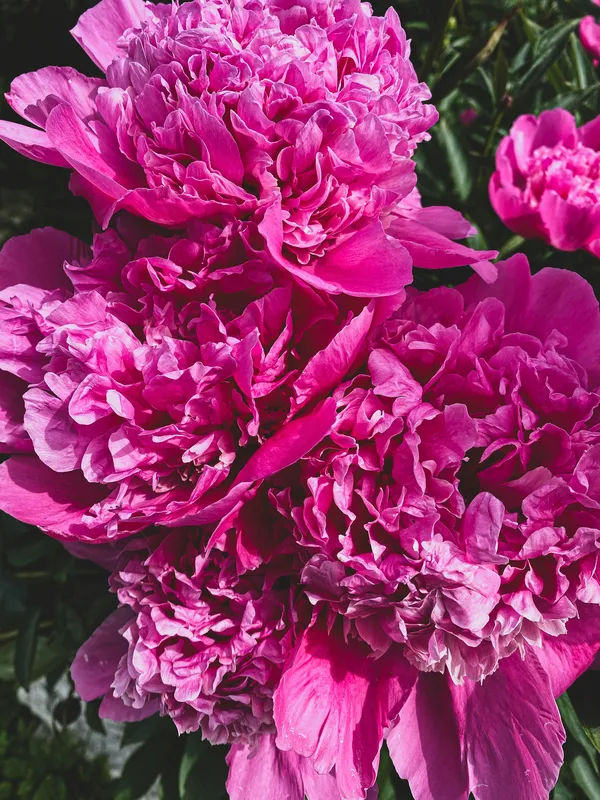
The Peony Is the King of Flowers - And My Mom Had Strong Opinions About That
Every Chinese household I visited growing up had at least one piece of art featuring peonies. A scroll painting in the hallway. An embroidered cushion on the couch. A porcelain vase with pink blooms painted on the side. Peonies were everywhere, and nobody questioned it. They were just part of the background of being Chinese.
My mom had a peony painting in our living room that she got from a street vendor in Flushing. It was not expensive. It was not particularly well-done - the petals looked a little heavy, like they were painted by someone who had seen peonies in photos but never held one. But she hung it over the couch and that was that. When I asked her why, she said “mu dan is the king of flowers” the same way you might say “water is wet.” It was not up for debate.
I did not plant my first peony until I was 33. Now I understand what all the fuss was about.
Why Peonies Matter in Chinese Culture
The peony - mu dan in Mandarin - is not just another pretty flower in Chinese tradition. It is the flower. During the Tang Dynasty, roughly 618 to 907 CE, peonies were so prized that they were essentially reserved for royalty. Peony patterns could only be embroidered on the clothing of imperial family members. Regular people wearing peony designs could actually face punishment. That is how seriously people took this flower.
The reason goes deeper than aesthetics. Peonies represent wealth, honor, and prosperity. The traditional Chinese name for the peony is fu gui hua - literally “flower of wealth and honor.” If you wanted to wish someone a prosperous life, you gave them peonies. If you wanted good fortune for a marriage, peonies went into the decorations. If you wanted to signal that your household was doing well, you grew peonies in the front garden where everyone could see them.
In 1903, Empress Dowager Cixi officially named the peony as China’s national flower. That designation has been debated and revisited over the years, but culturally, the peony’s status has never really been in question. It is the king of flowers the same way my mom said it was - without room for argument.
My grandmother had a different take. She said peonies were popular because they bloom big and bold and do not apologize for it. “Some flowers hide,” she told me once. “Peonies do not hide.” I think about that more than I should.
The Basics of Growing Peonies
Here is the thing about peonies that nobody told me until I tried growing them: they are outdoor plants. If you are hoping to grow a peony on your apartment windowsill next to your pothos, I am sorry to be the bearer of bad news. Peonies need cold winters to set their buds. They need space. They need real sun. They are garden plants through and through.
But if you have any kind of outdoor space - a yard, a patio with big pots, even a balcony that gets serious sun - peonies are absolutely worth trying. They are long-lived, relatively low-maintenance once established, and they produce some of the most gorgeous blooms in the plant world. Individual plants can live for 50 years or more. Some peony plants in China are documented at over 100 years old.
Where to Plant
Peonies want full sun - at least six to eight hours a day. They can tolerate some light afternoon shade, especially in hotter climates (zones 8 and above), but more sun means more blooms. Pick a spot that is sheltered from strong winds, because peony flowers are big and heavy and a good storm will knock them flat.
Air circulation matters too. Peonies are susceptible to fungal diseases like powdery mildew and botrytis, and good airflow around the plant helps keep those problems in check. Do not cram your peony into a tight corner between the house and the fence. Give it room to breathe.
Soil
Peonies are not super picky about soil, but they absolutely need good drainage. Waterlogged roots will kill a peony faster than almost anything else. If you have heavy clay soil, amend it generously with compost before planting. A slightly acidic to neutral pH - somewhere between 6.0 and 7.0 - is ideal.
If your soil drains well, you are probably fine. If puddles sit in your yard for hours after rain, either amend the spot or pick a different location. Raised beds work great for peonies if drainage is a concern.
The Critical Planting Depth Rule
This is the single most important thing about growing peonies, and it trips up almost every beginner: do not plant them too deep.
Peony roots have little pink or red bumps on them called “eyes.” These are the growth points that will become next year’s stems and flowers. The eyes need to be no more than two inches below the soil surface. If you bury them deeper - say four or five inches down, like you might with a tulip bulb - the plant will grow lush green foliage and produce zero flowers. It will look healthy. It will just never bloom.
I made this exact mistake with my first peony. Gorgeous leaves for two full years. Not a single flower. I dug it up, replanted it shallower, and the next spring it bloomed like it had been waiting to prove a point. My mom, who was visiting, said “see?” as if the peony’s success was somehow her doing. Maybe it was.
Watering
Water deeply after planting and keep the soil consistently moist during the first growing season. Once established - usually by the second year - peonies are surprisingly drought-tolerant. Water about once a week during dry spells, making sure the soil dries out between waterings. They do not like sitting in soggy ground.
A good rule of thumb: if the top two inches of soil are dry, it is time to water. If they are still damp, leave it alone.
Fertilizing
Peonies are light feeders. A single application of balanced fertilizer in early spring, just as the new red shoots are poking up, is plenty. Too much nitrogen gives you lots of leaves and fewer flowers - which is exactly the opposite of what you want.
Some growers add a handful of bone meal around the base of the plant in fall to support root development over winter. I do this, and whether it actually helps or I just like feeling productive in October, the peonies seem to approve.
Growing Peonies in Containers
You can absolutely grow peonies in pots if you do not have garden beds. It takes a little more effort, but it works. Here is what you need to know.
Choose a container that is at least 18 inches deep and equally wide. Peonies have deep root systems and they do not like being cramped. Make sure the pot has excellent drainage holes - multiple holes, not just one sad little opening at the bottom.
Use a high-quality potting mix and plant the eyes no more than one to two inches below the soil surface. The same depth rule applies in containers as in the ground. Container peonies need more consistent watering than their in-ground cousins because pots dry out faster, but do not overwater. Check every few days and water when the top couple of inches are dry.
The tricky part with container peonies is winter. Peonies need a cold dormancy period - at least six weeks of temperatures below 40 degrees Fahrenheit - to set buds for next year’s blooms. In-ground peonies get this naturally. Container peonies are more exposed to temperature swings, so in very cold climates you may need to insulate the pot with bubble wrap or burlap, or move it against a sheltered wall.
When They Bloom - And Why It Is Worth the Wait
Peonies bloom in late spring, usually May or June depending on your climate. The blooming period is short - about seven to ten days per plant. This seems cruel until you experience it. Those seven days are some of the most beautiful days your garden will ever have.
The flowers are enormous. Some varieties produce blooms eight to ten inches across. They come in whites, pinks, corals, reds, and deep magentas. Some are single-petaled and simple. Others are full doubles that look like someone crumpled up a ball of silk and stuck it on a stem. The fragrance is sweet and clean and fills the entire yard.
My mom always said that peonies teach patience. They take two to three years to really establish themselves and start blooming well. The first year you plant a peony, you might get nothing. The second year, maybe a bloom or two. By the third year, the show begins. And every year after that, it gets better.
There is something very Chinese about that, if you think about it. Plant now. Wait. Trust that the good stuff is coming.
Common Problems and How to Handle Them
No Blooms
This is the number one complaint from peony growers, and the answer is almost always one of three things: planted too deep, not enough sun, or the plant is too young. Check the planting depth first. If the eyes are buried more than two inches, carefully dig up the root in fall and replant it shallower. Be patient with young plants - they need time to establish.
Ants on the Buds
You will see ants crawling all over your peony buds just before they open. Do not panic. There is an old myth that peonies need ants to bloom - that the ants somehow help the petals open. This is not true, but the ants are harmless. They are just eating the sweet sticky substance (nectar) that the buds produce. The peonies do not need the ants, and the ants are not hurting the peonies. Everyone is fine.
If you want to bring cut peonies inside without ant stowaways, give the stems a gentle shake or a quick rinse with cool water before bringing them in.
Botrytis Blight
If your peony stems suddenly wilt and turn brown at the base, or the buds turn brown and mushy instead of opening, you are probably dealing with botrytis blight. This fungal disease thrives in cool, wet conditions and poor air circulation.
Prevention is better than treatment. Space your plants properly, avoid overhead watering, and clean up all fallen foliage in autumn - do not leave it on the ground to harbor fungal spores over winter. If you catch it early, remove the affected stems immediately, cutting back to healthy tissue.
Floppy Stems
Big, heavy peony blooms on thin stems equal flowers face-down in the mud. This is a character flaw of many double-flowered varieties. Install a peony ring or grow-through support early in the season - before the stems get tall - and the plant will grow up through it. Trying to cage a fully grown peony is like trying to put a leash on a cat. Technically possible, but nobody is happy about it.
Choosing a Variety
There are three main types of peonies, and they each have their strengths.
Herbaceous peonies are the most common. The stems die back to the ground each winter and regrow in spring. They are the easiest to grow and produce the classic big, fluffy blooms most people picture when they think “peony.” Great for beginners.
Tree peonies (mu dan in the most traditional sense) are woody shrubs that keep their structure year-round. They bloom earlier than herbaceous types and produce slightly different flowers - often larger and more exotic-looking. Tree peonies are the ones you see in classical Chinese paintings. They are a bit more finicky and slower to establish, but if you want the full mu dan experience, this is the one.
Intersectional peonies (also called Itoh peonies) are hybrids between herbaceous and tree types. They combine the easy growth habit of herbaceous peonies with the exotic flower forms of tree peonies. They are more expensive but increasingly popular, and for good reason - they are stunning.
For your first peony, I would recommend a classic herbaceous variety like Sarah Bernhardt (double pink), Karl Rosenfield (double red), or Festiva Maxima (double white with red flecks). All three are reliable, widely available, and absolutely gorgeous.
The Painting Is Still on the Wall
My mom still has that peony painting from the Flushing street vendor. The frame is scratched and the colors have faded a little, but it is still there above the couch. Last time I visited, I noticed she had moved a small photo of my daughter next to it. When I pointed this out, she just shrugged.
My daughter is three and has no opinions about peonies yet. But this spring, I am planting a Sarah Bernhardt in the front yard where everyone can see it. Not hidden in the back. In the front. Because mu dan does not hide.
In a couple of years, when it is covered in enormous pink blooms, I will send my mom a photo. She will say “see?” again. And she will be right again.
Some things do not need to be explained. You just plant them.
Quick Reference
Best for beginners: Herbaceous peonies (Sarah Bernhardt, Karl Rosenfield, Festiva Maxima)
Sun: Full sun, six to eight hours minimum
Soil: Well-drained, pH 6.0 to 7.0
Critical rule: Plant eyes no more than two inches deep
Water: Regular first year, drought-tolerant once established
Zones: 3-8 (some varieties to zone 9 with afternoon shade)
Bloom time: Late spring (May to June)
Time to establish: Two to three years for full blooming
Lifespan: 50+ years
Container friendly: Yes, with 18-inch deep pots and winter protection
If your mom has opinions about flowers, she is probably right. Plant the mu dan.