Growing Osmanthus Indoors - The Scent That Takes Me Back to Every Mid-Autumn Festival
There are certain smells that hit you like a time machine. For some people it is fresh cookies or a campfire. For me, it is gui hua - osmanthus flowers. One whiff and I am eight years old again, sitting at my grandparents’ kitchen table in Flushing, eating mooncakes while the adults argue about mahjong.
My grandmother had an osmanthus tree in a big ceramic pot on her balcony. Every fall, when those tiny golden flowers bloomed, the whole apartment smelled like apricots and honey. She would pick the flowers and dry them for tea, or steep them in sugar syrup for tang yuan filling. That tree was not decorative. It was part of the household, as essential as the rice cooker.
When she passed away, nobody kept the tree. We were all too busy, too scattered, too whatever excuse we told ourselves. I thought about that tree for years before I finally did something about it.
Why Osmanthus Matters in Chinese Culture
If you grew up in a Chinese family, you probably know gui hua even if you do not know the English name. Osmanthus fragrans - sometimes called sweet olive or tea olive - has been woven into Chinese culture for over two thousand years.
The flowers bloom in autumn, right around Mid-Autumn Festival, which makes them basically the pumpkin spice of Chinese fall. Except with about two millennia more cultural weight behind them. Tang dynasty poets wrote about their fragrance drifting beyond the clouds. There is even a legend about an osmanthus tree growing on the moon, which is why the flowers and the festival are so connected.
The word gui in gui hua is a homophone for noble or distinguished. In ancient China, when someone passed the civil service examinations, they were given a sprig of osmanthus to mark their new status. So the plant carries associations with success, prosperity, and good fortune. My grandmother was not thinking about Tang dynasty poetry when she grew hers, but she definitely believed it brought good luck.
Osmanthus is also tied to love and family harmony. The flowers are used in weddings, given as gifts to in-laws, and the traditional osmanthus wine - gui hua jiu - is the reunion drink at Mid-Autumn Festival, meant to symbolize family togetherness and prosperity.
All of which is to say: this is not just a plant. It is a whole cultural institution in a pot.
The Day I Finally Got My Own
Three years ago, I ordered an Osmanthus fragrans from an online nursery. It arrived as a sad little stick with a handful of leaves, maybe fourteen inches tall. My wife looked at it and said, “That is the tree you have been talking about for five years?”
Fair point. It was not impressive.
But I repotted it, gave it the sunniest spot in our apartment, and waited. Because osmanthus is a slow grower, and patience is part of the deal. My grandmother’s tree was probably fifteen or twenty years old when I knew it. Mine was essentially a baby.
That first year, it grew maybe four inches. No flowers. I adjusted its position, obsessed over its watering schedule, and talked to it more than I would like to admit. My daughter, who was three at the time, named it Goldie. Which honestly is a better name than anything I came up with.
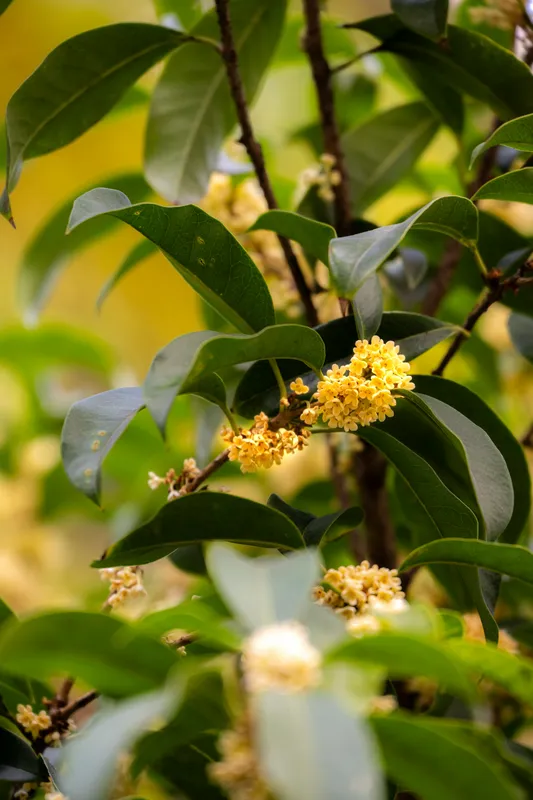
The second fall, it bloomed. Just a few tiny clusters of golden-orange flowers. The fragrance was unmistakable - sweet, warm, apricot-like, with a honeyed depth that no candle has ever gotten right. I stood in the living room at seven in the morning, breathing it in, and genuinely got emotional about a plant.
My daughter asked why I was making a weird face. I told her the flowers smelled like great-grandma’s house. She said “cool” and went back to her cereal. Kids.
How to Grow Osmanthus Indoors
Here is the practical part. If you want to try growing osmanthus as an indoor container plant, it is absolutely doable, but you need to set realistic expectations. This is not a pothos that you can ignore for two weeks. It is more like a relationship - it needs consistent attention but rewards you generously.
Light
Osmanthus needs a lot of light. South-facing window is ideal. It can bloom with as little as two hours of direct morning sun, but more is better. If your apartment is dim, this might not be the plant for you unless you supplement with grow lights.
I keep mine about a foot from our biggest south-facing window, and in summer I move it to the fire escape where it gets full sun for most of the day. The more light it gets in summer, the better it blooms in fall.
Watering
Keep the soil evenly moist but not waterlogged. This is one of those plants where consistency matters more than quantity. I water mine when the top inch of soil feels dry, which works out to about twice a week in summer and once a week in winter.
The biggest mistake I made early on was letting the soil dry out completely between waterings. Osmanthus does not bounce back from drought stress the way a snake plant does. If the leaves start dropping, you have probably waited too long.
Soil and Containers
Use a well-draining, slightly acidic potting mix. I use a standard container mix with some added perlite and a handful of pine bark fines to keep the pH on the acidic side. A mix designed for azaleas or camellias works well too.
Choose a pot with good drainage holes. Ceramic is nice because it is heavy enough to keep the plant from tipping over as it grows - these things get top-heavy. Repot every other year in spring, going up one pot size at a time.
Temperature and Humidity
Here is where indoor growing gets interesting. Osmanthus actually needs a period of cooler temperatures to set flower buds. Ideally, it wants nighttime temperatures in the 50s to low 60s (Fahrenheit) for a few weeks in late summer or early fall. This is what triggers blooming.
If you keep your apartment at a steady 72 degrees year-round, your osmanthus might not bloom. I solve this by leaving mine on the fire escape well into October, bringing it inside only when nighttime temperatures start dipping below 45. That transition period seems to do the trick.
Humidity-wise, osmanthus is not as demanding as a calathea, but it appreciates moderate humidity. A pebble tray underneath the pot helps, especially in winter when indoor air gets dry.
Fertilizing
Feed monthly during the growing season (spring through early fall) with a balanced, all-purpose liquid fertilizer diluted to half strength. Stop feeding in winter.
One warning: do not over-fertilize. Too much fertilizer causes brown leaf tips, which is frustrating because you are trying to be a good plant parent and it punishes you for it. Less is more here. If your leaf tips start browning, cut back.
Pruning
Pinch the growing tips on young plants to encourage bushier growth. Without pruning, osmanthus tends to grow tall and leggy, which is not what you want in a container plant. Prune in spring after the last flush of blooms. You can shape it however you like - mine is about three feet tall now and roughly vase-shaped, which keeps it manageable indoors.
Common Problems and How to Fix Them
No flowers
The most common complaint, and usually it comes down to one of three things: not enough light, no cool period to trigger bud set, or the plant is too young. Osmanthus typically needs to be at least three to four years old before it blooms. If you are doing everything right and still not getting flowers, give it time.
Leaf drop
Usually caused by drought stress, overwatering, or sudden temperature changes. Check the soil moisture first. If the soil is soggy, you are overwatering. If it is bone dry, you waited too long. If neither, think about whether the plant experienced a sudden move or temperature shift recently.
Brown leaf tips
Almost always a fertilizer issue. Cut back on feeding and flush the soil with clean water a few times to wash out salt buildup.
Leggy growth
Not enough light. Move closer to the window or supplement with grow lights. Also make sure you are pruning regularly to encourage branching.
Making Gui Hua Part of Your Kitchen
If your plant does bloom, do not just admire the flowers - use them. Here are a few things my family does with fresh osmanthus blossoms:
Gui hua cha (osmanthus tea): Dry the flowers on a paper towel for a day, then steep a teaspoon in hot water. You can also add them to green tea or oolong for an extra layer of flavor. This is what my grandmother did most often, and the taste is gentle, floral, and calming.
Gui hua tang (osmanthus sugar syrup): Simmer equal parts sugar and water, add a generous handful of fresh flowers, and let it steep off heat for thirty minutes. Strain and use in tang yuan, drizzled over shaved ice, or stirred into cocktails. This syrup is liquid gold.
Gui hua jiu (osmanthus wine): The traditional Mid-Autumn Festival drink. Steep dried flowers in baijiu or a neutral rice wine for a few weeks. Strain and serve. It is sweet, fragrant, and deceptively strong.
My daughter helps me pick the flowers now. She is very serious about it - she uses tweezers and a little bowl, like a tiny scientist. It has become our fall tradition, and honestly, that is the whole point.
What This Plant Really Means
I did not buy an osmanthus tree just because I wanted a nice-smelling houseplant. I mean, it is a nice-smelling houseplant, but that is not why it matters.
Growing gui hua connects me to my grandmother, to the festivals I grew up with, to a cultural tradition that stretches back thousands of years. It connects my daughter to those things too, even if right now she mostly thinks it is cool that we make syrup from flowers.
When Goldie blooms every fall, our apartment smells like my grandmother’s kitchen. My wife, who is not Chinese, says it smells like autumn. My daughter says it smells like gold. And I think they are both right.
If you have room for one more plant and you have a sunny window, I cannot recommend osmanthus enough. It is slow, it is particular, and it will test your patience. But the first time those tiny flowers open and your whole apartment fills with that warm, honeyed scent - you will understand why poets have been writing about this plant for two thousand years.
Quick Care Cheat Sheet
- Botanical name: Osmanthus fragrans
- Common names: Sweet olive, tea olive, gui hua
- Light: Bright direct sun, south-facing window ideal
- Water: Keep evenly moist, do not let dry out completely
- Soil: Well-draining, slightly acidic (azalea mix works great)
- Temperature: Needs cool period (50-60F nights) in late summer to trigger blooming
- Humidity: Moderate, benefits from pebble tray in winter
- Fertilizer: Monthly half-strength balanced feed, spring through early fall
- Repotting: Every two years in spring
- Difficulty: Intermediate - not hard, but not hands-off
- Best for: Patient plant parents who appreciate fragrance and cultural connection