The Orchid on My Grandma’s Windowsill (And Why I Keep One Too)
My grandmother kept a single orchid on her kitchen windowsill for as long as I can remember. It sat in a ceramic pot - white with blue painted cranes - next to a jar of fermented bean curd and a pair of kitchen scissors she used for everything from cutting scallions to opening packages.
The orchid was always there. Sometimes it bloomed - these elegant arching sprays of pale pink flowers that lasted for months. Sometimes it was just leaves - two or three thick, dark green ovals that looked like they were made of rubber. Either way, my grandmother tended it the same. A splash of water on Sundays. A turn of the pot every few weeks. That was it.
I never thought much about it as a kid. It was just part of the scenery of her apartment in Flushing, like the plastic-covered sofa and the wall calendar from the Chinese grocery store that was always two months behind.
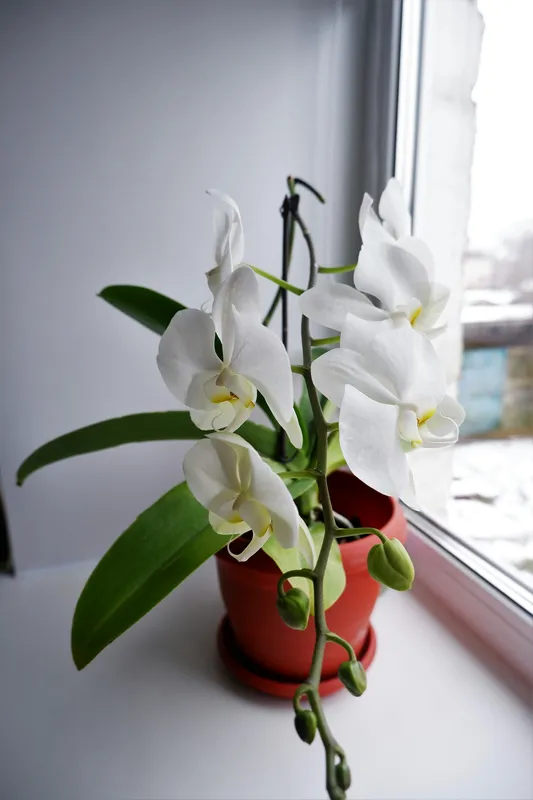
Now I’m 35, I have two kids of my own, and there’s a Phalaenopsis orchid on my kitchen windowsill. It took me a while to understand why.
The Four Gentlemen
In Chinese culture, orchids are kind of a big deal. They’re one of the “Four Gentlemen” - si junzi (four noble plants) - along with plum blossoms, chrysanthemums, and bamboo. Each represents different virtues that scholars aspired to. The orchid stands for integrity, refinement, and quiet strength.
Confucius compared the orchid to an honorable person. The idea was that an orchid blooms beautifully whether or not anyone is watching, just as a person of good character acts with integrity even when no one is around to notice.
That’s a lot of philosophical weight for a plant sitting next to leftover congee.
But my grandmother didn’t keep her orchid because of Confucius. She kept it because it was beautiful and because it reminded her of home. Her mother had kept orchids in Guangzhou, and her mother before that. It was just what you did. You kept an orchid.
The Chinese word for orchid is lan hua. “Lan” was one of the most popular names for girls in my grandmother’s generation. It carries connotations of elegance and grace - qualities that Chinese culture has associated with orchids for over two thousand years.
Why Moth Orchids Are Perfect for Busy Families
Here’s the thing about Phalaenopsis orchids (the moth orchids you see at every grocery store, Trader Joe’s, IKEA, and Home Depot): they’re actually easy. I know, I know - orchids have this reputation for being fussy, temperamental divas. But moth orchids are the golden retrievers of the orchid world. They want to make you happy and they’ll put up with a lot.
My grandmother’s orchid thrived on what I’d generously call “benign neglect.” She didn’t check the humidity. She didn’t mist the roots. She didn’t have a moisture meter or a grow light or a self-watering pot. She had a windowsill that got indirect light and a Sunday watering routine.
And honestly? That’s about all you need.
Light: Moth orchids want bright, indirect light. An east-facing window is ideal - morning sun without the afternoon intensity. A north-facing window works too, though blooming might be less frequent. If your leaves are dark green, the plant is happy but could use a bit more light. If they’re reddish, dial it back. You’re looking for a medium olive green.
Water: This is where most people go wrong. Orchids don’t want to sit in water, but they also don’t want to be bone dry. The classic advice is to water once a week, but really you should check the roots. If they’re silvery-gray, it’s time. If they’re green, hold off. My grandma’s Sunday routine worked because her apartment was consistently warm and the pot dried out at roughly that pace.
Temperature: Regular household temps are fine - 65 to 80 degrees during the day, with a slight drop at night. Here’s a fun trick: if your orchid hasn’t rebloomed in a while, let it experience slightly cooler nights (around 55 to 60 degrees) for a few weeks in fall. This temperature drop signals the plant to send up a new flower spike. My grandmother’s apartment was drafty in October, and her orchid rebloomed like clockwork every winter.
Humidity: Moth orchids like 50 to 70 percent humidity, but they’ll tolerate less. If your home is dry in winter (and if you live in New York with steam heat, it absolutely is), try setting the pot on a tray of pebbles with water. The evaporation helps. My grandmother’s kitchen had a rice cooker going most of the day, which probably provided all the humidity that orchid ever needed.
The Patience Part
My daughter once asked me why I keep checking on the orchid when “it’s not even doing anything.” She had a point. For months at a time, the orchid just sits there. Two leaves. Maybe three. No flowers, no drama, no visible growth. It looks like a plant that’s given up on life.
But it hasn’t. Orchids are playing the long game. Under those calm, boring leaves, the plant is storing energy, growing roots, and waiting for the right conditions to bloom. When it finally sends up a flower spike - this pale green tendril that reaches toward the light like a slow-motion firework - it feels like a reward for all those months of patience.
There’s a parenting metaphor in there somewhere, but I’ll let you find it yourself.
My grandmother understood this instinctively. She never fussed over the orchid. She never googled “why isn’t my orchid blooming” at midnight (mostly because she didn’t have Google, but still). She just took care of it - water, light, a good spot - and trusted that the plant would do its thing when it was ready.
That kind of patience is hard to come by these days. Everything in my life moves fast - work emails, kids’ schedules, the news cycle, the constant scroll. The orchid on my windowsill is a daily reminder that some things just take time, and that’s okay.
Common Mistakes (That I’ve Made)
I haven’t always been great at this. Before I found my groove with orchids, I killed a few. Here’s what I learned the hard way:
Overwatering. My first orchid died a mushy, root-rotted death because I watered it every three days. The roots turned brown and the leaves went limp. If you’re not sure whether to water, wait another day. Orchids handle drought better than drowning.
Using ice cubes. I saw this tip everywhere - “just put an ice cube on your orchid once a week!” Please don’t. Orchids are tropical plants. They don’t appreciate ice water on their roots any more than you’d appreciate someone dumping ice water on your feet while you’re sleeping. Room temperature water, please.
Cutting the spike too soon. After the flowers drop, the spike (the long stem the flowers grew on) turns brown and dry. But sometimes only part of it dies. If there’s still green on the spike, leave it - it might branch and bloom again. I chopped a perfectly good spike once out of impatience and had to wait another full cycle for new flowers.
Wrong pot. Orchid roots need air. Those decorative ceramic pots with no drainage? They’re basically coffins. Use a pot with drainage holes, or better yet, a clear plastic pot so you can see the roots. My grandmother’s blue-crane pot had a drainage hole in the bottom and sat on a small saucer. Simple, effective, and honestly more charming than anything I’ve found at the garden center.
Keeping the Tradition
Last spring, my mom came to visit and noticed the orchid on my windowsill. She didn’t say much - just smiled and touched one of the leaves, gently, the way you’d touch something that belonged to someone you missed.
“Nai nai’s orchid,” she said.
It wasn’t my grandmother’s actual orchid, of course. That one probably died years ago. But it was the same kind - a white Phalaenopsis with a faint blush of pink at the center. The kind you can find at any grocery store for fifteen dollars.
My daughter, who is four and has opinions about everything, has decided the orchid is “her flower.” She checks on it every morning, pressing her face close to the leaves and reporting back: “Still no flowers, Daddy.” She says it with the earnest disappointment of someone who has been waiting an eternity, which in four-year-old time means about two weeks.
When it finally blooms, it’ll be her first orchid bloom. She’ll probably forget about it within a day. But someday - maybe when she’s thirty-five and standing in her own kitchen, wondering why she’s drawn to the orchids at the grocery store - she might remember.
That’s how these things work. You don’t realize something has been planted in you until much later.
Getting Started
If you want to keep an orchid - whether for cultural reasons, for the quiet satisfaction of it, or just because they’re pretty - here’s what you need:
Pick up a Phalaenopsis from your local grocery store or garden center. They’re usually between ten and twenty dollars, and they’re almost certainly already blooming, which means you get instant gratification while you learn the ropes.
Find a spot with bright, indirect light. East-facing windows are ideal. Keep the plant away from heating vents and cold drafts.
Water when the roots look silvery - roughly once a week, maybe less in winter. Take the pot to the sink, run room-temperature water through it for about thirty seconds, and let it drain completely before putting it back.
Don’t repot it right away. Wait until it’s done blooming, then move it into a slightly larger pot with fresh orchid bark. Regular potting soil is too dense - orchid roots need airflow.
Be patient. Your orchid might not rebloom for six months to a year after the current flowers fade. That’s normal. Keep caring for it the same way. It’ll come back.
And if you’re Chinese American and you put that orchid on your kitchen windowsill, you’re not just keeping a houseplant. You’re continuing something that stretches back through your family - through apartments in Flushing and houses in Guangzhou and further than any of us can trace. There’s something quietly powerful about that.
My grandmother would approve.