The Night-Blooming Cereus (Tan Hua) - The Flower That Taught Me About Impermanence
There is a Chinese idiom - tan hua yi xian - that translates roughly to “the cereus blooms briefly.” People use it to describe something beautiful but fleeting. A flash of brilliance. A moment you almost missed.
I did not learn this idiom from a textbook. I learned it from my grandmother’s apartment in Flushing, Queens, at 11 PM on a Tuesday night in August.
She called my mom around 9 that evening. “The tan hua is going to bloom tonight,” she said, with the same urgency most people reserve for actual emergencies. My mom hung up the phone, told me to put my shoes on, and we drove the fifteen minutes to grandma’s place like we were responding to a fire.
When we got there, my uncle was already on the balcony. My aunt was pouring hot water for tea. My grandmother was standing in front of a scraggly, flat-leaved cactus that I had never paid any attention to before, beaming like she had just won the lottery.
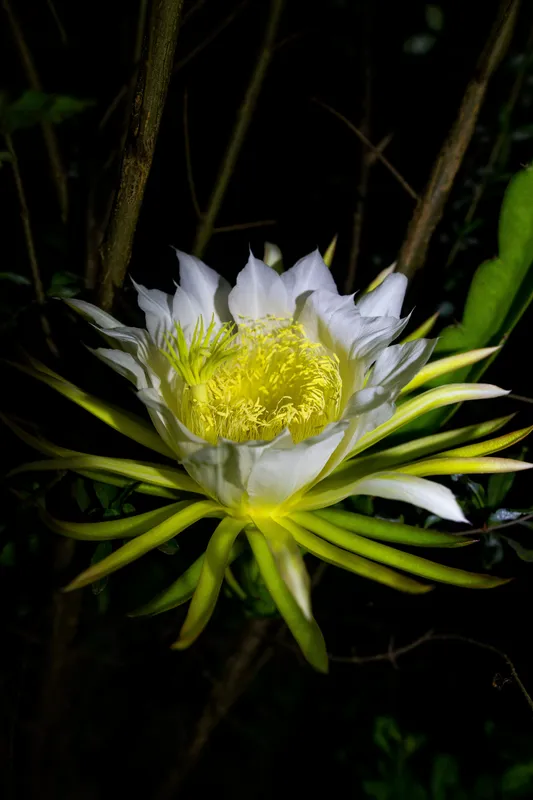
And then the flower opened. One single, enormous, white flower that smelled like the most perfect combination of vanilla and jasmine and something I have never smelled before or since. It was the size of a dinner plate. It was ridiculous. It was absolutely beautiful.
By the next morning, it was gone. Wilted, collapsed, done.
I was maybe eight years old, and I remember thinking: what was the point? All that fuss for a flower that lasted a few hours?
I am 35 now. I have a tan hua of my own. And I finally understand.
What Exactly Is a Night-Blooming Cereus?
The plant most Chinese families call tan hua is Epiphyllum oxypetalum, also known as the queen of the night or Dutchman’s pipe cactus. Despite the “cactus” label, it is actually an epiphytic plant native to the tropical forests of Central and South America. In the wild, it grows on trees, using them for support while drawing moisture and nutrients from the humid air.
It looks… honestly, kind of ugly for most of the year. Flat, leaf-like stems that flop around. No obvious flowers. No real structure. It is not going to win any beauty contests sitting on your shelf in February.
But that is the deal you make with a tan hua. You give it a year of patience - sometimes several years - and in return, it gives you one of the most spectacular blooming events in the entire plant world. Large, white, intensely fragrant flowers that open after dark and close by sunrise. Each flower blooms exactly once.
Why It Matters in Chinese Culture
The idiom tan hua yi xian has been around for centuries. Buddhist monks originally used the brief bloom of this flower as a metaphor for the impermanence of all things - beauty, success, life itself. The image became poetic during the Song Dynasty, showing up in verses about moments of brilliance that come and go.
But in the homes I grew up around, the tan hua was not a philosophical symbol. It was a living calendar event. When someone’s tan hua was about to bloom, phone calls went out. Neighbors came over. People stayed up late on work nights, drinking tea and watching a flower open in real time.
There is a belief in many Chinese families that witnessing a tan hua bloom brings good luck and prosperity. My grandmother absolutely believed this. She would not let anyone leave until the flower was fully open.
Looking back, I think the luck was in the gathering. A dozen people on a balcony in Queens, watching a cactus do its thing at midnight. You cannot schedule that kind of moment. You cannot force it. You just have to be paying attention when it happens.
How to Grow Your Own Tan Hua
Good news: this plant is surprisingly easy to care for. It is much more forgiving than it looks, and once established, it can bloom reliably for decades. My grandmother’s plant bloomed every summer for at least twenty years.
Light
Bright, indirect light is the sweet spot. An east-facing window works well - gentle morning sun without the harsh afternoon blaze. If you only have a south or west-facing window, pull the plant back a foot or two or filter the light with a sheer curtain. Direct summer sun will scorch those flat stems, turning them yellow and crispy.
In the summer, you can move the plant outdoors to a shaded patio or covered porch. Mine spends May through September under our back deck overhang, and it seems to love the extra humidity and air circulation.
Soil
Remember, this is an epiphyte, not a desert cactus. It wants a chunky, well-draining mix that holds some moisture but never stays soggy. A good recipe is one part orchid bark, one part perlite or pumice, and one part coco coir. You can also use a commercial cactus mix and add extra perlite until it feels loose and airy.
The biggest mistake people make is planting a tan hua in regular potting soil. It is too dense, holds too much water, and the roots will rot before you know it.
Watering
Treat this more like a tropical plant than a cactus. During the growing season (spring and summer), water thoroughly when the top two to three inches of soil are dry. That usually works out to every seven to fourteen days depending on your conditions.
In fall and winter, cut way back. Every four to six weeks is usually plenty. The plant goes semi-dormant, and overwatering during this period is the fastest way to kill it.
If the stems start looking shriveled or thin, you are underwatering. If they turn mushy or translucent at the base, you are overwatering. Adjust accordingly.
Temperature (The Secret to Blooming)
Here is the thing nobody tells you: the tan hua will not bloom without a cool winter rest period. This is the number one reason people grow this plant for years and never see a flower.
From roughly November through March, the plant needs nighttime temperatures between 35 and 60 degrees Fahrenheit. For most people, this means putting it near a cool window, in an unheated garage, or on a covered porch where it stays above freezing but does not get cozy.
My grandmother kept hers on her enclosed balcony in Flushing all winter. The temperature dropped into the low 40s some nights. The plant looked terrible by March. And then every July, like clockwork, it bloomed.
If you keep your tan hua in a warm, climate-controlled room year-round, it will survive just fine. It will grow. It will look healthy. But it probably will not bloom. The cool period triggers the hormonal changes the plant needs to set flower buds.
Fertilizing
Feed monthly during the growing season with a balanced liquid fertilizer diluted to half strength. Some growers switch to a high-phosphorus formula (like a 10-30-20) in late spring to encourage blooming, but I have not noticed a dramatic difference with my own plant. Consistent feeding matters more than the exact formula.
Stop fertilizing entirely in winter during the rest period.
Potting
Epiphyllum likes to be slightly root-bound, so do not rush to repot. A snug pot actually seems to encourage blooming. Repot only when roots are actively circling the bottom or pushing out of drainage holes, and go up just one pot size.
The Waiting Game
I should be upfront with you: getting a tan hua to bloom for the first time can take anywhere from two to five years if you start from a cutting. Mature plants purchased from nurseries might bloom the first summer if they have already been through winter chill cycles.
This is either extremely frustrating or deeply fitting, depending on how you look at it.
I got my cutting from a family friend in Chinatown - she snipped a six-inch piece from her mother’s plant, which had originally come from her grandmother’s plant in Guangzhou. That is at least three generations of this particular genetic line, traveling from southern China to a Queens apartment to my house in New Jersey.
The cutting sat in a pot for two years, producing new flat stems that flopped sideways and generally looked like a plant that had given up on life. My wife asked me more than once if it was dead. I told her it was just thinking.
The third summer, I noticed swollen buds forming along the edges of the stems. They developed slowly over about two weeks, getting longer and more pendulous, looking like green beans hanging off the plant.
And then one evening in late July, one of the buds turned upward. This is the signal. When a tan hua bud points up instead of hanging down, it is going to bloom that night.
I did what my grandmother did. I called people.
The Bloom
If you have never seen a tan hua bloom in person, it is hard to convey what makes it special. There are bigger flowers, more colorful flowers, flowers that last weeks instead of hours.
But there is something about watching it happen in real time - starting around 9 or 10 PM and fully opening by midnight - that changes how the flower feels. You are watching something that is actively temporary. You know, even as you are admiring it, that it will be gone by morning.
The flower itself is stunning. Pure white petals radiating from a central cup, sometimes six to eight inches across. The fragrance is intense and complex - sweet, almost tropical, with a richness that fills an entire room. Some people describe it as a mix of vanilla, gardenia, and jasmine.
My kids thought it was magic. My five-year-old kept asking if it would come back. I told her it would - next year, if we are lucky and patient. She thought about that for a while and then said, “So we have to wait a whole year to see it again?”
Yes. That is exactly the point.
Common Problems and How to Fix Them
No blooms after several years
Almost always a temperature issue. Make sure the plant gets that cool winter rest - below 60 degrees at night for at least two to three months. Also check that it is getting enough light during the growing season. A plant stuck in a dark corner will survive but will not bloom.
Stems turning yellow
Too much direct sun. Move it to a brighter spot with indirect light, or filter harsh afternoon sun.
Mushy stems or black spots at the base
Overwatering or poor drainage. Let the soil dry out more between waterings, check that your pot has drainage holes, and consider switching to a chunkier soil mix.
Stems shriveling or going thin
Underwatering, especially during the growing season. Give it a thorough soak and adjust your schedule.
Pests
Mealybugs and scale are the most common problems. Check the crevices where stems meet, and treat with rubbing alcohol on a cotton swab or a diluted neem oil spray. These pests love hiding in the folds of those flat stems, so be thorough.
Starting Your Own
The easiest way to get a tan hua is from someone who has one. The plant propagates readily from stem cuttings, which is why there are so many tan hua plants circulating through Chinese American communities - they literally get passed from family to family, generation to generation.
To propagate, cut a healthy stem segment about six to twelve inches long. Let the cut end dry and callus over for one to two weeks in a shaded spot. Then plant it about two inches deep in your chunky, well-draining soil mix. Keep it lightly moist (not wet) and in bright indirect light. Roots should develop within a few weeks.
If you do not know anyone with a plant, nurseries and online sellers carry them. Just be prepared for the wait - a small nursery plant might take a couple of years to reach blooming size.
The Point of the Tan Hua
My grandmother passed away six years ago. She left behind a lot of things - recipes, stories, a jade bracelet my mom wears every day, opinions about every decision anyone in the family ever made.
She also left behind a tan hua that is still growing on my uncle’s porch in Queens.
Every summer, when it blooms, someone in the family sends a photo to the group chat. Nobody says anything particularly profound. Usually it is just “It bloomed!” and a couple of blurry pictures taken in bad lighting.
But everyone sees it. Everyone knows what it means. A brief, beautiful thing that connects us to someone who is gone but also, somehow, still very much here.
Tan hua yi xian. The cereus blooms briefly. But it keeps coming back.
What to Do Next
If you are interested in growing a tan hua, start by asking around your community - you might be surprised how many people have one and are happy to share a cutting. Check local plant swaps and Facebook gardening groups in your area.
Once you have your plant, the care routine is simple. Give it bright indirect light, chunky soil, and a cool winter rest. Then wait. The patience is not a bug - it is the whole experience.
And when the buds finally show up and one of them turns skyward some evening, call someone. It is not the kind of thing you should watch alone.