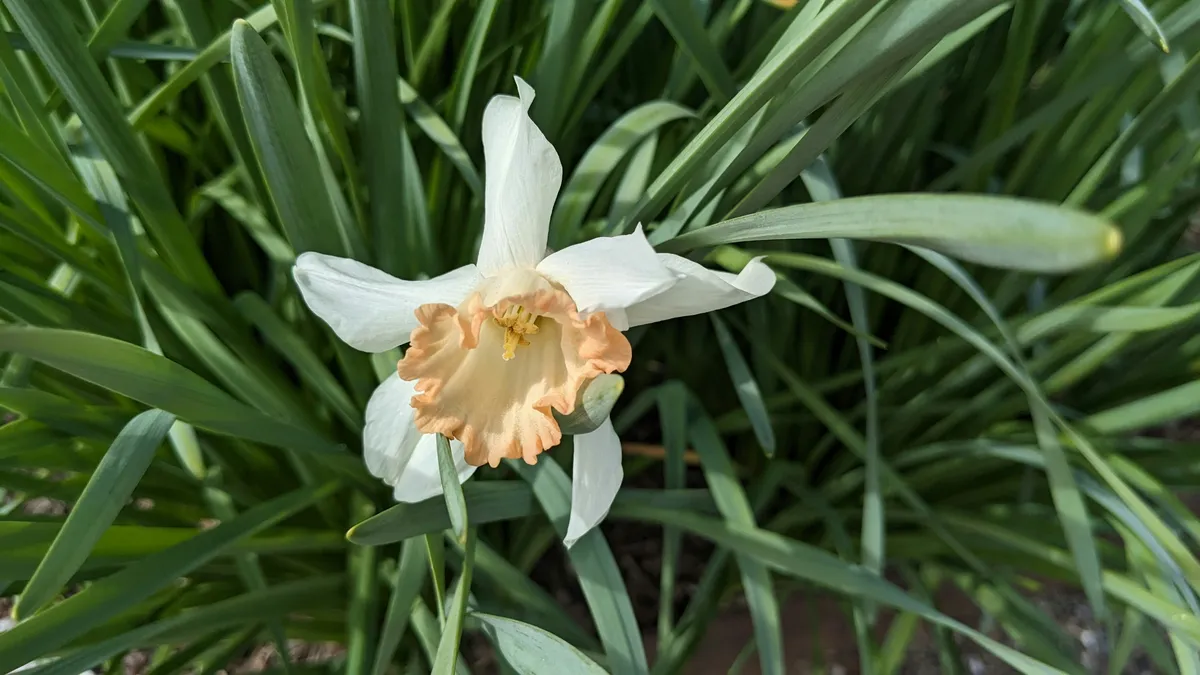
The Water Fairy Flower: Growing Narcissus for Chinese New Year
Every January, my mom would come home with a brown paper bag from the Chinese grocery store. Inside were a few ugly, papery bulbs that looked like oversized garlic cloves. She would set them in a shallow ceramic dish, nestle them into a bed of smooth pebbles, add water, and put the whole thing on the windowsill.
“Shui xian hua,” she would say. Water fairy flowers.
Within weeks, those lumpy brown bulbs would send up slender green shoots, and then - if we were lucky, if the timing was right - clusters of small white flowers with golden centers would open just in time for Chinese New Year. The whole apartment would smell like spring had arrived early, even while the radiator clanked and snow piled up on the fire escape.
That is the magic of Chinese narcissus. No soil. No complicated care routine. Just water, light, a handful of pebbles, and a little patience. If your narcissus bloomed on New Year’s Day, it meant good luck for the whole year. My mom took this very seriously.
Now I am the one buying bulbs every winter, and my kids are the ones watching the green shoots grow taller each day. Some traditions are worth keeping.
What Exactly Is Chinese Narcissus?
The Chinese narcissus (Narcissus tazetta var. chinensis) goes by many names. Shui xian hua literally translates to “water immortal flower.” Some people call it the Chinese sacred lily, which is confusing because it is not a lily at all. In Cantonese, it is seui sin fa. In English garden catalogs, you might see it listed as paperwhite narcissus, though the Chinese variety is slightly different from the Mediterranean paperwhites sold at most American garden centers.
The plant produces clusters of small, fragrant white flowers with a yellow or orange cup in the center. Each bulb can send up multiple stems, and each stem carries several flowers. The fragrance is sweet and clean - nothing like the overpowering scent of some lilies. It fills a room without taking it over.
Chinese narcissus bulbs are larger than regular paperwhites, often sold in clusters of connected bulbs. They have been cultivated in southeastern China - particularly Fujian Province - for close to a thousand years, ever since Arab traders brought the original bulbs along established trade routes during the Song Dynasty.
Why It Matters for Chinese New Year
In Chinese culture, the narcissus symbolizes good fortune, prosperity, and new beginnings. Having a blooming narcissus in your home during the Lunar New Year is considered auspicious. The closer the blooms time to New Year’s Day itself, the luckier it is.
This is not just decorative. For many families, the narcissus is as essential to the holiday as red envelopes and dumplings. The simplicity of growing it - just bulbs and water - reflects a kind of Taoist elegance. You create something beautiful from almost nothing.
My grandmother in Guangzhou would line her windowsill with six or seven dishes of narcissus every year. She would fuss over them constantly, moving them into the sun, moving them into the shade, checking the water level twice a day. She believed that if she could get them all to bloom simultaneously on New Year’s morning, the coming year would be exceptional.
She was right about half the time. But she never stopped trying.
How to Grow Chinese Narcissus in Water
This is one of the simplest plant projects you can do. Kids love it because the growth is fast and visible. You do not need any gardening experience at all.
What you need:
- Chinese narcissus bulbs (available at Chinese grocery stores in winter, or online)
- A shallow, waterproof container (ceramic dishes, glass bowls, or even a baking dish work)
- Clean pebbles, decorative stones, or glass marbles
- Water
- A cool, bright spot near a window
Step by step:
-
Choose your container. Anything at least 3-4 inches deep works. Traditional Chinese dishes are lovely, but a glass bowl from the dollar store does the job too.
-
Spread a layer of pebbles across the bottom, about 1-2 inches deep. These anchor the bulbs and give the roots something to grip.
-
Set the bulbs upright on the pebbles, pointy end up. If you have a cluster of connected bulbs, keep them together. Nestle them into the pebbles so they stay upright. You can pack them close together.
-
Add more pebbles around the bulbs for support, leaving the top third of each bulb exposed.
-
Add water until it just reaches the base of the bulbs. The bottoms should be sitting in water, but the bulbs themselves should not be submerged. This is important - too much water causes rot.
-
Place the container in a cool spot (around 50-60 degrees Fahrenheit is ideal) with indirect light for the first week or two. A cool windowsill, an unheated room, or even a garage that gets some light works well.
-
Once green shoots appear and reach about 3 inches tall, move the container to a brighter spot with more direct sunlight.
-
Top off the water every day or two. Change the water completely once a week to prevent it from getting slimy.
That is it. No fertilizer needed. No soil. No repotting. The bulb contains everything the plant needs to produce flowers.
Timing the Bloom for New Year
Here is where the tradition gets serious. Chinese narcissus typically takes 4-6 weeks from planting to bloom, depending on temperature and light. If Chinese New Year falls in late January, you want to start your bulbs in mid-to-late December. If it falls in mid-February, start in early January.
The tricky part is that temperature controls the speed. Warmer rooms speed up growth. Cooler rooms slow it down. If your narcissus is growing too fast and might bloom before New Year, move it to a cooler spot. If it is growing too slowly, bring it somewhere warmer.
My mom had a system. She would check the shoots every morning while making coffee. If they seemed too tall too early, the dish went to the cold corner of the kitchen near the window. If they seemed behind schedule, it went on top of the refrigerator where it was warm.
Was this scientifically rigorous? No. Did it work most of the time? Somehow, yes.
A rough guide for timing: at around 60 degrees Fahrenheit, expect blooms in about 5-6 weeks. At 70 degrees, closer to 4 weeks. Above 75 degrees, the blooms may come fast but they will also fade fast, and the flower buds might shrivel before opening.
The Art of Bulb Carving
In Guangdong Province and Hong Kong, narcissus cultivation is taken to another level with bulb carving. Skilled growers use a small blade to carefully cut into the outer scales of the bulb before forcing it. This encourages the leaves to curl and the flower stems to grow in artistic, sculptural shapes instead of straight up.
A carved narcissus bulb display is called a “crab claw” arrangement because the curving leaves resemble crab pincers. Master carvers spend about three hours on a single bulb, and the results are genuinely stunning.
I have tried this exactly once. My carved bulb looked less like a crab claw and more like something the cat attacked. But the flowers still bloomed, which I count as a win.
If you want to try carving, here is the basic idea: after peeling the outer brown skin, use a sharp knife to make careful cuts into the scale layers on one side of the bulb, exposing but not damaging the leaf and flower buds inside. Soak the carved bulb in clean water for five days, changing the water daily, before placing it in your dish with pebbles. The exposed side will grow outward and curl, creating that distinctive flowing shape.
It is an art form that rewards patience and practice. Start simple your first year.
Common Problems (and How to Fix Them)
All leaves, no flowers: The bulb may have been stored poorly before you bought it. Look for firm, heavy bulbs without soft spots. Lightweight bulbs have often dried out and may not have enough energy to flower.
Floppy, leggy growth: Too warm, not enough light. Move the container to a brighter, cooler spot. Some people add a tiny amount of alcohol to the water (about one part rubbing alcohol to seven parts water) to keep the stems shorter. This is a real trick, not a dad joke.
Slimy water and bad smell: Change the water more frequently. Rinse the pebbles when you change the water. Make sure the bulb itself is not rotting - if it is soft and mushy at the base, it may be too far gone.
Blooms came too early: For next year, start later or keep the bulbs cooler. Write down when you started and when they bloomed so you can adjust your timing.
Blooms came too late: Start earlier next year, or keep them in a warmer spot. Again, take notes. You will dial it in over a few seasons.
After the Blooms Fade
Here is the honest truth: Chinese narcissus bulbs forced in water will not bloom again indoors. They have used up all their stored energy. You can compost them, or if you have a garden, plant them outside in the ground where they might - emphasis on might - recover over a year or two and eventually bloom again outdoors.
My mom always composted hers without ceremony. The flowers had done their job. They brought beauty and luck into the house for the new year. That was enough.
Where to Find Bulbs
In New York, Chinese narcissus bulbs show up at grocery stores in Chinatown and Flushing starting in December. Look for them near the produce section or by the registers, often in red mesh bags. Markets like Hong Kong Supermarket, New York Supermarket, and iFresh usually carry them.
If you do not live near a Chinatown, you can order them online. Search for “Chinese narcissus bulbs” or “Narcissus tazetta chinensis.” They are seasonal items, so order early - they sell out fast.
Choose bulbs that feel heavy and firm. Bigger bulbs with multiple growing points will produce more flower stems. Avoid any that feel light, hollow, or show signs of mold.
A Tradition Worth Starting
You do not have to be Chinese to grow narcissus for the new year. You do not need a green thumb or any special equipment. You need a bowl, some pebbles, water, and a few weeks of patience.
But if you are Chinese American like me, there is something quietly powerful about continuing this tradition. My kids do not speak Mandarin as well as I wish they did. They have never been to my grandmother’s apartment in Guangzhou. But every January, they watch bulbs turn into flowers on our kitchen windowsill, and they know the word shui xian.
Some traditions travel in brown paper bags from the grocery store. This is one of the good ones.
Quick Reference
- Plant: Chinese narcissus (Narcissus tazetta var. chinensis)
- Also called: Shui xian hua, Chinese sacred lily, paperwhite narcissus
- Growing method: Water and pebbles (no soil needed)
- Time to bloom: 4-6 weeks from planting
- Light: Bright indirect to direct sunlight
- Temperature: 50-65 degrees Fahrenheit is ideal; avoid above 75
- Water: Keep water level at the base of bulbs; change weekly
- When to start: 4-6 weeks before Lunar New Year
- Where to buy: Chinese grocery stores (seasonal), online retailers
- Difficulty: Absolute beginner - one of the easiest plant projects around