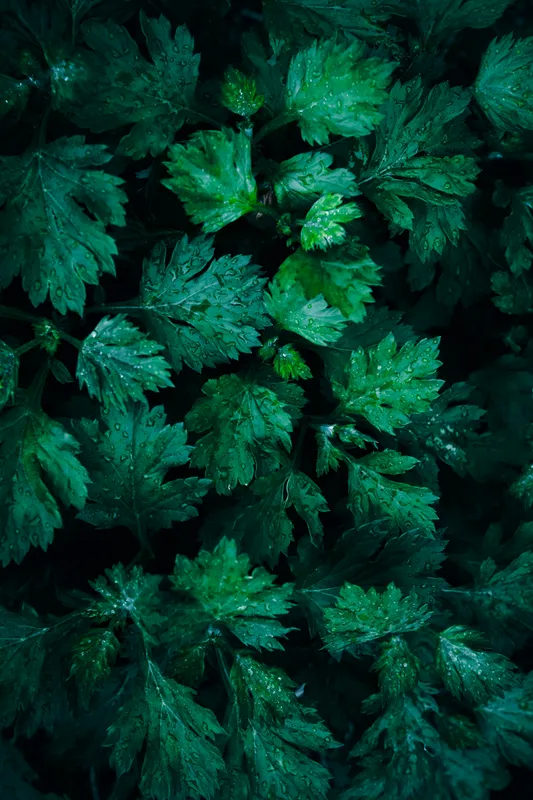
Growing Mugwort at Home - The Herb My Mom Swore Could Cure Anything
Every June, a few weeks before Dragon Boat Festival, my mom would come home from the Chinese grocery store in Flushing with a bundle of mugwort that looked like she had yanked it straight out of somebody’s yard. It was this scraggly bunch of silvery-green leaves, tied together with a rubber band, still smelling like the earth it came from. She would hang it above the front door, and for the next week our hallway smelled like a cross between sage and fresh-cut grass.
“Ai cao,” she would say, tapping the bundle like it was a security system. “Keeps the bad stuff out.”
I did not question this as a kid. The mugwort went up every year, same as the red envelopes came out at Chinese New Year. It was just what we did. It was not until I had my own kids and my own front door that I started wondering - could I actually grow this stuff instead of hunting it down at the store every June?
Turns out, yes. And it is almost embarrassingly easy.
What Is Mugwort, Exactly?
Mugwort - Artemisia argyi if you want to impress someone at a plant swap - is a perennial herb that has been central to Chinese medicine and culture for thousands of years. In Chinese, it is called ai cao (literally “moxa grass”), and if you have ever had acupuncture or moxibustion, you have already encountered it. Those little cones or sticks they burn near your skin? That is dried mugwort.
But in most Chinese households, mugwort’s job is a lot less clinical. It is the plant that shows up at Dragon Boat Festival, hung in doorways to ward off evil spirits and disease. It is the herb your grandmother steeped into bath water when you had a cold. It is the ingredient in qing tuan - those gorgeous green rice balls stuffed with sweet bean paste that appear in bakeries every spring.
In other words, mugwort is everywhere in Chinese culture. It is just easy to overlook because nobody makes a big deal about it. It is not showy like a peony or symbolic like bamboo. It is more like the reliable uncle who shows up early to every family gathering and quietly fixes the leaky faucet. Not glamorous, but absolutely essential.
Why My Mom’s Mugwort Ritual Matters More Now
Here is the thing about growing up Chinese American: you spend your teenage years rolling your eyes at all the traditional stuff, and then you spend your thirties desperately trying to remember it.
My mom’s mugwort ritual was one of those things. She did not just hang it at the door. She would take some of the leaves and boil them into a tea-colored bath for my sister and me the week of Duan Wu Jie. She said it would keep mosquitoes away and keep our skin healthy through the summer. I thought it was weird. My white friends were not taking herb baths.
Now I am 35 with two kids of my own, and last year I found myself standing in front of a pot of mugwort on my fire escape, picking leaves to steep in the bath for my daughter. My mom visited that weekend, saw the mugwort growing, and got this quiet smile on her face. She did not say anything dramatic. She just nodded and said, “Good. Now you know.”
That moment alone was worth every minute of gardening I have ever done.
Growing Mugwort at Home - The Practical Stuff
Okay, let us talk about actually growing this plant. The good news is that mugwort is one of the most forgiving herbs you will ever meet. If you can keep a pothos alive, you can grow mugwort. If you have killed every pothos you have owned, you can probably still grow mugwort.
Light
Mugwort likes sun. Aim for at least four to six hours of direct or bright indirect light per day. A south-facing or west-facing window works great indoors. If you have a balcony, patio, or fire escape (hello, fellow apartment dwellers), even better. It will tolerate some shade, but the plant will get leggy and produce fewer of those aromatic leaves.
Soil
Well-draining soil is the key requirement here. Mugwort is not picky about soil richness, but it absolutely does not want to sit in water. A standard potting mix with some perlite mixed in works fine. If you are growing it outside in the ground, sandy or loamy soil is ideal. The pH sweet spot is 6.0 to 7.5, but honestly, mugwort is not going to throw a fit if your soil is slightly off.
Watering
This is where mugwort makes your life easy. Water it when the top inch or so of soil feels dry, and then leave it alone. Mugwort is drought-tolerant once established, which means it forgives you when you forget about it for a few days. I water mine roughly once a week indoors, maybe twice a week in the peak of summer when it is out on the fire escape.
Overwatering is really the only way to mess this up. If the leaves start yellowing from the bottom up, you are giving it too much water. Back off and let it dry out.
Temperature
Mugwort is incredibly adaptable. It is comfortable anywhere between 60 and 80 degrees Fahrenheit, which covers most indoor environments. It can handle cold snaps down to light frost, making it a solid choice if you want to keep it outdoors in a container through most of the year. In USDA zones 4 through 9, it will come back as a perennial.
Container Growing
I strongly recommend growing mugwort in a container rather than planting it in the ground. Here is why: mugwort spreads. Like, aggressively. It sends out underground runners called rhizomes, and if you plant it in your garden bed, it will try to colonize your entire yard within a season or two. Think of it as the plant equivalent of that one friend who shows up for dinner and somehow moves in for three months.
A 12-inch pot with drainage holes is plenty for one plant. You can go bigger if you want a bushier specimen, but keep it contained. Your neighbors will thank you.
Propagation
Mugwort is almost too easy to propagate. You have three options:
Division is the simplest method. In spring, dig up a clump, separate it into sections making sure each piece has some roots attached, and replant. Done. This is how my mom has been sharing mugwort with aunties for decades.
Root cuttings work well too. Cut a three to four inch section of root, lay it horizontally in moist soil about half an inch deep, and keep it warm. New shoots should appear within a couple of weeks.
Seeds are an option but require more patience. Mugwort seeds need light to germinate, so scatter them on top of moist soil without covering them. They take one to three weeks to sprout. Start indoors about six weeks before your last frost date if you are going this route.
Harvesting and Using Your Mugwort
This is the fun part - actually using what you grow.
For Dragon Boat Festival
Harvest whole stems in late spring or early summer, right before the plant flowers. Bundle them together and hang them upside down above your door. They will dry naturally and keep their fragrance for weeks. My mom says the fresher and more aromatic the bundle, the better its protective qualities. I am not going to argue with that logic.
For Cooking
Young mugwort leaves harvested in spring are the ones you want for qing tuan and other culinary uses. The older leaves get bitter. Blanch the young leaves, blend them into a paste, and mix into glutinous rice flour for those springtime green rice balls. If you have never made qing tuan from scratch, it is a project worth trying at least once - the color you get from fresh mugwort is so much more vibrant than anything from a store.
For Baths
Steep a generous handful of dried or fresh leaves in hot water for 15 to 20 minutes, strain, and add to your bath. This is my mom’s mosquito-repellent bath method. Whether the mosquito repelling actually works is debatable, but the bath smells incredible and feels genuinely relaxing. My daughter asks for “the green bath” now.
For Drying and Storage
Harvest stems, bundle them, and hang upside down in a dry spot with decent airflow. Once fully dry, strip the leaves and store them in a glass jar or paper bag. Dried mugwort keeps well for about a year.
Common Mistakes to Avoid
Planting it in the ground without containment. I cannot stress this enough. Mugwort will take over. Use a pot or, if you really want it in the ground, sink a pot into the soil to contain the roots.
Overwatering. Mugwort is from the same genus as sagebrush and wormwood. These are plants that thrive in tough conditions. Treat it more like a succulent than a fern when it comes to water.
Harvesting too late in the season. For culinary use especially, you want young spring leaves. Once the plant starts flowering in mid-to-late summer, the leaves get tough and bitter.
Ignoring it completely. Even though mugwort is low-maintenance, give it a trim once or twice during the growing season to encourage bushier growth and prevent it from getting tall and floppy.
Why I Think Every Chinese American Household Should Grow Mugwort
Look, I am not going to pretend I believe mugwort hanging over the door literally keeps evil spirits away. But I will say this: growing mugwort has connected me to a tradition that I almost let slip away. My kids now know what ai cao smells like. They help me hang the bundle at Dragon Boat Festival. They ask for the green bath. They have eaten qing tuan made with leaves from our own plant.
These are small things. But they are the kind of small things that add up to cultural continuity, which is something I think a lot of us second-generation kids struggle with. We did not grow up in China. We do not always speak the language perfectly. But we can grow the plants our parents and grandparents grew, and in doing so, we keep a little piece of that heritage alive.
My mom never explained it that way. She just hung the mugwort every year because that is what you do. Now I do it too. And someday my kids will do it for their kids, hopefully with mugwort they grew themselves.
Getting Started
If you are ready to grow your own mugwort, your best bet is to find a live plant at a Chinese nursery or ask around in your local plant community. Many Chinese grandmas have mugwort growing somewhere and will happily share a division. Seeds are available online too - search for Artemisia argyi rather than just “mugwort” to make sure you get the Chinese variety rather than the European Artemisia vulgaris.
Start with one pot. Give it sun, do not drown it, and keep it contained. By next Dragon Boat Festival, you will have your own bundle to hang above the door. And if your kids ask why, you get to tell them - because that is what we do.