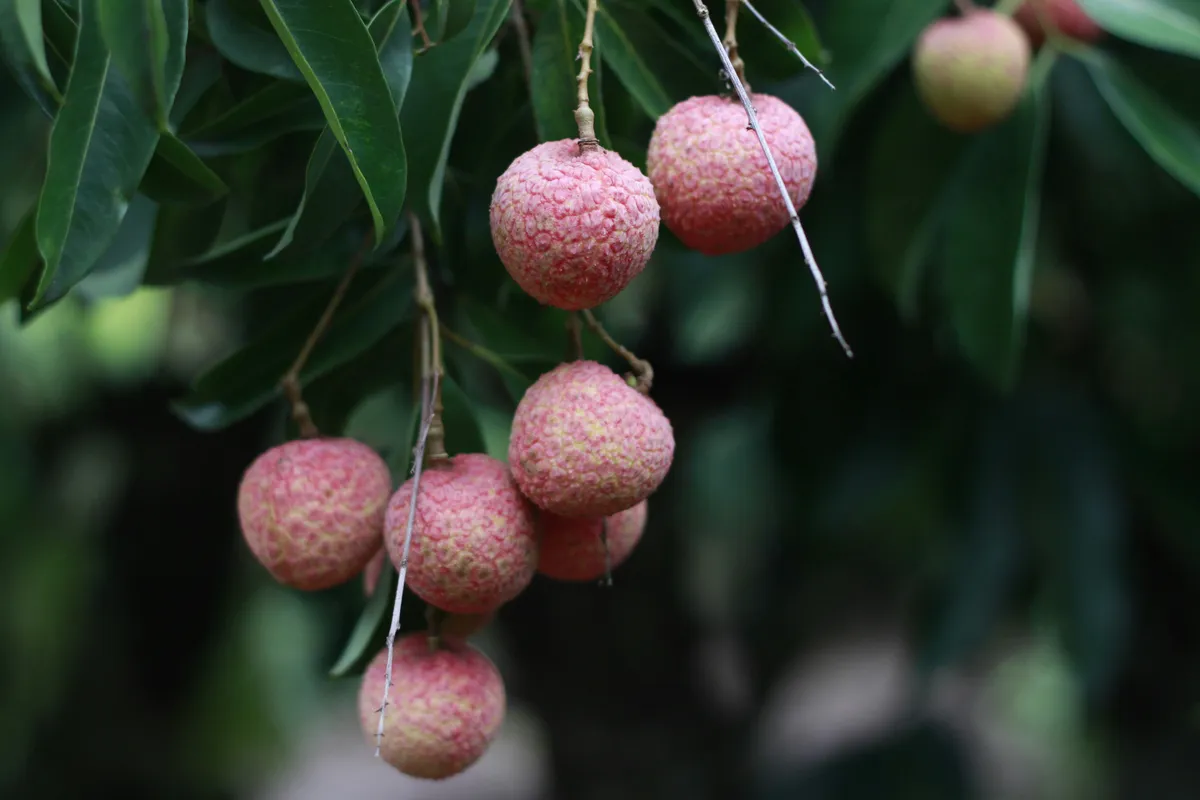
The Lychee Tree That Started with a Grocery Store Fruit
Every summer growing up, my dad would come home from the Chinese grocery store with a plastic bag of lychees. Not a small bag. A bag so full it looked like he was smuggling softballs. He would dump them into a colander in the sink, rinse them off, and within twenty minutes my brother and I had eaten every single one while watching cartoons. The kitchen counter would be covered in bumpy red shells and slippery translucent seeds, and my mom would yell at us to clean up before the ants found them.
That was the whole ritual. No ceremony, no explanation. Just lychees in summer, eaten fast, shells everywhere.
I didn’t think much about it until I was in my thirties, standing in a Chinatown fruit stall on Canal Street, holding a bag of lychees and suddenly feeling the whole weight of the moment. My daughter had never had one. I was about to introduce her to something that had been part of my summers since before I could remember, and I couldn’t even tell you the last time I had eaten one myself.
She loved them, by the way. Peeled through half the bag before I could stop her.
And that night, staring at a bowl of slippery brown seeds on the kitchen counter, I had the thought that every plant dad eventually has: what if I grew one of these?
The History Behind the Fruit
Lychee - li zhi in Mandarin, written as荔枝 - has been cultivated in southern China for over two thousand years. It shows up in historical records dating back to around 200 BC. The fruit was so prized that during the Tang Dynasty, Emperor Xuanzong had fresh lychees transported hundreds of miles by horseback relay to his palace so his beloved consort Yang Guifei could eat them. Imagine that kind of dedication to a fruit.
In Chinese culture, lychee carries layers of meaning beyond just being delicious. The word li is a homonym for words meaning clever and profitable, which makes lychee a popular symbol at weddings and celebrations. You will find lychees painted on porcelain, woven into textiles, and referenced in poetry from Du Fu and Su Dongpo. The first known monograph about a fruit tree in Chinese history was about lychee - written by the scholar Cai Xiang in 1059 AD, describing over thirty varieties.
My dad did not tell me any of this when he brought home those bags. He just said they were good and to eat them before they went bad. Fair enough.
Planting the Seed (Literally)
Here is the honest truth about growing lychee from seed: it is easy to start and hard to finish. Getting a seed to sprout is surprisingly simple. Getting a tree that produces fruit in a New York apartment is a completely different conversation, one that ends with “probably not, but the tree is still pretty.”
I planted my first lychee seed the same week my daughter tried the fruit. Here is what I did, and what I have learned since.
Step 1: Get Fresh Seeds
The most important thing is freshness. Lychee seeds lose viability fast - within a day or two of being removed from the fruit, they start drying out and dying. So eat your lychees, enjoy them thoroughly, and then immediately grab those seeds. Do not let them sit on the counter overnight. Do not put them in a drawer and forget about them for a week. I made that mistake with my first batch and got nothing.
Pick the biggest seeds you can find. Larger seeds from fully ripe fruit tend to germinate better. You will know the fruit is ripe when the skin is mostly red or reddish-pink and the flesh is sweet and fragrant.
Step 2: Soak and Wait
Clean the seeds - get all the fruit flesh off, because any remaining pulp can attract mold. Then soak them in a small bowl of warm water for three days. Change the water every day. By day three, you should see the outer brown shell starting to crack slightly. That is your green light to plant.
Some people wrap the seeds in a damp paper towel inside a plastic bag for this stage instead. Both methods work. I went with the water method because I could check on them without unwrapping anything, and honestly because checking on germinating seeds three times a day is a hobby I am not ashamed of.
Step 3: Plant
Use a pot that is about eight to ten inches deep with good drainage holes. Fill it with a slightly acidic, well-draining potting mix - something designed for azaleas or blueberries works well, or you can mix regular potting soil with some perlite and a bit of peat moss. Bury the seed about an inch deep. Water it well.
Now here is the part that requires patience. Put the pot somewhere warm - around 75 to 80 degrees Fahrenheit is ideal. Keep the soil consistently moist but not waterlogged. And wait. Germination takes anywhere from one to four weeks. Mine took about two and a half weeks, during which time I checked on it approximately four hundred times.
When a green shoot finally pokes through the soil, it feels like you’ve accomplished something significant. You have not. The hard part is just beginning.
Keeping a Lychee Tree Happy Indoors
Lychee trees are subtropical plants native to southern China and northern Vietnam. They are built for warm, humid conditions with monsoon-level rainfall and intense summer sun. A New York apartment in January is not that. But with some effort, you can keep one alive and even thriving as a houseplant.
Light
This is the biggest challenge. Lychee trees want a lot of light - we’re talking bright, direct sun for at least six to eight hours a day. A south-facing window is the minimum. If you don’t have that, invest in a grow light. I run a full-spectrum LED for about fourteen hours a day during the winter months. Without supplemental light, the tree gets leggy and sad-looking, and I get emotionally invested in its sadness.
Water
Lychees are thirstier than most houseplants. They come from regions with heavy rainfall, and their root systems expect consistent moisture. Water when the top inch of soil feels dry - during the growing season, this might be every other day. In winter, you can back off a bit, but never let the soil dry out completely.
That said, they do not like sitting in water. Make sure your pot drains well. Root rot will kill a lychee tree faster than neglect will.
Humidity
Aim for 60% humidity or higher. In a New York apartment during winter, the ambient humidity is roughly the same as the Sahara Desert. A humidifier near the plant helps enormously. Grouping it with other tropical plants also helps. Misting is fine but not enough on its own.
Temperature
Keep it above 60 degrees Fahrenheit. Lychee trees can handle brief dips to 50 degrees but anything below that and you will see leaf drop. They also do not appreciate sudden temperature swings, so keep them away from drafty windows and heating vents.
Soil and Feeding
Lychee trees prefer slightly acidic soil - a pH between 5.0 and 5.5 is ideal. Feed with a balanced liquid fertilizer every two weeks during the growing season (spring through fall) and stop feeding in winter. Iron deficiency is common in lychee trees, especially in alkaline soil, so watch for yellowing leaves with green veins and supplement with chelated iron if needed.
The Fruit Question
I know what you are wondering. Will it actually produce fruit?
The honest answer is: almost certainly not indoors. Lychee trees grown from seed can take ten to twenty-five years to fruit, and that is under ideal outdoor conditions in a subtropical climate. Indoor trees rarely get enough light, space, or the seasonal temperature changes they need to trigger flowering.
But here is what I have realized. I did not plant that seed because I expected to harvest lychees in my living room. I planted it because my daughter watched me do it, asked questions about it, and now checks on “her tree” every morning before school. She knows the fruit comes from China. She knows her grandpa used to buy them in big bags every summer. She knows how to peel one without squishing the fruit inside.
The tree is three years old now. It is about two feet tall, with glossy dark green leaves that have a bronze tint when they first unfurl. It is genuinely a beautiful little tree. It will probably never fruit. I do not care even a little bit.
Common Mistakes When Growing Lychee from Seed
If you want to try this yourself - and you should, because it is one of the more rewarding kitchen experiments out there - here are the things that tend to go wrong.
Using old seeds. This is the number one reason people fail. Lychee seeds need to be planted within a day or two of eating the fruit. If you bought lychees, ate them, tossed the seeds in the compost, and are now reading this article three days later wishing you hadn’t - go buy more lychees. Problem solved.
Not enough light. Lychee trees are not low-light plants. They are not even medium-light plants. They want full sun or the closest thing you can provide indoors. Skimp on light and you will get a spindly, unhappy plant that drops leaves constantly.
Overwatering without drainage. Lychees want moist soil, not wet soil. There is a difference. If your pot does not have drainage holes, your tree will develop root rot. Drill holes in the pot. Use a well-draining mix. Do not skip this step.
Ignoring humidity. If your leaves are browning at the tips and edges despite proper watering, the air is too dry. Get a humidifier. This is nonnegotiable for tropical plants in most North American homes.
Expecting fruit. I am being serious. If you go into this expecting to harvest lychees, you will be disappointed. Go into it expecting a beautiful tropical houseplant and a connection to something meaningful, and you will be very happy.
What Growing Lychee Has Taught Me
There is a type of patience that plants teach you that nothing else quite does. Not the patience of waiting in line or sitting in traffic - that is just tolerance. The patience plants teach is more like trust. You do the right things, you provide what you can, and then you wait and see what happens. You cannot rush it. You cannot negotiate with it. You just show up and keep watering.
My lychee tree sits next to the window in our living room, right next to my daughter’s little desk. Sometimes I catch her talking to it while she draws. She told me last week that she thinks the tree misses China. I told her that maybe it does, but it seems pretty happy here too.
She thought about that for a second and said, “Like Grandpa.”
Yeah. Like Grandpa.
Getting Started
If you want to try growing lychee from seed, the process is simple. Buy fresh lychees from an Asian grocery store during summer when they are in season (roughly June through August). Eat them. Enjoy them. Then plant the seeds immediately using the steps above. Put the pot in your warmest, brightest spot and keep the soil moist.
You probably will not grow fruit. But you will grow something worth having.