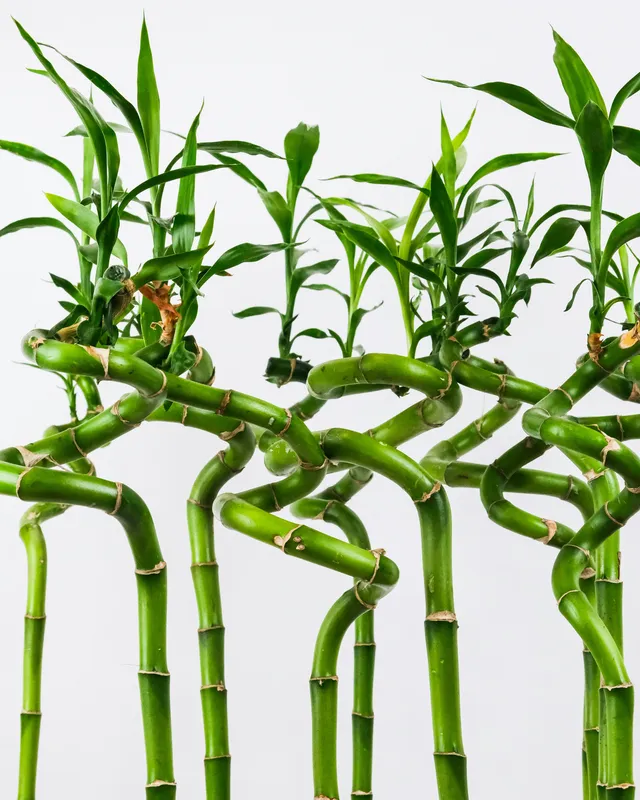
There was always a lucky bamboo in my grandmother’s apartment.
It sat on a table near the window in a shallow ceramic dish - white with blue painted flowers, the kind you find in every Chinese grandmother’s home. The stalks were twisted into a loose spiral, held upright with a few smooth pebbles. A faded red ribbon wrapped around the base. That ribbon had been there so long it was more pink than red, but nobody replaced it because that was the lucky bamboo’s ribbon, and you don’t mess with something that’s been bringing your family good fortune since before you were born.
Every Chinese household I visited as a kid had one. My aunt’s apartment in Flushing. My parents’ friends in Chinatown. The back counter of my uncle’s restaurant. Sometimes they were tall and dramatic, sometimes just a few stalks in a glass jar. But they were always there, quiet and green and doing their job.
I didn’t think much about it then. Now I’m a dad with my own lucky bamboo on the kitchen windowsill, and I think about it all the time.
Not Actually Bamboo (But That’s Fine)
Here’s the thing most people don’t know: lucky bamboo isn’t bamboo at all. It’s Dracaena sanderiana, a tropical plant native to Central Africa. It ended up associated with Chinese culture through feng shui practices, where its upright growth and green color symbolize vitality and resilience. The stems look like bamboo, the name stuck, and honestly, the plant doesn’t seem to mind the identity mix-up.
I remember learning this as a teenager and feeling almost betrayed. “It’s not even bamboo?” I told my mom. She shrugged. “It’s lucky,” she said. “That’s what matters.”
She had a point. The plant’s actual species name doesn’t change what it represents to millions of families. It’s a living symbol of hope, placed deliberately in homes to invite good energy. That’s real, even if the taxonomy is surprising.
The Language of Stalks
One of the things I love most about lucky bamboo is how the number of stalks carries specific meaning. My grandmother knew all of these by heart, and she was very particular about arrangements.
Three stalks for happiness, wealth, and long life - this was the standard arrangement in most homes I visited. The Cantonese word for “three” sounds similar to the word meaning “to live,” which gives it extra significance. My grandmother called it the everyday arrangement, good for general blessings.
Two stalks for love and partnership. My parents kept a two-stalk arrangement in their bedroom for years. I didn’t understand why until much later.
Five stalks represent the five elements - earth, water, wood, fire, and metal. My grandmother said this arrangement promotes balance in all areas of life. She kept one in her kitchen.
Six stalks attract smooth energy and wealth. My uncle had a six-stalk arrangement near the register at his restaurant. Business was good. Coincidence? Maybe. But nobody was going to move that bamboo and find out.
Eight stalks symbolize abundance - the number eight is considered extremely lucky in Chinese culture because it sounds like the word for prosperity.
And then there’s four. You never give someone four stalks of lucky bamboo. The word for “four” in Mandarin sounds almost identical to the word for “death.” My grandmother would have been horrified. Some things you just don’t do.
Nine stalks represent the ultimate good fortune. My grandmother received a nine-stalk arrangement as a gift when she turned 80, and she placed it in the most prominent spot in her living room. It stayed there for the rest of her life.
My First Lucky Bamboo
I got my first lucky bamboo when I moved into my first apartment after college. My mom showed up on moving day with a cardboard box full of kitchen supplies I didn’t ask for - a rice cooker, chopsticks, a bottle of soy sauce, and a small glass container with three stalks of lucky bamboo.
“For your new home,” she said, placing it on the kitchen counter like she was performing a small ceremony.
I was 22 and thought I was too cool for superstition. But I kept it. I kept it because my mom brought it, and because throwing away a lucky bamboo felt like tempting fate in a way I wasn’t willing to test. Even the most skeptical part of me wasn’t going to be the guy who tossed his mom’s housewarming blessing in the trash.
That bamboo lasted four years. It survived a roommate who poured coffee in it once (“I thought it was the compost jar”), a move across Brooklyn, and my general neglect during grad school. Lucky bamboo is remarkably hard to kill, which is probably why it became the plant of choice for blessing homes. You can’t bring someone good fortune if you die after two weeks on a windowsill.
Caring for Lucky Bamboo (It’s Almost Too Easy)
If you’re reading this and thinking about getting one - or you already have one and want to make sure you’re not slowly killing it - here’s what you need to know.
Lucky bamboo grows happily in water. That’s it. You don’t even need soil. Fill a container with enough water to cover the roots and about an inch of the stems, add some pebbles or decorative stones for support, and you’re done. Change the water every week or two to keep it fresh and prevent stagnation.
For light, think bright but indirect. A spot near a window with filtered light is perfect. Direct sunlight will scorch the leaves - they’ll turn yellow and crispy, and no amount of good feng shui can fix sunburned foliage.
If you want to go the extra mile, use filtered or distilled water. Lucky bamboo is sensitive to chlorine and fluoride, which can cause brown leaf tips over time. My grandmother always let her tap water sit out overnight before adding it to her plants. I thought she was being fussy. Turns out she was just removing chlorine through evaporation. Grandma knew chemistry.
Temperature-wise, keep it between 65 and 90 degrees Fahrenheit. If you’re comfortable in your home, the bamboo is comfortable too. Avoid placing it near drafty windows in winter or directly in front of heating vents.
You can feed it with a drop of liquid fertilizer every month or two during spring and summer, but honestly, lucky bamboo doesn’t need much. It’s the least demanding houseplant I’ve ever owned, and I’ve owned a lot of houseplants.
When Things Go Wrong
The most common problem with lucky bamboo is yellowing leaves, and it’s almost always one of three things: too much direct sunlight, chemicals in the water, or the water hasn’t been changed in too long. Fix whichever applies and trim the yellow leaves - they won’t turn green again, but new growth will be healthy.
If the stalks themselves start turning yellow or mushy, that’s a bigger problem. It usually means root rot from stagnant water. Remove the affected stalk immediately so it doesn’t spread to the others, clean the container, and replace with fresh water.
Brown leaf tips are typically a water quality issue. Switch to filtered or distilled water and the new growth should come in clean.
My grandmother’s solution for a struggling lucky bamboo was to talk to it. “You need to tell it you care,” she’d say, adjusting the stalks while speaking to them in Cantonese. I used to roll my eyes. Now I do the same thing in English, standing at my kitchen sink, telling three stalks of Dracaena sanderiana that they’re doing a great job. Parenthood changes you.
Passing It Down
My daughter is four. She calls the lucky bamboo on our windowsill “the lucky sticks.” Every morning when I change the water in her sippy cup, she reminds me to check on the lucky sticks too. She doesn’t know about feng shui or the five elements or why we never have four stalks. She just knows it’s our plant and it lives in the kitchen and we take care of it.
Last Chinese New Year, I bought a new arrangement - three fresh stalks with a red ribbon - and placed it next to the old one. My daughter watched me position it carefully, checking the light angle, adding the pebbles one by one.
“Why do we have two now?” she asked.
“The new one is for this year’s luck,” I said. “Fresh start.”
She thought about this for a second. “Can I tie the ribbon?”
She tied the worst bow I’ve ever seen. It was perfect.
Someday I’ll tell her about her great-grandmother’s blue and white dish, and the faded ribbon that nobody replaced, and how the word for “four” sounds like death so we skip that number. I’ll tell her that it’s not actually bamboo, and she’ll probably be annoyed about that for a minute, and then she’ll shrug just like my mom did.
And when she moves into her first apartment, I’ll show up with a rice cooker, a bottle of soy sauce, and three stalks of lucky bamboo. Because some traditions don’t need explaining. They just need continuing.
Getting Started with Lucky Bamboo
If you want to bring a lucky bamboo into your home, they’re easy to find at most garden centers, Asian grocery stores, and even some supermarkets - especially around Lunar New Year. Choose stalks that are firm and bright green, with healthy white roots.
Pick your number of stalks with intention. Three is the most common and a great place to start. Add a red ribbon if you want to follow the tradition - red symbolizes fire energy in feng shui and is said to activate the plant’s lucky properties.
Place it somewhere you’ll see it every day. The kitchen, the living room, a home office. In feng shui, the east side of a room promotes family health, and the southeast corner attracts wealth. But honestly, put it wherever makes you smile. That’s the best feng shui advice I know.
Change the water regularly. Talk to it if you want. And don’t give anyone four stalks.
That’s all there is to it. A little water, a little light, and a whole lot of quiet, steady luck.