Growing Lotus in a Bowl - The Flower That Taught Me About Patience
My grandmother had a saying she repeated so often it became background noise in our house: “The lotus grows from the mud but is not stained by the mud.” She said it when I bombed a spelling test. She said it when my cousin got in trouble at school. She said it when the evening news was especially grim. It was her answer to everything - her way of reminding us that beautiful things come from messy beginnings.
I nodded along like any kid does when grandma dispenses wisdom. I definitely did not think about it again until I was thirty-two years old, standing in a garden center in Red Hook, holding a lotus tuber that looked like a muddy potato, thinking: okay, Nai Nai. I get it now.
That was three summers ago. Every year since, I have grown lotus in a wide ceramic bowl on my fire escape. It is, without exaggeration, the most rewarding plant project I have ever attempted. And I say this as someone who has propagated approximately nine thousand pothos cuttings.
Why Lotus Matters to Chinese Families
If you grew up in a Chinese household, you already know the lotus (lian hua, in Mandarin) is everywhere. It shows up in paintings, on porcelain, in poetry, in Buddhist temples, and on the plates at dim sum in the form of lotus root and lotus seed buns. The flower is so deeply embedded in Chinese culture that it barely registers as remarkable until you step back and realize - yeah, we really love this plant.
The reasons go deep. In Buddhism, the lotus represents enlightenment. The flower blooms above murky water, rooted in the muck below but untouched by it. It is the ultimate symbol of rising above your circumstances. In Confucianism, the lotus represents the ideal gentleman - someone who remains virtuous despite living in a corrupt world. The scholar Zhou Dunyi wrote an entire essay about this in the eleventh century, and Chinese kids still read it in school today.
But for my family, the lotus was mostly about food. My mom would buy dried lotus seeds at the Asian grocery store and add them to sweet soups. My dad loved lotus root - sliced thin, stir-fried with a little vinegar and sugar. And my grandmother would occasionally buy lotus leaf-wrapped sticky rice from Chinatown and present it like she was handing us a gift. Which, honestly, she was.
Growing up, the lotus was something that existed in stories and on plates. It never occurred to me that I could grow one myself until I stumbled across a video of someone growing a full lotus bloom in a kiddie pool on their patio. If that person could do it in a plastic tub in Ohio, I could definitely manage a bowl garden in Brooklyn.
What You Need to Get Started
Here is the good news: growing lotus in containers is way easier than it looks. You do not need a pond, a massive yard, or any special expertise. You need a few basic supplies and one crucial ingredient - patience.
The container. Use a wide, shallow vessel without drainage holes. Think ceramic bowls, plastic tubs, or even half wine barrels with the drain plugged. Lotus roots spread horizontally, so width matters more than depth. For dwarf or bowl varieties, a container at least 10 to 12 inches across works well. For standard-sized lotus, go bigger - 18 to 24 inches across and at least 12 inches deep.
I use a large glazed ceramic bowl I found at a home goods store. It is about 16 inches wide and 10 inches deep, and it cost less than a delivery pizza. The dark color helps absorb heat, which lotus loves.
The soil. Regular heavy garden soil or clay loam works best. Do not use potting mix - it is too light and will float. You want something dense that settles to the bottom and holds the tuber in place. I mix plain topsoil with a little clay and call it done.
The tuber or seeds. You can start lotus from tubers or seeds. Tubers are faster - you will get blooms in the first summer if everything goes well. Seeds are cheaper and more widely available, but they take longer. Your first bloom from seed might not happen until the second year.
I recommend tubers for your first attempt. The gratification is quicker, and honestly, you deserve a win. Look for dwarf or bowl lotus varieties if your space is limited. Some good ones to search for include ‘Momo Botan’ (double pink, very compact), ‘Red Scarf’ (vivid red, great for small containers), or ‘Green Maiden’ (elegant single blooms).
Planting Step by Step
This is easier than repotting a root-bound monstera. I promise.
Step one: Fill your container about halfway with heavy soil. Four to five inches is plenty for most bowls.
Step two: If you are using a tuber, lay it horizontally on the soil surface with the growing tip pointing toward the center of the container. Press it gently into the top inch of soil, but leave the growing tip exposed. Do not bury it completely - the growth point needs to stick up a little. If you are starting from seed, file or nick the hard outer coat first (the round end, not the pointed end), then drop the seeds into warm water until they sprout, which takes about a week.
Step three: Add water slowly. Start with about two to four inches of water above the soil. As the lotus grows and sends up leaves, you can gradually raise the water level to six inches or more.
Step four: Place the whole setup somewhere that gets full sun. This is non-negotiable. Lotus needs at least six hours of direct sunlight daily. Eight is better. My fire escape faces south and gets blasted with sun from mid-morning through late afternoon. The lotus thrives on it.
Step five: Wait. This is the hard part.
The Patience Part
I am not going to sugarcoat this. Lotus is not a fast grower in the early stages. After planting my tuber in mid-May, I spent about three weeks staring at a bowl of muddy water wondering if I had been scammed. Then one morning, a tiny rolled-up leaf appeared at the surface, pale green and impossibly delicate, unfurling like a fist slowly opening.
That first leaf floats on the water like a lily pad. Then another comes, and another. Eventually, the plant shifts gears and starts sending up aerial leaves - these are the tall ones that rise above the water on long stems. When you see aerial leaves, you know the lotus is happy and establishing itself.
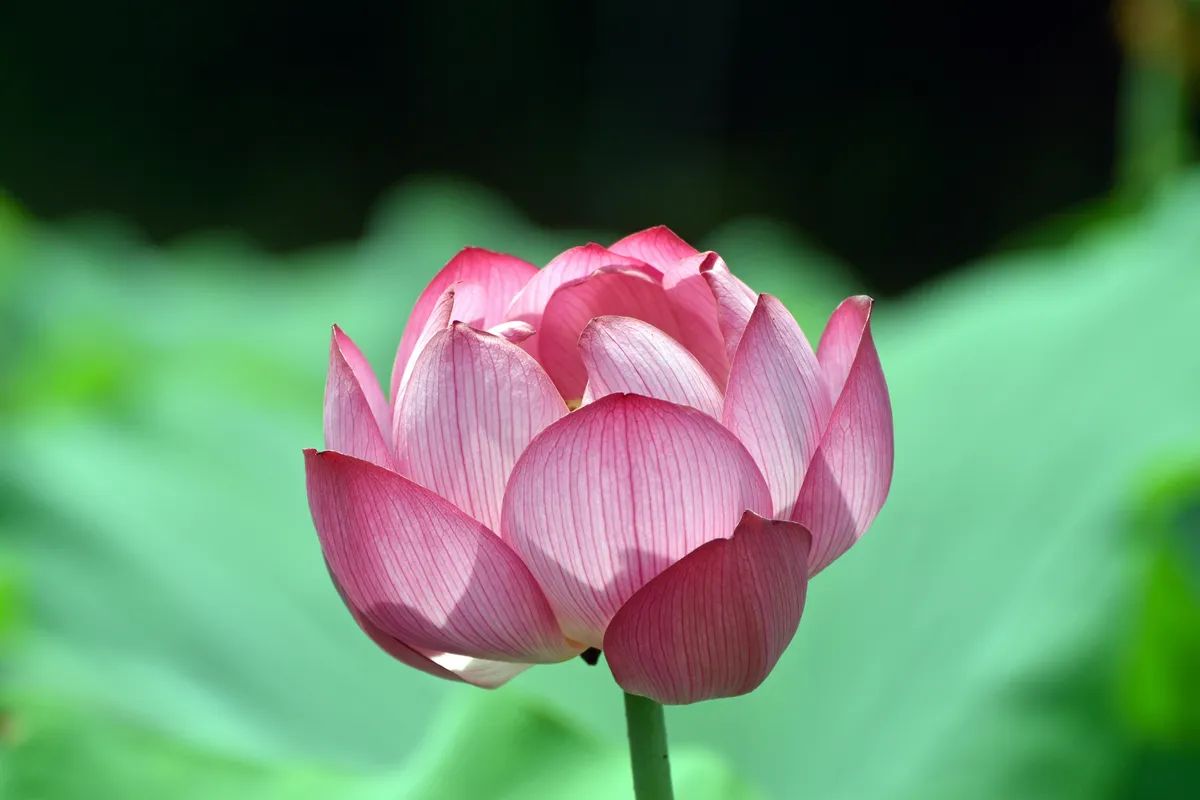
The blooms, if you get them, are transcendent. Each flower lasts only three to four days, opening in the morning and closing at night. The colors range from pure white to deep pink to creamy yellow, depending on the variety. The center of the flower develops into a distinctive seed pod that looks like a tiny showerhead - you have seen these in dried flower arrangements at every Chinese household ever.
My first year, I got exactly one bloom. It opened on a Saturday morning in late July and I called my mom to tell her about it like I had just won the Nobel Prize. She said, “Send me a picture.” I sent her about forty.
Ongoing Care Through the Season
Once lotus gets going, it is honestly pretty low maintenance. The main things to remember:
Keep it wet. This is an aquatic plant. The soil must stay submerged at all times. In hot weather, you may need to top off the water daily. I keep a watering can next to the bowl and top it up every morning. This becomes part of the routine, like making coffee.
Give it sun. Full sun, as much as possible. If your lotus is not blooming, insufficient light is the most likely culprit. Move it to a sunnier spot before you try anything else.
Feed it. Lotus is a hungry plant. Once you see aerial leaves (the tall ones above water), start fertilizing every two to three weeks with aquatic plant fertilizer tablets pushed into the soil. Do not fertilize too early though - newly planted tubers can be burned by excess nutrients.
Watch for pests. Aphids are the main nuisance. A strong spray of water knocks them off. I have also seen the occasional caterpillar munch on a leaf, which I handle with the sophisticated technique of picking it off and relocating it to the neighbor’s garden. (Sorry, Frank.)
No pruning needed during the growing season. Let the leaves do their thing. Yellow leaves can be removed, but healthy green leaves should stay - they are feeding the tuber below for next year’s growth.
Winterizing Your Lotus
This is where it gets real if you live somewhere with actual winters, like New York.
Lotus is hardy to about USDA Zone 5, which means the tuber can survive freezing - but not if it freezes solid in a shallow container sitting on your fire escape. You have two options.
Option one: Bring the whole container into an unheated garage, basement, or shed once the foliage dies back in fall. Cut the dead stems. Keep the soil barely moist but not flooded. The tuber goes dormant and sleeps through winter. Do not let it dry out completely or freeze solid.
Option two: If the container is too heavy to move (mine is), remove the tuber from the soil in late fall, wrap it in damp newspaper, put it in a plastic bag with some air holes, and store it in the fridge. Yes, the fridge. Right next to the leftover dumplings. It will be fine. Replant in spring when temperatures consistently stay above 60 degrees Fahrenheit.
I use option two because my building has no garage and the bowl weighs approximately one million pounds when full of wet soil.
The Moment It All Clicked
Last summer, my daughter asked me what the big leaf was on the fire escape. She was three. I picked her up so she could see into the bowl, and she watched a small beetle walk across a floating leaf. She said, “Bug boat.”
I thought about my grandmother, who passed away when I was in college, and her saying about the lotus and the mud. I thought about how this plant connects me backward through my family and forward through my kids. A flower that has been meaningful to Chinese people for thousands of years, blooming in a ceramic bowl on a Brooklyn fire escape, observed by a three-year-old who thinks it is a boat for bugs.
The lotus is patient. It grows slowly. It blooms briefly. It asks for sun and water and mud. And every year it comes back, because the good stuff is happening underneath, out of sight, in the muck where the roots do their quiet work.
That is the most dad metaphor I have ever written. And I am keeping it.
Getting Started This Spring
If you want to try lotus this year, start shopping for tubers in March or April. Online specialty nurseries are your best bet - search for “bowl lotus” or “container lotus” and you will find plenty of options. Plant after your last frost date, when water temperatures are consistently warm.
Start with a dwarf variety if you are nervous. Start with a big container if you are ambitious. Either way, start. The mud is waiting.