The Loquat Tree That Connected Three Generations of My Family
There is a bottle of cough syrup that every Chinese kid knows. It comes in a brown glass bottle with old-fashioned lettering, and it tastes like honey mixed with something herbal and slightly mysterious. Pi Pa Gao - loquat syrup. My mom reached for it every time I had a cough, which in a New York City winter was approximately every other week.
I did not think much about where that syrup came from until I was in my twenties, visiting relatives in Guangdong, and saw an actual loquat tree for the first time. It was growing in my great-uncle’s courtyard, its broad, dark green leaves fanning out like open hands. There were clusters of small golden fruit hanging in bunches, and my cousin pulled one off and handed it to me like it was nothing special.
It was special. Sweet and tart and floral, like a peach that had been raised on sunshine and good manners. I stood there eating loquats in a courtyard in southern China and thought: this is the tree from the bottle.
What Exactly Is a Loquat?
The loquat (Eriobotrya japonica) is a small evergreen tree that originally comes from the cooler hill regions of southeastern China. Despite its scientific name suggesting Japan, it was cultivated in China for well over a thousand years before it made its way east and then eventually west. The Chinese name is pi pa, because the shape of the leaf resembles a pi pa - a traditional stringed instrument sort of like a lute.
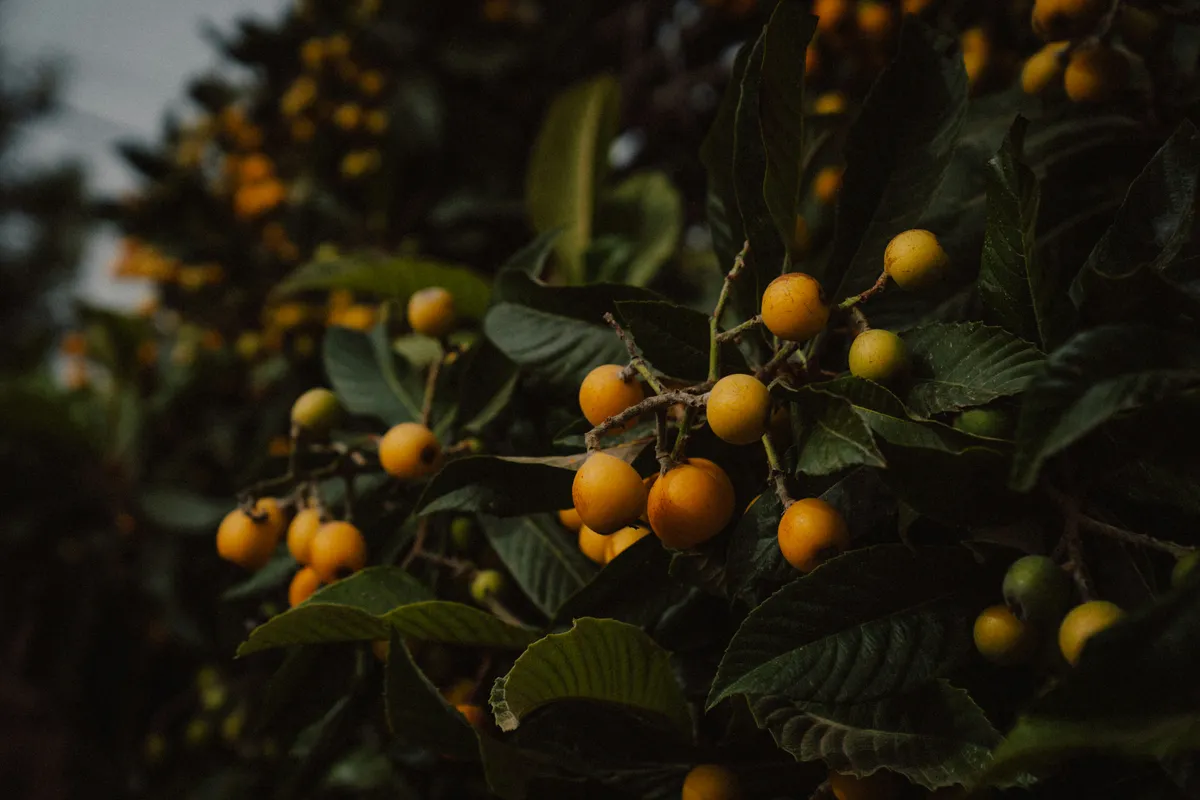
The tree itself is beautiful even when it is not fruiting. It grows to about 15 to 25 feet tall with large, deeply veined leaves that are dark green on top and fuzzy underneath. In late fall and winter, it produces clusters of small, fragrant white flowers. And then in late winter to early spring - when almost nothing else in the garden is doing anything - it gives you fruit. Golden, apricot-sized, with thin skin and juicy flesh surrounding a few large seeds.
That timing alone makes it special. When everything else in the garden is dormant, the loquat is out there producing fruit. My great-uncle called it the tree that refuses to rest.
The Pi Pa Gao Connection
You cannot talk about loquats in a Chinese context without talking about Pi Pa Gao. Nin Jiom Pei Pa Koa - the full name of the most famous brand - has been around since the Qing Dynasty. The formula combines loquat leaf extract with fritillaria bulb, honey, and a blend of other herbs. It is used for coughs, sore throats, and general respiratory comfort.
Growing up, that brown bottle lived in our medicine cabinet year-round. My mom used it the way some parents use Vicks VapoRub - as a cure-all for anything throat or chest related. To this day, when my kids start coughing, my first instinct is to reach for Pi Pa Gao before anything from the pharmacy.
In traditional Chinese medicine, loquat leaves (pi pa ye) are considered cooling and are used to clear heat from the lungs, calm coughs, and settle the stomach. My grandmother would sometimes make a simple tea by boiling dried loquat leaves with rock sugar. She said it was good for “hot” coughs - the kind that come with yellow phlegm and a dry, scratchy throat. I cannot verify the medical science here, but I can tell you it tasted decent and it made me feel cared for, which is sometimes the same thing.
Growing a Loquat Tree at Home
Here is the part where I tell you that you can actually grow one of these. And if you are in the right climate, it is surprisingly easy.
Climate and Zones
Loquat trees grow best in USDA zones 8 through 10. The tree itself can handle temperatures down to about 10 degrees Fahrenheit, but here is the catch - the flowers and developing fruit are much more sensitive. A hard freeze below 27 degrees will kill the blossoms, which means no fruit that year. The tree survives. The harvest does not.
If you are in zone 8 and get occasional hard freezes, you can still grow a loquat as an ornamental. The leaves are gorgeous year-round. You just might not get reliable fruit every year. Zone 9 and 10 are the sweet spot for consistent harvests.
For those of us in colder climates - yes, I am looking at my own New York City apartment with some sadness - container growing is possible but challenging. You can keep a young loquat in a large pot on a sunny patio and bring it inside for winter. It probably will not fruit, but you will have a beautiful evergreen houseplant with impressive leaves.
Planting
Pick a spot with full sun. Loquats will tolerate partial shade, but fruit production drops significantly without at least six hours of direct light. Plant the tree at least 25 feet from structures and other trees - it needs space to spread.
Loquats are not fussy about soil as long as it drains well. They prefer a slightly acidic to neutral pH, somewhere in the 6.0 to 7.0 range. If you are dealing with heavy clay, amend with compost and consider planting slightly raised.
Dig a hole twice as wide as the root ball and the same depth. Set the tree so the root flare sits at soil level. Backfill, water deeply, and mulch with two to three inches of organic material, keeping it away from the trunk.
Watering
Young trees need consistent moisture as they establish - water deeply once or twice a week for the first two years. Once established, loquats are fairly drought-tolerant. Water during extended dry spells, especially when fruit is developing, but do not overdo it. Soggy roots are a fast track to root rot.
Feeding
Fertilize three times a year - late winter, spring, and early summer. Use a balanced organic fertilizer. Avoid anything high in nitrogen, which pushes leaf growth at the expense of flowers and fruit. If the tree is healthy and producing well, less is more.
Pruning
Here is where timing matters. Prune right after harvest in spring. Never prune in fall, because that is when the flower buds are developing and you will be cutting off next year’s fruit.
Remove dead or crossing branches. Thin out dense growth in the center of the canopy to let light reach the developing fruit. If the tree is getting too tall, you can top it to keep it manageable - loquats respond well to pruning and will branch back vigorously.
Harvesting and Eating
Loquat fruit ripens on the tree and does not continue to ripen after picking, so timing matters. Wait until the fruit is fully colored - a deep golden yellow to orange depending on the variety - and gives slightly when you press it. Use pruners to clip the fruit from the stem rather than pulling, which can damage the branch.
The fruit is best eaten fresh within a day or two. Peel the thin skin, pop out the seeds, and eat. It tastes like a cross between an apricot and a pear with floral undertones that are hard to describe until you taste them.
If you get a big harvest, here are some things to do with it:
Loquat jam - Cook peeled fruit with sugar and a squeeze of lemon. It makes a gorgeous golden jam that tastes like fancy marmalade.
Loquat wine - My great-uncle made this every year. I am not going to pretend it was sophisticated, but it was memorable.
Poached loquats - Simmer in a light syrup with a vanilla bean. Serve over ice cream or yogurt. This is one of those desserts that makes people think you are a better cook than you are.
Dried loquat - Slice and dehydrate for a sweet, chewy snack. Not as common as dried persimmon, but equally good in my opinion.
Common Problems
Loquat trees are relatively trouble-free, but here is what to watch for:
Fire blight - This bacterial disease can affect loquats, causing branches to look scorched and blackened. Prune affected branches well below the damaged area and sterilize your tools between cuts. Good air circulation helps prevent it.
Fruit fly - In warmer climates, fruit flies can be a nuisance. Harvest promptly when fruit is ripe and clean up any fallen fruit.
Birds - They will find your loquats before you do. Netting is the most effective solution if you want to keep the full harvest for yourself. Personally, I think sharing with the birds is part of the deal.
Cold damage - As mentioned, the flowers are the vulnerable part. If you are in a borderline zone, planting near a south-facing wall provides some frost protection from radiated heat.
More Than a Tree
Last year, I took my kids to a botanical garden in Florida and we found a loquat tree with ripe fruit. The sign said visitors could taste one. My daughter picked a fruit, took a bite, and her eyes went wide. “It tastes like candy,” she said, juice running down her chin.
I told her about the tree in her great-great-uncle’s courtyard. About Pi Pa Gao and the brown bottle in our medicine cabinet. About how her grandmother used to make tea from the leaves when I was coughing. She listened the way four-year-olds listen - half paying attention, half wondering if there were more loquats within reaching distance.
That is fine. The story lands when it lands.
I cannot grow a loquat tree in New York. Not a real, fruiting one anyway. But we are talking about maybe spending winters somewhere warmer eventually - retirement is a long way off, but a man can dream. And when that happens, the first thing I am planting is a pi pa tree. Right in the front yard where everyone can see it.
My great-uncle would approve. My grandmother would make tea from the leaves. My mom would reach for the fruit and tell me it needs another week.
Some things are worth growing, even if you have to wait.
Quick Reference
Scientific name: Eriobotrya japonica
Common names: Loquat, Chinese plum, Japanese medlar, pi pa
USDA zones: 8-10 (fruit); can grow as ornamental in zone 7
Sun: Full sun (6+ hours) for best fruit
Soil: Well-drained, pH 6.0-7.0
Water: Regular for young trees, drought-tolerant once established
Mature size: 15-25 feet tall
Fruit season: Late winter to early spring
Time to fruit: 2-3 years from nursery tree, 6-8 years from seed
Self-fertile: Some varieties yes, some need cross-pollination - check your variety
Best varieties for backyard: Champagne, Gold Nugget, Big Jim
If you have the climate for it, plant one this year. And if you do not, buy a bottle of Pi Pa Gao and keep it in your medicine cabinet. Either way, you are connecting to something old and good.