Longan Trees and Long Yan Rou: The Dragon Eye Fruit That Tastes Like Childhood
If you grew up in a Chinese household, you probably know the taste of dried longan before you ever saw the fresh fruit. Long yan rou - literally “dragon eye flesh” - showed up in everything. My grandmother dropped it into her tong sui (sweet soups) on cold evenings. My mom tucked a handful into the rice cooker when she made eight-treasure congee. And every Lunar New Year, a bowl of dried longan sat on the coffee table next to the melon seeds and peanut candy, because longan symbolizes fertility and good fortune.
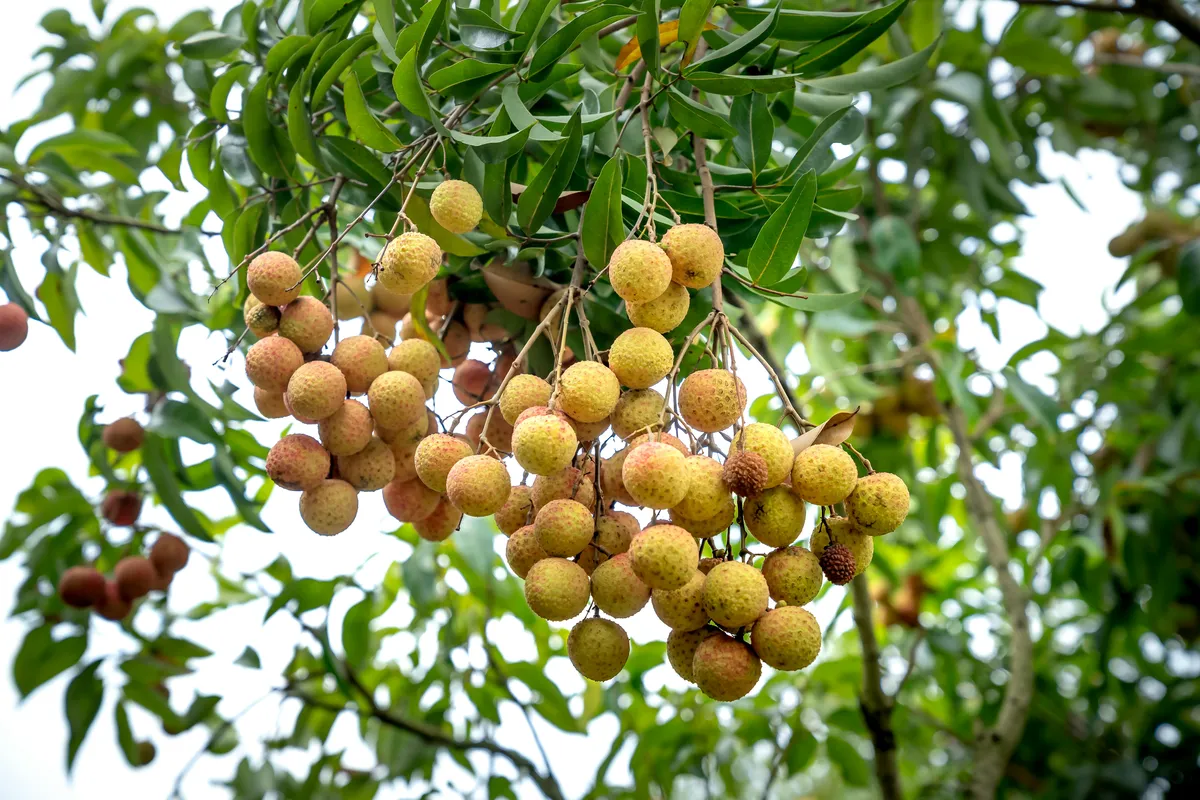
I did not think much about where it came from until I was maybe seven or eight, visiting family in Fujian province. My uncle took me to the backyard, pointed at a massive tree covered in clusters of small, round, brownish fruit, and said, “That is long yan. Go pick some.”
I have been chasing that memory ever since.
The Name Says It All
Longan (Dimocarpus longan) gets its name from the Cantonese “lung ngaan,” which means dragon eye. Crack open the thin, bark-like shell and you will see why - the translucent white flesh wraps around a glossy black seed, and the whole thing looks exactly like an eyeball staring back at you. My kids think this is the coolest thing about longan, which says a lot about what impresses a five-year-old.
The fruit is related to lychee, and if you have had lychee, you are in the neighborhood. But longan is a little less floral, a little more caramel-sweet, with a musky depth that intensifies when dried. Fresh longan tastes like summer. Dried longan tastes like memory.
Why I Tried Growing One in New York
Here is where the plant dad in me took over. After years of buying dried longan from the Chinese grocery store on Mott Street, I started wondering: could I grow a longan tree? In New York City? In my apartment?
The short answer is yes, sort of, with caveats the size of Manhattan.
Longan trees are tropical. They are native to Southeast Asia and southern China, and they thrive in USDA zones 9 through 11 - think South Florida, Southern California, Hawaii. New York City is solidly zone 7. The math does not add up. But I have never let climate zones stop me from trying something dumb with plants.
So I ordered a small grafted longan sapling online, potted it up, and set it by our sunniest window. Here is what I have learned over the past few years of keeping this ridiculous, beautiful, probably-never-going-to-fruit tree alive in my living room.
Growing Longan in Containers: The Honest Guide
Start with the Right Plant
You have two options: grow from seed or buy a grafted tree. If you grow from seed, you are looking at six to eight years before it might produce fruit - and “might” is doing heavy lifting there. Seed-grown trees are also less predictable in fruit quality.
A grafted sapling can fruit in two to four years and gives you a known variety. I went with a grafted Kohala variety, which is one of the more compact cultivars suited for container growing. It cost about thirty dollars, which is roughly what I spend on dried longan in a year anyway.
The Container Setup
Start with a 20 to 24 inch pot with drainage holes. Longan trees hate waterlogged roots - they will tell you by dropping leaves and looking generally miserable. Use a mix of potting soil, perlite, and bark for drainage. I do roughly 60 percent potting mix, 20 percent perlite, 20 percent orchid bark. The goal is soil that holds moisture but drains freely.
As the tree grows, you will eventually need to move up to a larger container. My tree is currently in a 15-gallon fabric pot, which lets the roots breathe and prevents the circling root problem you get with plastic pots.
Light - The Non-Negotiable
This is where apartment growing gets tricky. Longan trees need full sun - six to eight hours of direct sunlight daily. Not bright indirect light. Not “near a window.” Actual direct sun hitting the leaves.
In our apartment, I put the tree right against our south-facing window from spring through fall. During winter, I supplement with a full-spectrum grow light on a timer for twelve hours. Is this overkill? Maybe. Does the tree seem to appreciate it? Also maybe. Plants cannot talk, but if mine could, I think it would ask to move to Florida.
Temperature and Humidity
Longan trees prefer temperatures between 68 and 86 degrees Fahrenheit. They are frost-sensitive - even a brief dip below 32 degrees can cause serious damage. This is actually one advantage of apartment growing in New York. My apartment never drops below 65 degrees, because apparently my building’s heating system has one setting: “surface of the sun.”
Humidity is the bigger challenge. Longan trees like it humid - 50 to 70 percent relative humidity. New York apartments in winter are basically deserts. I run a humidifier near the tree from November through March, and I group it with my other tropical plants so they can create their own little microclimate. My wife calls this corner of the living room “the jungle.” She is not wrong.
Watering
Water deeply when the top two inches of soil feel dry. In summer, that is about twice a week. In winter, more like once a week or even less. The key is consistency without overdoing it. Longan roots are sensitive to both drought and standing water, which makes them exactly as dramatic as they sound.
I bottom-water mine by setting the pot in a large tray filled with a few inches of water and letting it soak for thirty minutes. This encourages roots to grow downward and ensures even moisture throughout the pot.
Feeding
During the growing season (spring through early fall), I fertilize every two weeks with a balanced liquid fertilizer diluted to half strength. Once a month, I add a fertilizer with extra potassium to support any potential flowering. In fall and winter, I stop fertilizing entirely and let the tree rest.
One trick I learned from a forum for tropical fruit growers: longan trees need a period of cool (but not cold) temperatures to trigger flowering. In their native habitat, this happens naturally. In my apartment, I try to keep the tree in a cooler room - around 55 to 60 degrees - for four to six weeks in late fall. This is logistically complicated in a two-bedroom apartment with kids, but I manage by putting it in our bedroom and sleeping under extra blankets. My wife is a saint.
The Cultural Weight of a Fruit
Here is the thing about growing longan that transcends the practical gardening stuff. In Chinese culture, longan carries real significance. Dried longan (long yan rou) is a staple in traditional Chinese medicine - it is believed to nourish the blood, calm the mind, and strengthen the spleen. My grandmother used it the way some people use chamomile tea: as a gentle remedy for everything from insomnia to fatigue.
During Lunar New Year, longan appears alongside lychee and other round fruits as symbols of prosperity and completeness. A gift basket with longan signals wishes for fertility and abundance. When my wife and I got married, my mom included dried longan in the traditional gift exchange. I did not fully understand the symbolism at the time, but now, with two kids running around and a longan tree growing in my living room, it feels like it worked.
There is also the legend that gives the fruit its name. The story goes that a hero named Long Yan defeated a dragon that had been terrorizing his village. After the battle, fruit trees bearing small, eye-shaped fruit grew from where he fell. The villagers named the fruit in his honor. My kids love this story. My son now insists our tree is “the dragon’s tree,” and honestly, that is the best name any plant in our house has ever been given.
Will It Ever Fruit?
Let me be real with you. My longan tree has been growing for about three years. It is healthy, it is putting out new growth every spring, and it has never once flowered. Growing tropical fruit trees outside their native climate is an exercise in managing expectations. The tree might flower next year. It might never flower. The cool period trick might work, or it might just make our bedroom uncomfortably cold for six weeks.
But here is what I have come to understand: the fruit is not really the point. I mean, yes, I would lose my mind with joy if I ever harvested a single longan from this tree. I would probably cry. I would definitely make my whole family gather around and watch me eat it.
But the tree itself has already given me something. When I water it on Sunday mornings, I think about my uncle’s backyard in Fujian. When I drop dried longan into a pot of red date tea, I think about my grandmother’s kitchen. When my kids press their faces against the leaves and ask me to tell the dragon story again, I think about how food and plants carry culture forward in ways that recipes alone cannot.
If You Want to Try It
Here is my honest advice for anyone thinking about growing a longan tree:
If you live in zones 9 through 11 - go for it. Plant it in the ground, give it space, and you will likely get fruit within a few years from a grafted tree. Lucky you.
If you live somewhere colder, like me, grow it in a container and treat it as a beautiful, slow-growing houseplant that happens to have an incredible story behind it. Keep your expectations low and your humidity high. Accept that you might never get fruit, and find joy in the growing anyway.
Either way, pick up some dried longan from your local Asian grocery store. Simmer a handful with red dates and goji berries in water for twenty minutes. Add a little rock sugar. Drink it on a cold evening and tell me it does not taste like being taken care of.
That is the real harvest.
Quick Care Reference
- Botanical name: Dimocarpus longan
- Common names: Longan, dragon eye, long yan
- Light: Full sun, 6 to 8 hours direct
- Water: When top 2 inches dry, consistent but not soggy
- Soil: Well-draining mix with perlite and bark
- Temperature: 68 to 86 degrees F, frost-sensitive
- Humidity: 50 to 70 percent
- Fertilizer: Balanced liquid, half-strength, every 2 weeks in growing season
- Container size: Start 20 to 24 inch pot, size up as needed
- Time to fruit: 2 to 4 years (grafted), 6 to 8 years (seed-grown)
- Hardiness zones: 9 to 11 outdoors, container anywhere with enough light