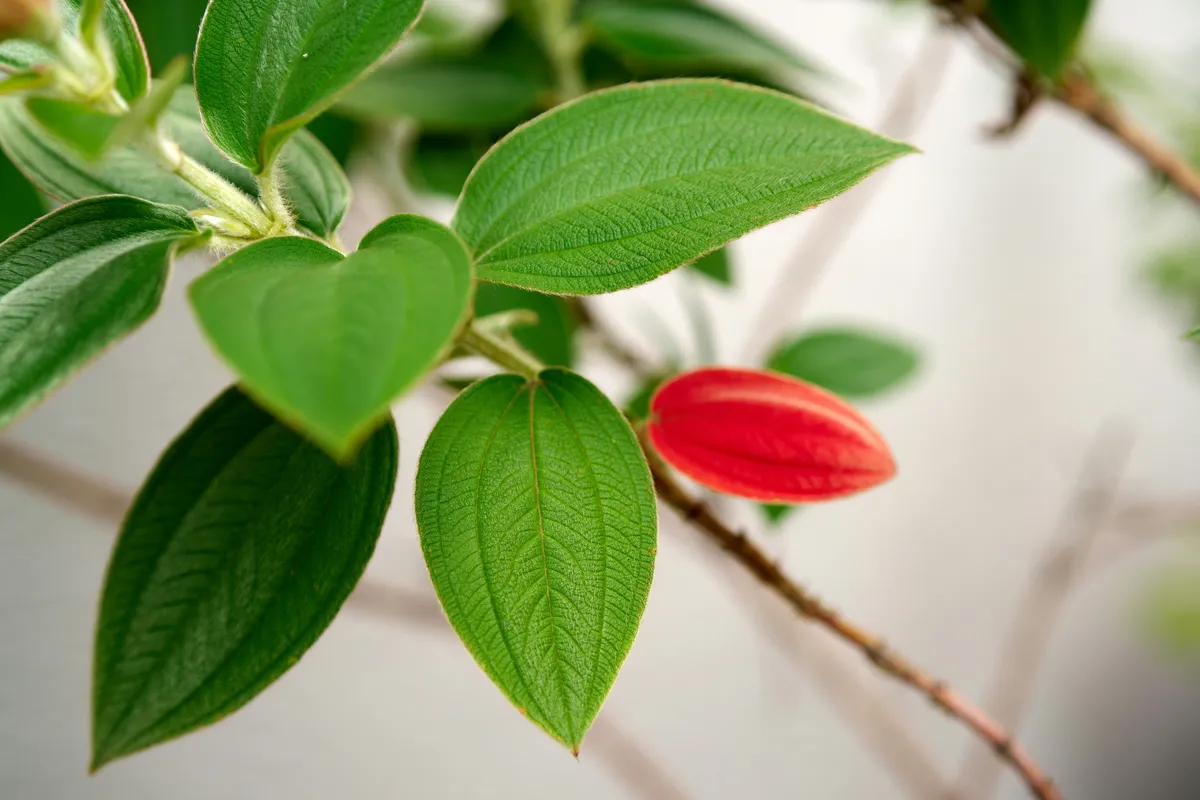
If you have ever scrolled past a photo of a trailing plant covered in bright red tubular flowers and thought “what is THAT,” congratulations - you just discovered the lipstick plant. And yes, it really does look like tiny tubes of lipstick poking out of dark green foliage.
Aeschynanthus radicans is one of those plants that makes visitors stop and ask questions. It trails beautifully from a hanging basket or high shelf, and when it blooms, those vivid red flowers steal the show. The best part? It is not nearly as fussy as it looks.
I picked mine up at a local nursery on a whim because my daughter pointed at it and said “that one has lipstick.” She was three. She was also correct. Two years later, it is still one of my favorite plants in the house.
What Makes the Lipstick Plant Special
The lipstick plant is an epiphyte, which means in its native habitat across Southeast Asia (Malaysia, Indonesia, and surrounding regions), it grows on tree branches rather than in the ground. It gets its nutrients from organic matter that collects around its roots and from the humid air.
This matters for how you care for it at home. Epiphytes generally want chunky, well-draining soil, good airflow, and consistent humidity. Think of it less like a traditional potted plant and more like something that wants to feel like it is hanging out on a tree branch in a tropical forest.
The “lipstick” part comes from the way the flowers emerge. Dark, tube-shaped buds (called calyces) form at the stem tips, and then bright red tubular flowers slowly push out of them - exactly like a lipstick being twisted up from its case. It is one of the most satisfying things to watch in slow motion over a few days.
Light Requirements
This is where most people go wrong with lipstick plants, and it is the single most important factor for getting blooms.
Bright, indirect light is the sweet spot. An east-facing window is perfect - gentle morning sun without the harsh afternoon intensity. A west-facing window works too, as long as you pull the plant back a foot or two during peak afternoon sun in summer.
North-facing windows are usually not bright enough. Your plant will survive there, but it probably will not bloom. And honestly, the blooms are half the reason to grow this plant.
Signs of too much light: Leaves turning pale, yellowish, or developing brown crispy patches, especially on the side facing the window.
Signs of too little light: Long, leggy stems with big gaps between leaves. No flowers. Slow or no growth, even during spring and summer.
One thing I have learned the hard way - if your lipstick plant has not bloomed in over a year, the answer is almost always “it needs more light.” I moved mine from a north window to an east window and had flowers within two months.
Watering
Lipstick plants like consistent moisture but absolutely hate sitting in soggy soil. This is the classic houseplant balance that trips people up.
The rule of thumb: Let the top inch of soil dry out between waterings, then water thoroughly until it drains from the bottom. Empty the saucer after about 15 minutes. Do not let it sit in standing water.
During spring and summer when the plant is actively growing, you will probably water once a week or so. In winter, cut back to every 10-14 days. But always check the soil first rather than watering on a strict schedule. Your home’s humidity, temperature, and light levels all affect how fast the soil dries.
Underwatering signs: Leaves feel thin and papery, lower leaves drop, stems look deflated.
Overwatering signs: Leaves turn yellow and feel mushy, stems get soft and brown at the base, soil smells funky.
If you are a chronic overwaterer (no judgment, we have all been there), a moisture meter is your best friend with this plant. Aim for a reading of about 3-4 before watering again.
Humidity
Here is where that tropical epiphyte heritage really shows up. Lipstick plants love humidity in the 50-70% range. Most homes sit around 30-40% in winter, which is why you might see some leaf drop or brown tips during the colder months.
Easy ways to boost humidity:
- Group it with other plants. Collective transpiration creates a little microclimate of higher humidity.
- Set the pot on a pebble tray filled with water. Make sure the pot sits on the pebbles, not in the water.
- Run a humidifier nearby. This is the most effective option if your home is really dry.
- Keep it in a bright bathroom if you have one with a window. The steam from showers is basically a spa day for this plant.
One important note: High humidity is great, but stagnant moist air is not. Make sure there is some air circulation in the room. A gentle fan or cracked window (when the weather allows) helps prevent fungal issues.
Soil and Potting
Remember the epiphyte thing? Your lipstick plant wants a potting mix that drains fast and does not hold too much water. Dense, heavy potting soil is a recipe for root rot.
A good mix:
- One part regular potting mix
- One part perlite
- One part orchid bark
This gives you the drainage and airflow the roots need while still retaining enough moisture to keep the plant happy between waterings. If you do not have orchid bark, you can substitute with coconut coir chunks or even some pumice.
Pot choice matters too. Go with a pot that has drainage holes - this is non-negotiable. Terracotta is great because it breathes and helps prevent overwatering. Plastic works too, but you will need to be more careful with your watering schedule.
Lipstick plants do not mind being slightly rootbound, which is actually good news. You will only need to repot every 2-3 years. When you do, go up just one pot size. A pot that is too large holds too much moisture in the soil the roots have not reached yet.
Temperature
Keep it between 65-80F (18-27C) and your lipstick plant will be content. It is a tropical plant, so it does not appreciate cold at all.
Watch out for:
- Cold drafts from windows in winter
- Air conditioning vents blowing directly on the plant
- Temperatures below 55F (13C) - this can cause serious leaf drop and stress
If you live in an apartment in New York like I do, the winter struggle is real. Drafty windows plus dry radiator heat is basically the opposite of what this plant wants. I keep mine away from the window during the coldest months and run a humidifier nearby.
Fertilizing
During the growing season (spring through early fall), feed your lipstick plant every 2-4 weeks with a balanced liquid fertilizer diluted to half strength. Something like a 10-10-10 or 20-20-20 works well.
If you want to encourage blooming specifically, you can switch to a fertilizer with a slightly higher phosphorus content (the middle number) once the plant is mature and getting enough light.
Stop fertilizing in winter. The plant is not actively growing, and excess fertilizer salts can build up in the soil and damage the roots.
If you notice white crusty buildup on the soil surface, that is salt buildup from fertilizer. Flush the soil thoroughly with plain water to wash it out.
Getting Your Lipstick Plant to Bloom
Let’s be real - the flowers are the main event. Here is how to maximize your chances:
- Light, light, light. This is the number one factor. Bright indirect light for several hours a day.
- Slight cool period in winter. Dropping nighttime temperatures to around 60-65F (15-18C) for a few weeks in winter can help trigger spring blooms. Just do not go below 55F.
- Consistent watering. Stress from irregular watering can cause bud drop.
- Feed during growing season. The plant needs energy to produce flowers.
- Be patient. Young plants often will not bloom until they are a couple of years old. This is normal.
When buds do form, try not to move the plant around. Changes in light direction or temperature can cause buds to drop before they open. I know it is tempting to move it somewhere more visible, but resist the urge.
Pruning
Lipstick plants can get leggy over time, especially if the light is not quite bright enough. Regular pruning keeps the plant bushy and actually encourages more blooms, since flowers form on new growth.
After the plant finishes blooming, trim the stems back by about a third. Cut just above a leaf node (the point where a leaf meets the stem). New growth will branch out from there, giving you a fuller plant.
Save those cuttings - they root easily in water or moist soil. Free plants for friends, or more lipstick plants for yourself. Nobody is judging.
Common Problems and How to Fix Them
Leaves dropping: The most common complaint. Usually caused by:
- Sudden temperature changes (moved the plant, cold draft, etc.)
- Soil too dry OR too wet (check with your finger or a moisture meter)
- Low humidity, especially in winter
No flowers: Almost always a light issue. Move to a brighter spot. If light is adequate, make sure you are fertilizing during growing season and the plant is mature enough (at least 1-2 years old).
Brown leaf tips: Low humidity or fertilizer salt buildup. Increase humidity and flush the soil if you have been fertilizing heavily.
Leggy, sparse growth: Not enough light. Move to a brighter location and prune back the leggy stems to encourage bushier growth.
Soft, mushy stems at the base: Root rot from overwatering. Remove the affected stems, let the soil dry out, and repot in fresh, well-draining mix if needed. Cut back on watering going forward.
Varieties Worth Knowing
The classic lipstick plant (Aeschynanthus radicans) has red flowers, but there are some fun varieties out there:
- Mona Lisa - More compact growth habit with red-orange flowers. Probably the easiest to find and the most forgiving for beginners.
- Black Pagoda - Striking mottled leaves with orange-yellow flowers. The foliage alone is worth growing it for.
- Rasta or Curly - Twisted, curly leaves that give the whole plant a unique texture. Same red flowers.
- Tangerine - Orange-yellow flowers instead of red. A nice alternative if you want something different.
Is It Safe Around Kids and Pets?
Good news - lipstick plants are considered non-toxic to cats, dogs, and humans. This makes them a solid choice if you have curious toddlers or pets who like to nibble on leaves. Always nice when you do not have to play defense with your plant placement.
Final Thoughts
The lipstick plant is one of those houseplants that rewards you for paying attention without punishing you too harshly when life gets busy. Give it bright light, reasonable humidity, and consistent (not excessive) watering, and it will trail beautifully and eventually reward you with those showstopping blooms.
If you are new to trailing plants, this is a great one to start with. It is more forgiving than a string of pearls, more interesting than a basic pothos, and when those flowers finally pop out - you will understand why everyone makes such a fuss about them.
Now go find one. Your empty shelf is waiting.