How I Became a Plant Dad: From Killing Succulents to a 50-Plant Apartment
I want to be honest with you. Five years ago, I could not keep a cactus alive.
That is not a figure of speech. My wife bought me a tiny barrel cactus from the Union Square farmers market. I set it on the kitchen windowsill, forgot about it for three weeks, then overwatered it out of guilt. It turned to mush. A cactus. Mush.
If you had told me then that I would one day have over fifty plants crammed into a two-bedroom apartment in Queens, that I would spend Saturday mornings checking humidity levels and talking to a fiddle leaf fig like it owed me money, I would have laughed at you.
But here we are.
The Accidental Beginning
It started with my daughter.
When Lily was about eighteen months old, we moved into our current place. It was smaller than our old apartment - which I did not think was possible - and had exactly one good window. The kind of window that gets afternoon light and makes the whole room glow golden for about forty-five minutes before the building next door blocks it entirely.
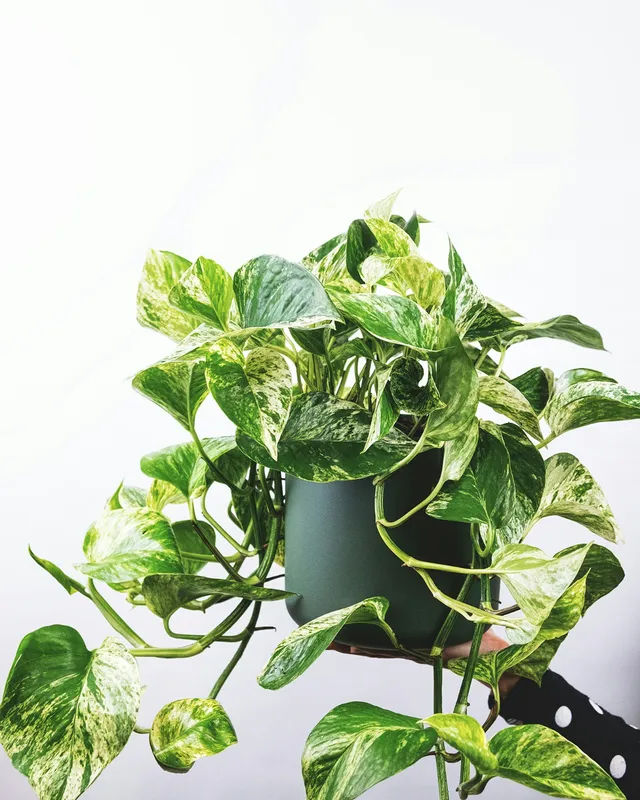
My mother-in-law came to visit and brought a pothos in a ceramic pot. “For the window,” she said, like she was prescribing medicine. In Chinese families, plants are not really optional. They are somewhere between decor and superstition. You just have them.
I put it on the windowsill and expected it to die. That is what plants did around me. They arrived, they slowly turned yellow, and they left.
But the pothos did not die. It grew. It grew fast. Within a month, it had a new vine trailing over the edge of the pot. Within two months, it was reaching for the curtain rod.
I did not do anything special. I watered it when I remembered, which was maybe once a week. The light was decent. The apartment was warm. That was it.
And something in my brain shifted. Not a dramatic revelation. More like a quiet thought: huh, maybe I am not cursed.
The Dad Factor
Here is the thing nobody tells you about becoming a father. You spend so much time keeping a tiny human alive that you develop this weird hyperawareness about living things. You notice when the baby is breathing. You notice when the baby is too quiet. You check on them seventeen times before you go to sleep.
That vigilance leaks into everything else. Suddenly you are also noticing the plant on the windowsill. You see the soil is dry. You see a yellow leaf. You instinctively grab the watering can because your brain is already in caretaking mode.
I think that is what changed for me. I did not suddenly develop a green thumb. I developed dad reflexes, and some of those reflexes pointed toward plants.
The pothos got a friend. A snake plant from the hardware store, because someone online said they were impossible to kill. Then a spider plant, because it was three dollars at the bodega and I am physically incapable of saying no to a three-dollar anything.
Within six months, I had twelve plants. Within a year, I lost count.
What My Dad Would Think
My father grew up in Guangdong province, where his family had a small plot of land behind their house. They grew bitter melon, bok choy, winter melon, and more greens than I can name. Gardening was not a hobby. It was dinner.
When he came to the States, he traded that plot for a one-bedroom in Flushing. No yard. No balcony worth mentioning. But he always had plants on the windowsill. Always. A pot of green onions regrowing from scraps. A jade plant that lived on top of the refrigerator for reasons I never understood. Aloe vera that my mom would break open whenever someone got a burn.
I never thought of my dad as a plant guy. He was a restaurant guy, a work-double-shifts guy, an I-will-sleep-when-I-am-dead guy. But those windowsill plants were always there, quiet and persistent, and I realize now that they were his version of holding onto something from home.
I think about that a lot when I am misting my calatheas at six in the morning while my daughter eats Cheerios and asks me why the leaves are curly. I think about the line between his windowsill and mine. How it is the same impulse dressed up differently.
He would probably think fifty plants is ridiculous. He would be right.
The Apartment Jungle Phase
There is a period in every plant person’s journey where things get a little out of hand. For me, it was the winter of 2023.
I discovered plant Instagram. I discovered Facebook Marketplace plant sales. I discovered that people in Brooklyn would trade cuttings in parking lots like it was some kind of underground economy. Which, honestly, it kind of is.
I bought a monstera deliciosa from a woman in Park Slope who was moving to Portland. Twenty dollars, three feet tall, absolutely gorgeous. I carried it home on the subway and got three compliments and one very suspicious look from a man who clearly thought I was up to something.
The monstera needed more light than we had. So I bought a grow light. But the grow light made the corner look weird without more plants around it. So I got a shelf. And a shelf with one plant on it looks sad, so I filled it.
This is how it happens. Nobody wakes up one morning and decides to have fifty plants. You just keep solving small problems until your living room looks like a greenhouse.
My wife was patient about it. “Patient” might be generous. She tolerated it. She drew the line at the bathroom, which I respected until I read that ferns love humidity and, well, sometimes lines are meant to be gently relocated.
The Kills Along the Way
I want to be clear: I did not go from plant killer to plant whisperer. I went from plant killer to plant keeper-alive-most-of-the-time. There is a huge difference.
In the last few years, I have killed a string of pearls (overwatered, obviously), two calathea ornatas (they wanted more humidity than my apartment and my marriage could handle), a maidenhair fern (I still do not know what went wrong and I have made peace with never knowing), and a fiddle leaf fig that I loved so much I am pretty sure I loved it to death.
Every dead plant taught me something. The string of pearls taught me that “water when the soil is dry” means actually dry, not “slightly less wet.” The calatheas taught me that some plants need conditions you cannot easily provide, and that is okay. The fiddle leaf fig taught me that moving a plant six inches to the left can apparently be a life-or-death event.
I keep a small list of plants I have lost. Not because I am morbid, but because it helps me remember what I have learned. Every plant person has a kill list. If someone tells you they have never lost a plant, they are either lying or they only own plastic ones.
What It Actually Gave Me
I could tell you about the studies that say houseplants reduce stress and improve air quality. And those things are probably true. But that is not why I keep doing this.
I keep doing this because it is the one hobby I have that does not require leaving the house, spending a fortune, or having more than ten free minutes. I can water a plant while my daughter watches cartoons. I can propagate a cutting while waiting for pasta water to boil. I can check on my plants at midnight when I cannot sleep and the apartment is quiet and it feels like the whole city has gone still.
Plants do not need you to be impressive. They do not care about your job or your parenting style or whether you remembered to send that email. They need water, light, and occasionally some fertilizer. That is it.
There is something deeply calming about a relationship that simple.
And there is something wonderful about watching my daughter learn it too. She has her own plant now - a small pothos cutting that she waters with a spray bottle every Sunday. She named it Broccoli. I do not know why. I did not ask.
She checks on Broccoli before school sometimes. Tells it good morning. Tells it to “grow big.” And I watch her and think about my dad’s jade plant on top of the refrigerator, and my mother-in-law’s pothos on our windowsill, and how this thing keeps getting passed down even when nobody is trying to pass it down.
If You Are at the Beginning
Maybe you are reading this because you killed a succulent last month and you are wondering if plants are just not your thing. I get it. I was you.
Here is what I wish someone had told me: you do not need a green thumb. You need one forgiving plant and a little bit of attention. Start with a pothos or a snake plant. Put it near a window. Water it when you remember. Do not overthink it.
The plant will grow. And slowly, without you noticing, so will you.
That sounds cheesy. I know. Dad energy. I warned you.
What is Next
If my story sounds familiar, you might enjoy some of these posts that dig into the practical side of what I have learned along the way. Check out the guide on caring for pothos in low light if you are just starting out. Or if you are ready to multiply your collection for free, the pothos propagation guide is a good next step. And if you have kids, the toddler-proof plants list might save you some heartache.
Fifty plants later, I am still learning. Still killing the occasional calathea. Still talking to the fiddle leaf fig replacement like it can hear me.
But I am also still growing. And honestly, that is the whole point.