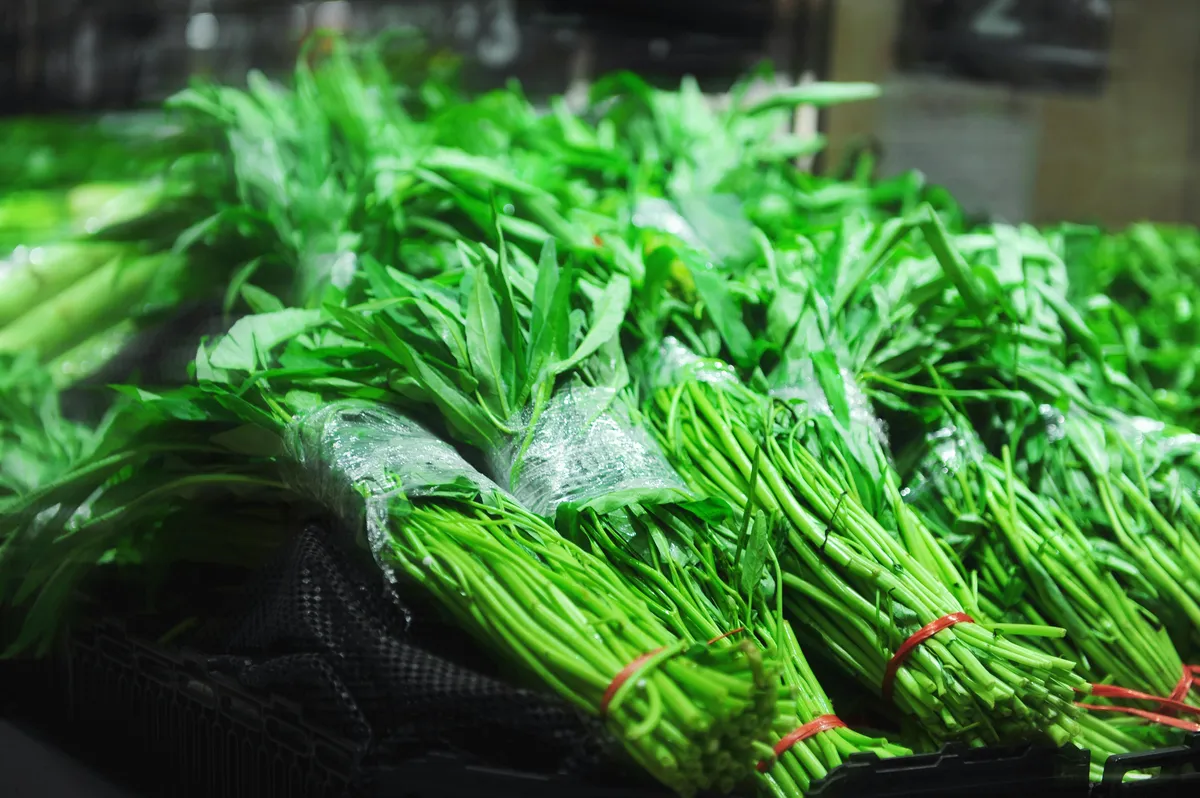
Growing Water Spinach (Ong Choy): The Wok-Ready Green That Grows Itself
If you have ever ordered stir-fried water spinach at a Chinese restaurant - you know the one, with garlic and maybe a little fermented bean curd - you already know why this vegetable is worth growing. Those hollow, crunchy stems. The tender leaves that soak up whatever sauce you throw at them. The way the whole plate disappears in about 90 seconds flat.
Water spinach goes by a lot of names depending on who is cooking it. Ong choy in Cantonese. Kong xin cai (literally “hollow heart vegetable”) in Mandarin. Kangkung in Malay and Indonesian. Morning glory in Thai cooking. Whatever you call it, it is the same plant: Ipomoea aquatica, a semi-aquatic tropical green that grows faster than almost anything else you can put in a pot.
My dad never grew this one. He was a tomato guy, through and through. But my uncle in Flushing had water spinach growing in a big plastic tub on his back patio every summer, and I remember being amazed at how quickly it would bounce back after he hacked it down for dinner. Two weeks later, it looked like he had never touched it.
That is the kind of plant we are talking about here. Cut it, and it grows back. Water it a lot, and it is happy. Forget about it for a day in July heat, and it is still fine. If you want a productive, low-fuss green for summer stir-fries, water spinach might be the easiest win in your garden.
The Legal Situation (Yes, Really)
Before we get into the how-to, we need to talk about something unusual. Water spinach is classified as a federal noxious weed in the United States. I know. A vegetable that millions of people eat every day across Asia is technically on a government watch list here.
The reason is that Ipomoea aquatica is an incredibly aggressive grower in warm, wet environments. In tropical and subtropical climates, it can escape cultivation and take over waterways, choking out native plants and clogging drainage systems. States like Florida, where it has already established invasive populations, take this seriously.
What does this mean for you as a home gardener? It depends on your state. Texas has lifted restrictions for personal cultivation. Massachusetts has a permitting system. Some southern states have outright bans. In northern states with cold winters, the plant dies back with the first frost and does not pose an ecological threat, so enforcement is generally less strict.
My advice: check with your local agricultural extension office before you plant. In most of the Northeast and Midwest, growing ong choy in containers for personal use is not going to land you in trouble. But know the rules for your area. And absolutely, do not dump leftover plants or cuttings into any waterway. Grow it in a pot, eat it, and compost the rest.
What You Need to Get Started
Water spinach is not fussy. Here is the basic setup:
Container: A wide, deep pot or a plastic storage tub works great. Think 12 inches deep minimum, wider is better. Water spinach spreads, so give it room. I have seen people use five-gallon buckets, Rubbermaid totes, even old coolers with drainage holes drilled in the bottom.
Soil: Standard potting mix is fine. Water spinach is not picky about soil as long as it stays consistently moist. If you want to get fancy, mix in some compost for extra nutrients.
Seeds or cuttings: You can find water spinach seeds at Asian grocery stores, online seed shops, or sometimes at farmers markets. Look for packets labeled “ong choy,” “kangkung,” or “water spinach.” If you can find fresh water spinach at an Asian market with stems still intact, you can also root cuttings in water - just stick the bottom few inches in a jar and wait for roots to appear in about a week.
Sun: Full sun, at least 6 hours a day. More is better. This is a tropical plant that loves heat and light.
Water: Lots of it. This is literally called water spinach. Keep the soil consistently wet - not just moist, wet. Some growers even keep a saucer under the pot filled with water so the roots are always drinking. If you are growing in a tub without drainage, even better. Just do not let it get stagnant and gross.
Planting and Growing
Step 1: Soak your seeds. Drop them in a bowl of lukewarm water and let them sit for 12 to 24 hours. This softens the seed coat and speeds up germination.
Step 2: Plant. Fill your container with moist potting mix, leaving about an inch of space at the top. Push seeds about half an inch into the soil, spacing them roughly 2 to 3 inches apart. Do not stress too much about spacing - you can always thin later, and water spinach is forgiving about crowding.
Step 3: Keep it warm and wet. Water spinach germinates best when soil temperatures are above 75 degrees Fahrenheit. If you are starting in spring and nights are still cool, keep pots indoors near a sunny window or use a seedling heat mat. Expect sprouts in 7 to 14 days.
Step 4: Move outside when it is warm. Once nighttime temperatures are consistently above 60 degrees Fahrenheit, your water spinach can live outside full time. In the New York area, that is usually late May or early June.
Step 5: Feed it. Water spinach is a heavy feeder. Apply a balanced liquid fertilizer every two to three weeks during the growing season. Fish emulsion works great and is what my uncle always used. The smell is… memorable, but the plants love it.
Harvesting (The Best Part)
Here is where water spinach really shines. You can start harvesting just 4 to 6 weeks after planting, and the plant keeps producing all summer long.
How to harvest: Cut stems about 2 to 3 inches above the soil line using clean scissors or a sharp knife. Do not pull the plant up - you want those roots intact so it can regrow. Each cut point will send out new side shoots, making the plant bushier and more productive with each harvest.
How often: Every two to three weeks during peak summer, sometimes more. In hot weather with plenty of water and fertilizer, growth is almost comically fast. You will have more ong choy than you know what to do with, which is exactly the kind of problem you want.
What to harvest: Both the stems and leaves are edible. Young, tender tips are best for stir-frying. Thicker, more mature stems are still good but benefit from a slightly longer cook time. The hollow stems stay crunchy even when cooked, which is a big part of the appeal.
How to Cook It
I am not going to pretend this is a cooking blog, but if you are growing ong choy, you need to know the basics.
The classic: Garlic stir-fried water spinach. Heat your wok until it is screaming hot. Add oil, then smashed garlic cloves. Toss in washed, roughly chopped water spinach. Stir-fry for 60 to 90 seconds. Season with soy sauce or a little oyster sauce. Done. The whole thing takes less time than it takes to read this paragraph.
With fermented bean curd: Same method, but add a cube of fu ru (fermented tofu) mashed into the oil with the garlic. This is how my uncle made it, and it is transcendent. Salty, funky, and weirdly addictive.
In soups: Water spinach is great tossed into a simple broth-based soup in the last minute of cooking. Think a clear pork rib soup or a simple egg drop soup - just throw in a handful of leaves and stems right before serving.
Common Problems (And Why You Probably Will Not Have Them)
Water spinach is genuinely one of the most trouble-free vegetables you can grow. But a few things can go wrong:
Slow growth or leggy stems: Not enough sun. Move the container to a sunnier spot. Water spinach wants full, direct sunlight.
Yellowing leaves: Usually a nutrient deficiency. Increase your fertilizing schedule or switch to a nitrogen-rich fertilizer. Fish emulsion is your friend here.
Pests: Aphids occasionally show up, but they are rarely a serious problem. A strong blast of water from the hose usually takes care of them. Spider mites can appear if conditions are too dry, which should not be a problem if you are keeping the soil wet like you should be.
It dies in fall: That is normal. Water spinach is a tropical annual that cannot handle frost. Once temperatures drop below about 50 degrees Fahrenheit consistently, the plant will decline. Pull it up, compost it, and save some seeds or cuttings for next year.
Why Every Asian American Garden Should Have This Plant
There is something about growing the vegetables you ate growing up that hits different than growing regular garden tomatoes or basil. When I harvest ong choy from my patio tub and stir-fry it with garlic, it tastes like every family dinner at a round table in Chinatown. It tastes like my uncle’s backyard. It tastes like something that connects where I am now to where my family came from.
Plus, at the grocery store, water spinach runs $3 to $5 a bunch and wilts fast. A single container plant will give you enough greens for stir-fries all summer long, and the leaves are so much crisper when they go from pot to wok in 10 minutes instead of sitting in a plastic bag for three days.
If you have a sunny spot, a big pot, and access to water, you can grow this. It is one of the most rewarding kitchen garden plants I know - fast, productive, delicious, and deeply tied to the foods that shaped how many of us grew up eating.
Start some seeds this spring. Your wok will thank you.