Growing Taro at Home: The Plant Your Grandma Grew (And You Should Too)
There is a photo somewhere in my parents’ house of my grandmother standing in her garden in Guangdong, surrounded by taro plants that came up to her waist. She is holding a corm the size of a football and grinning like she just won the lottery. My dad says she grew taro every single year without fail, the same way some American grandparents grow tomatoes - it was just what you did.
I did not inherit her garden, but I did inherit the craving for taro. Taro in congee. Taro in mooncakes. Taro bubble tea that turns everything purple. And after years of buying sad, shrink-wrapped corms from the grocery store, I finally decided to try growing my own. Turns out, if you have a big pot and a sunny spot, taro is surprisingly cooperative - even in a New York City apartment with questionable natural light.
What Exactly Is Taro?
Taro (Colocasia esculenta) is one of the oldest cultivated crops in the world. It has been grown in Southeast Asia for over 10,000 years, which means humans were farming taro before they figured out wheat. That is a serious resume.
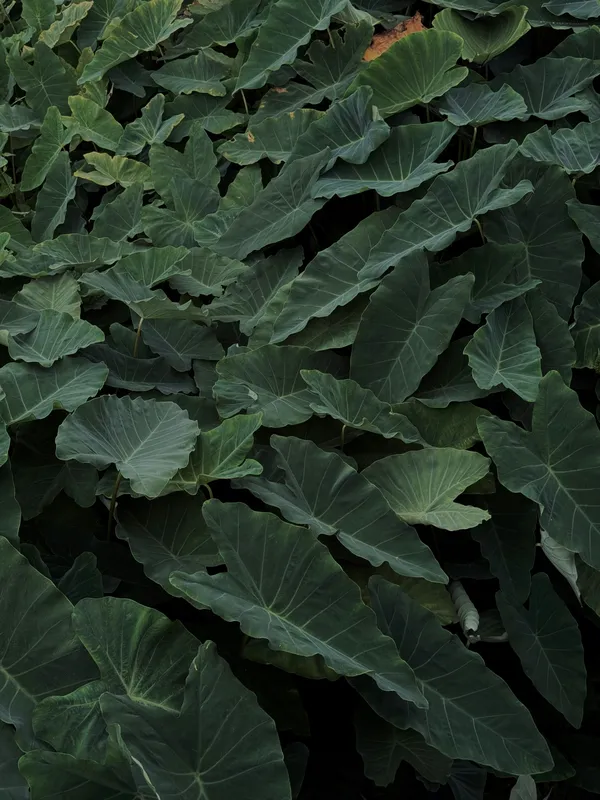
The plant produces large, heart-shaped leaves on long stems - they look like elephant ears, which is actually one of its common names. Underground, it grows starchy corms (technically not roots, but everyone calls them that) that are a dietary staple across Asia, the Pacific Islands, Africa, and the Caribbean. If you have eaten poi in Hawaii, wu tao in a dim sum restaurant, or that incredible purple taro ice cream from the Asian bakery down the street, you have eaten Colocasia esculenta.
The best part? The plant itself is absolutely gorgeous. Those big, velvety leaves catch water droplets like tiny mirrors. Even if you never harvest a single corm, growing taro as an ornamental is worth it. But we are going to harvest, because homegrown taro tastes noticeably better than store-bought. I do not make the rules.
Getting Started: The Grocery Store Corm Method
Just like with ginger and lemongrass, your local Asian grocery store is your best nursery. Head to H Mart, 99 Ranch, or your neighborhood Chinese market and look for fresh taro corms. You want ones that are firm, heavy for their size, and show no signs of mushiness or mold. If you can find smaller corms (sometimes labeled “baby taro” or “small taro”), those actually work better for planting because they sprout faster.
You can also order taro corms online from tropical plant sellers, but honestly, the grocery store method is cheaper and more fun. There is something deeply satisfying about turning a three-dollar vegetable into a six-month gardening project.
Here is what you need to get started:
- 2-3 small taro corms (grocery store is fine)
- A large container, at least 15-18 inches wide and 12 inches deep
- Potting mix (rich and moisture-retentive - more on this below)
- A warm, bright spot (indoors or outdoors)
- Patience (about 6-8 months to harvest)
Planting Your Taro
Fill your container with a rich, moisture-retentive potting mix. Taro grows naturally along streams and in wetland areas, so it likes soil that stays consistently damp. I use a mix of regular potting soil, compost, and a handful of peat moss or coconut coir. You want something that holds moisture without turning into a swamp. Think “damp sponge,” not “mud puddle.”
Plant each corm about 3-4 inches deep with the pointy end facing up. If you cannot figure out which end is pointy, do not stress - taro is forgiving and will sort itself out. Space corms about 12 inches apart if you are putting multiple in one large container. Water thoroughly after planting until water runs out the drainage holes.
One tip my dad passed along: soak your corms in lukewarm water for 24 hours before planting. He swears this wakes them up faster. I have no scientific evidence for this, but I do it anyway because arguing with your dad about gardening is a losing battle.
Light Requirements
Taro wants bright, indirect light or partial sun. In nature, it grows under forest canopies near water, so it is used to dappled conditions. Full blazing sun all day can scorch the leaves, especially if humidity is low.
If you are growing indoors, a south or west-facing window works well. Outdoors, a spot that gets morning sun and afternoon shade is ideal. I keep mine on my east-facing balcony from May through September, and it does great.
During winter in colder climates (hello, fellow New Yorkers), bring the whole container inside and give it the brightest spot you have. Growth will slow dramatically, but the plant will survive.
Watering: More Is More
This is the one plant where I will tell you to overwater. Okay, not literally overwater, but taro is one of the thirstiest plants you will ever grow. In its natural habitat, it grows in standing water. Your container taro does not need to be submerged, but it does need consistently moist soil. Never let it dry out.
During the growing season (spring through early fall), I water my taro every single day when it is outdoors. Sometimes twice on really hot days. If the leaves start to droop, that is your sign that it needed water yesterday. They bounce back quickly once watered, but repeated wilting stresses the plant and can affect corm development.
A neat trick for the truly committed: place the pot in a deep saucer and keep the saucer filled with an inch or two of water at all times. This mimics the boggy conditions taro loves. Just make sure the pot has drainage holes so the soil does not become fully waterlogged - you want moist, not anaerobic.
Temperature and Humidity
Taro is tropical to its core. It thrives when temperatures are between 70-85 degrees Fahrenheit (21-29 degrees Celsius) and humidity is above 60%. Below 50 degrees Fahrenheit (10 degrees Celsius), growth stops. Frost will kill it outright, no negotiation.
For humidity, a humidifier near the plant helps during dry indoor winters. Grouping it with other tropical plants also creates a little microclimate of shared humidity, which is basically a plant community potluck where everyone brings moisture.
If you live in USDA zones 8-11, you can grow taro outdoors year-round. The rest of us treat it as a warm-season outdoor plant and bring containers inside when nighttime temperatures start dipping below 55 degrees Fahrenheit.
Feeding Your Taro
Taro is a heavy feeder. Those giant leaves and starchy corms take a lot of energy to produce. Feed every 3-4 weeks during the growing season with a balanced liquid fertilizer (something like 10-10-10 works well). If you prefer organic options, diluted fish emulsion or compost tea are both excellent choices.
I alternate between a balanced liquid fertilizer and fish emulsion. My wife says the fish emulsion makes the balcony smell like a pier at low tide. She is not wrong. But the taro loves it, and happy taro means future taro cake, so the smell is a worthy trade.
Stop fertilizing in fall when growth naturally slows down. Overfeeding a dormant plant is like bringing snacks to someone who is trying to sleep. Unnecessary and a little rude.
Common Problems and Solutions
Yellowing leaves: Usually means too much direct sun or not enough water. Check both. Move to a shadier spot and increase watering frequency.
Small or mushy corms: Often caused by insufficient nutrients or waterlogged (not just moist) soil. Make sure your container has drainage even though taro likes moisture. Feed regularly during the growing season.
Pests: Spider mites and aphids occasionally show up, especially indoors. A strong spray of water knocks most of them off. For persistent problems, neem oil works well. Taro is generally pest-resistant though - one of its many charms.
No growth after planting: Taro corms can be slow to sprout, especially if planted in cool conditions. Make sure soil temperature is at least 65-70 degrees Fahrenheit before planting. If it has been more than 3-4 weeks with no signs of life, check that the corm has not rotted. A healthy corm will be firm when you gently press on it.
Leaf spots: Brown or black spots on leaves can indicate fungal issues, usually from poor air circulation combined with high humidity. Space plants out and make sure air can move around them.
Harvesting
This is the fun part. Taro corms are ready to harvest about 6-8 months after planting, when the leaves start to yellow and die back naturally. You can also harvest earlier for smaller “baby” corms, which are actually more tender and cook faster.
To harvest, stop watering for a week or two to let the soil dry slightly. Then tip the container on its side and gently work the corms out of the soil. You should find one main corm plus several smaller side corms (called cormels). All of them are edible.
Important safety note: raw taro contains calcium oxalate crystals that will make your mouth feel like you ate fiberglass. Always cook taro thoroughly before eating. Boiling, steaming, roasting, or frying all work. Once cooked, the irritating compounds break down completely and you are left with creamy, slightly nutty, absolutely delicious starch. Do not eat it raw. I cannot stress this enough. Learn from my one very regrettable taste test.
What to Do with Your Harvest
Homegrown taro is incredibly versatile. Here are some of my favorite uses:
Taro congee is comfort food at its finest - simmer chunks of taro in rice porridge until everything gets thick and creamy. My kids call it “purple oatmeal” and request it on cold mornings. You can also cube and steam taro, then mash it with a little sugar and coconut milk for a filling that goes into bao buns and mooncakes. Stir-fried taro with garlic and oyster sauce is a weeknight staple that comes together in fifteen minutes. And if you are feeling ambitious, taro cake (wu tao gou) is a dim sum classic that freezes beautifully and pan-fries into crispy, savory perfection.
Save a few of the smaller cormels for replanting next season. Just store them in a paper bag in a cool, dry place over winter. You have now entered the cycle of infinite taro, which is exactly where my grandmother would want you to be.
Why Taro Is Worth the Wait
I will be honest - taro is not a weekend project. It takes months to go from corm to harvest, and it demands consistent attention to watering and feeding. It is not a “set it and forget it” plant.
But there is something deeply rewarding about growing a crop that connects you to thousands of years of agricultural tradition, to your own family history, and to a cuisine that shaped how you eat. Every time I slice into a homegrown corm and see that familiar purple-flecked white flesh, I think about my grandmother’s garden. I think about how she would probably laugh at my single container on a New York balcony compared to her rows and rows of taro. But she would also be proud that the tradition carried forward, even in a smaller, more urban form.
Start with a couple of corms from the grocery store this spring. Give them water, warmth, and patience. And in six months, when you are pulling your own taro out of the soil, you will understand why this plant has been feeding families for ten thousand years.