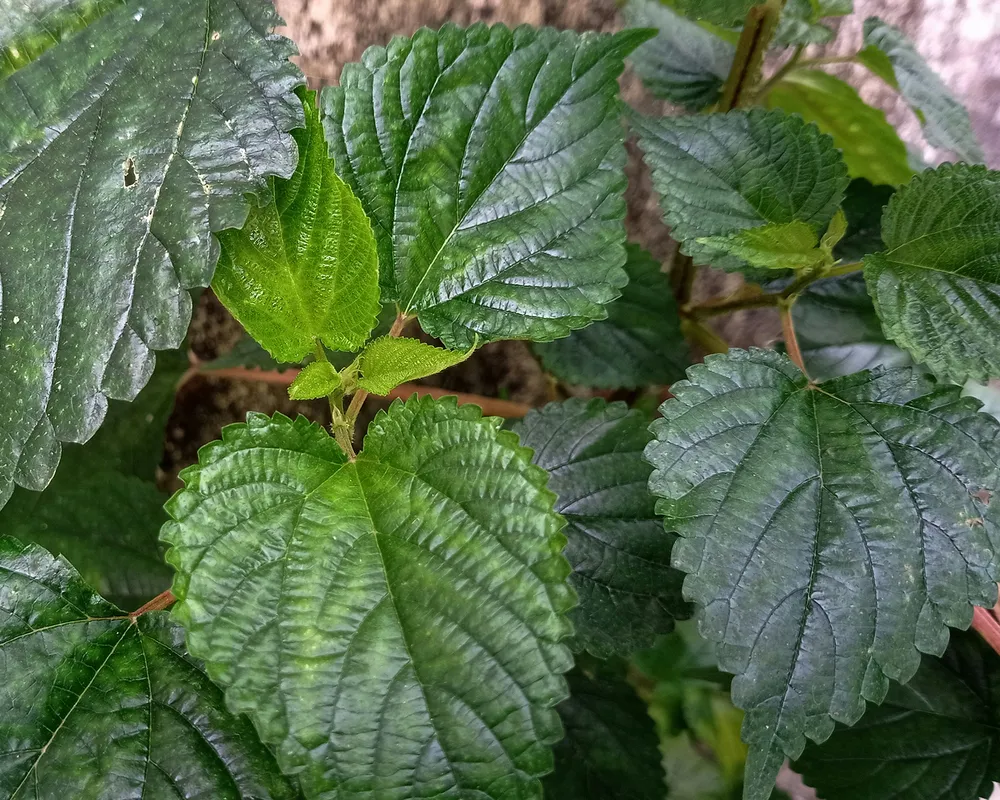
Growing Shiso at Home: The Herb My Grandma Called Zisu
If you have ever ordered sashimi at a Japanese restaurant and wondered about that beautiful purple-green leaf under the fish, that was shiso. If you have ever had Korean BBQ and used a big, sturdy leaf to wrap your galbi, that was also shiso - or its close cousin, perilla. If your Chinese grandma ever made a soup with a faintly minty, almost anise-like smell that you could never quite identify, there is a reasonable chance zisu was in there somewhere.
I grew up eating this herb without knowing what it was called. My grandma just used it. It appeared in the kitchen the way ingredients do when someone has been cooking for fifty years - without fanfare, without a recipe card, without any explanation beyond “it makes it taste right.”
I did not actually learn the name until I was an adult trying to recreate her braised fish recipe and describing the mystery ingredient to a woman at a Chinese grocery store in Flushing. She pointed immediately to a bunch of green leaves with slightly jagged edges and said “zisu” like I should have known this already.
I bought two bunches. I have been growing it on my windowsill ever since.
What Is Shiso, Exactly?
Shiso is the Japanese name for Perilla frutescens, a member of the mint family. It originated in China and has been used across East and Southeast Asia for thousands of years - one of the earliest written records of it appears in Chinese medical texts from around 500 AD.
In Japan it is shiso (紫蘇). In China it is zisu or huisu. In Korea the larger-leafed variety is called kkaennip (깻잎). In Vietnam a related variety shows up in fresh herb plates as tia to. These are all slightly different cultivars with different flavor profiles and textures, but they are all perilla, and they all bring that distinctive layered flavor - part mint, part basil, part anise, part something you just cannot put your finger on.
There are two main varieties you will find at nurseries:
- Green shiso - tender, bright, slightly sweet. The classic sushi and sashimi garnish. Great for tempura, salads, and wrapping things.
- Red (purple) shiso - more robust, more intensely flavored. Used to color and flavor umeboshi (pickled plums) and in Korean-style pickling.
Both are worth growing. If you can only start with one, go green - it is more versatile in everyday cooking.
Why You Should Grow Your Own
Here is the thing about buying shiso at the grocery store. If you can even find it, it costs somewhere between “mildly irritating” and “genuinely offensive” per bunch, and it wilts within a day or two. A living plant will give you fresh leaves for an entire season and costs a few dollars at a nursery or a few cents if you start from seed.
Also - and I say this as someone who grew up in a one-bedroom apartment in Queens - shiso is a genuinely good indoor herb. It does not need as much sun as tomatoes. It does not sprawl everywhere like mint. It grows upright, looks beautiful in a pot, and smells incredible when you brush against it.
My kids have started calling it “the purple-green leaf plant” which is not a very good name but shows they have noticed it, which is progress.
What Shiso Needs to Thrive
Light
Shiso wants bright indirect light or direct sun for four to six hours a day. A south-facing or west-facing windowsill is ideal. An east-facing window will work but the plant will be leggier and slower.
If you do not have great natural light, a basic grow light on a timer works well. Shiso is not as demanding as some herbs in this department.
Temperature
This is a warm-weather herb. It thrives between 65F and 85F and will sulk below 60F. If your apartment runs cold in winter, keep it away from drafty windows. If you grow it outside in a container, bring it in before the first frost.
The good news for apartment dwellers: most apartments are warm enough year-round to keep shiso going. I have kept mine alive through two New York winters without any special treatment beyond moving it away from the window on the coldest nights.
Soil and Containers
Use a well-draining potting mix - the same herb and vegetable mix you would use for basil or cilantro works fine. Aim for a pot that is at least six inches deep and six inches wide per plant. Eight to ten inches is better.
The most important thing is drainage holes. Shiso does not like wet feet. I killed my first plant by leaving it in a decorative pot with no drainage because I did not want to ruin the aesthetic of my windowsill. Lesson learned. Now I use a plain nursery pot inside the decorative one, and I empty the saucer after watering.
Soil pH between 5.5 and 6.5 (slightly acidic to neutral) is ideal, but you do not need to test your soil for this. A standard potting mix will be in that range.
Watering
Keep the soil consistently moist but never waterlogged. In a sunny spot, this usually means watering every two to three days in summer and once a week in winter. Stick your finger an inch into the soil - if it feels dry, water. If it still feels damp, wait another day.
The leaves will start to droop slightly when the plant is thirsty. It recovers quickly once you water. I find this honestly useful because it is a more reliable signal than trying to keep track of a watering schedule with two kids and a full-time job.
Fertilizing
Feed with a balanced liquid fertilizer or fish emulsion every three to four weeks during the growing season. Shiso is not a heavy feeder, but a little boost keeps the leaves coming. I use diluted fish emulsion because it also seems to make the whole apartment smell like low tide for about an hour, which my wife absolutely loves.
(She does not love it. But the plant does.)
How to Harvest
This is the fun part. Once your plant is about twelve inches tall and has a good amount of leaves, start harvesting. The rule is the same as with basil: never take more than a third of the plant at one time.
The best technique is to pinch off the growing tips - the top few sets of leaves - rather than just pulling individual leaves from the bottom. This keeps the plant bushy and encourages it to branch out. A shiso plant that you pinch regularly will give you far more leaves over a season than one you leave alone.
Remove any flower spikes as soon as they appear. Once shiso starts to flower, the leaves become more bitter and the plant is putting its energy toward seed production rather than leaf growth. Pinching the flowers off extends your harvest by weeks.
Using Shiso in the Kitchen
Fresh green shiso leaves are good for:
- Wrapping raw fish or grilled meat
- Chopping into cold noodle dishes and cucumber salads
- Layering into sandwiches and summer rolls
- Deep frying whole leaves as tempura
- Muddling into cocktails (unexpected but genuinely good)
- Tearing over ramen or udon at the last second
Red shiso has a more assertive flavor and is particularly good pickled in rice vinegar with a little salt and sugar. It keeps in the fridge for weeks and works as a tangy, beautiful accompaniment to rice dishes, grilled fish, or anything that needs a little brightness.
My personal favorite use: chiffonade of green shiso over cold tofu with a little soy sauce, sesame oil, and bonito flakes. My grandma made this as a quick appetizer whenever people came over. It takes five minutes and it tastes like summer.
Common Mistakes
Starting with seeds and not thinning them. Shiso seeds need light to germinate - scatter them on the surface of moist soil and press them gently down without covering them. Once seedlings emerge, thin to one plant per six-inch pot. Overcrowded shiso gets leggy and stressed.
Letting it get too cold. A single cold draft can set a shiso plant back significantly. If your windowsill gets cold at night in winter, either move the plant or keep a thin curtain between it and the glass.
Not pinching it back. If you let shiso grow straight up without pinching, you will get a tall, thin plant with fewer leaves and an early flower spike. Pinch early and often. Be a little ruthless about it.
Overwatering with no drainage. Already covered this. Drainage holes. Always.
Harvesting from the bottom. Pull leaves from the middle and bottom of the plant and you slow its growth. Harvest from the top and pinch growing tips and you encourage it to keep producing.
Getting Started
You can find shiso starts at Asian grocery stores in spring and summer - especially ones with a plant section, which in New York means H Mart and a few of the larger Chinese grocery stores in Flushing. Japanese nurseries sometimes carry them too.
Seed packets are readily available online from companies that specialize in Asian vegetables. Direct sow into moist soil, keep warm and in indirect light, and you should see sprouts in one to two weeks.
If you have never grown your own herbs before, shiso is a surprisingly forgiving place to start. It is tougher than it looks. It rewards regular harvesting. And every time I brush against the leaves while cooking, I think about my grandma’s kitchen in a Flushing apartment, and a soup I could never quite identify until I finally learned its name.
Zisu. Now you know.