Why Jujube Deserves a Spot in Your Garden
If you grew up in a Chinese household, chances are you know jujube. You might know it as hong zao, red date, or just “that wrinkly thing mom puts in everything.” Soups, teas, congee, desserts - dried jujubes show up in Chinese cooking the way bay leaves show up in Western stews. Quietly, consistently, making everything better.
What you might not know is that jujube trees are one of the easiest fruit trees you can grow at home. They handle heat, drought, poor soil, and neglect like champions. I am talking about a fruit tree that has been cultivated in China for over 4,000 years and somehow still does not get the attention it deserves in American gardens.
My dad used to buy dried red dates by the bag from the Asian grocery store. He would toss a handful into his thermos of hot water every morning - his version of a health tonic. When I told him I was growing my own jujube tree, he laughed and said, “Finally, something useful.” Thanks, Dad.
What Exactly Is a Jujube?
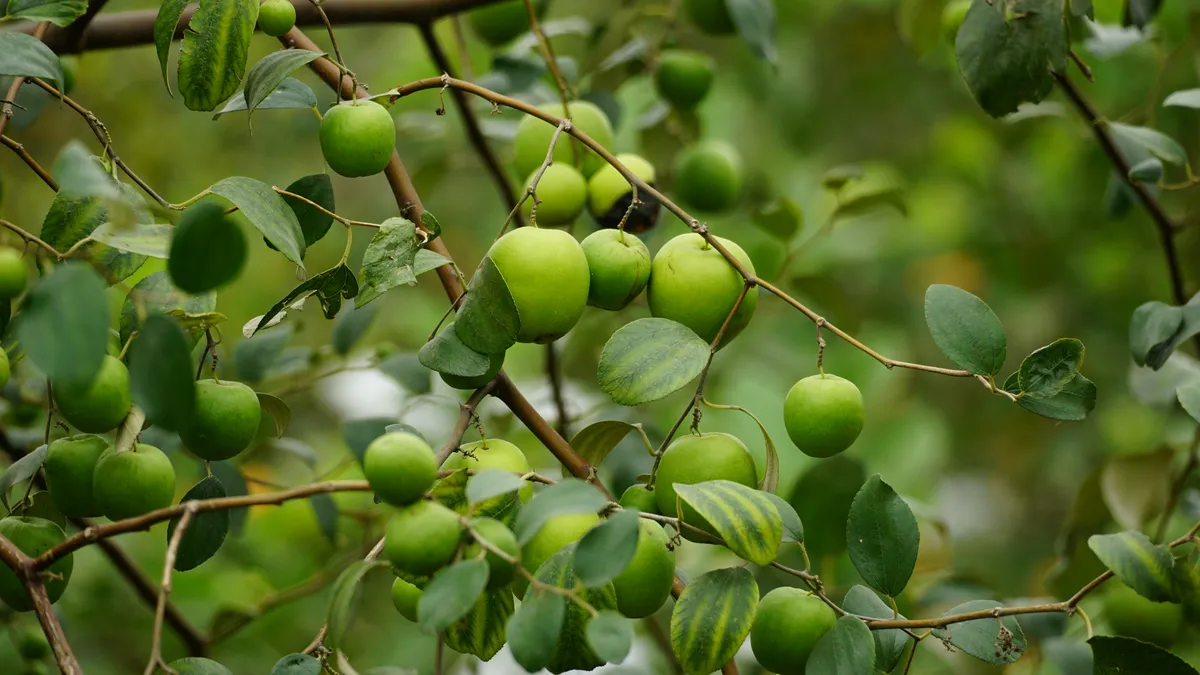
Jujube (Ziziphus jujuba) is a small to medium deciduous tree native to China. The fruit starts green, ripens to a reddish-brown, and tastes like a crisp, mildly sweet apple when fresh. When dried, it develops that familiar chewy, date-like sweetness that is a staple in Traditional Chinese Medicine and Asian cooking.
Fresh jujubes are honestly a revelation if you have only ever had them dried. Think of biting into a small apple with hints of pear and a touch of brown sugar. My kids were skeptical until they tried one right off the tree - now they race to check if the fruits are ripe.
Choosing the Right Variety
Not all jujubes are created equal. Here are the most popular varieties for home growing:
Li is the classic choice for eating fresh. It produces large, round fruits and is one of the most widely available varieties. If you want to impress your family with fresh jujubes, start here.
Lang is pear-shaped and excellent for drying. If your goal is to make your own hong zao for soups and teas, this is your pick.
Sugar Cane lives up to its name with exceptionally sweet, smaller fruits. It is a more compact tree, which makes it great for smaller spaces or containers.
Honey Jar is another compact variety with small, intensely sweet fruits. It is self-pollinating and tends to fruit at a young age, so you will not wait forever for your first harvest.
Most jujube varieties are self-fertile, meaning you only need one tree to get fruit. But planting two different varieties close together can improve your yields. If you only have room for one, go with Li or Honey Jar - you will not be disappointed.
Growing Conditions
Here is the good news: jujubes are remarkably unfussy. If you have killed a fiddle leaf fig (no judgment, we have all been there), a jujube tree will restore your confidence.
Sunlight
Jujubes want full sun - at least six to eight hours of direct sunlight daily. This is non-negotiable. More sun means more fruit and sweeter fruit. A south-facing spot is ideal.
Soil
They tolerate almost any soil type, from sandy to clay, as long as it drains reasonably well. A slightly acidic to neutral pH (6.0 to 7.0) is ideal, but honestly, jujubes are not picky. If your soil is heavy clay, mix in some perlite or coarse sand to improve drainage.
Water
Once established, jujube trees are remarkably drought-tolerant. For young trees, water deeply once a week during the growing season. Mature trees can handle long dry spells, but consistent watering during fruit development gives you plumper, juicier dates.
The biggest mistake people make is overwatering. Soggy roots will cause more problems than dry ones. When in doubt, let the top inch of soil dry out before watering again.
Temperature
Jujubes thrive in USDA zones 6 through 10. They handle both heat and cold impressively well - mature trees can survive temperatures down to about -20F. They actually need some winter chill hours to fruit properly, so if you live somewhere with mild winters, check that your variety does not require extended cold periods.
For those of us in the Northeast, this is great news. A jujube tree will handle a New York winter just fine once established.
Growing in Containers
No yard? No problem. Jujubes adapt well to container growing, which makes them perfect for patios, balconies, or even a sunny rooftop.
Start with a container that is at least 15 to 20 gallons. As the tree grows, you may eventually need to size up to a 25 to 30 gallon pot. Make sure your container has plenty of drainage holes - jujube roots absolutely cannot sit in standing water.
Use a well-draining potting mix. I like a combination of regular potting soil, perlite, and compost in roughly equal parts. This gives you good drainage while retaining enough moisture and nutrients.
Container-grown jujubes dry out faster than in-ground trees, so check the soil more frequently. During hot summer months, you might need to water every other day. A layer of mulch on top of the soil helps retain moisture and keeps roots cooler.
Choose a dwarf or semi-dwarf variety for containers. Sugar Cane and Honey Jar are both excellent choices that stay manageable in size. Even in a container, expect your tree to reach four to six feet tall - which is perfectly fine for a patio.
Planting Your Jujube Tree
Spring is the best time to plant, after the last frost date in your area. Here is the process:
For in-ground planting, dig a hole about twice as wide and the same depth as the root ball. Mix some compost into the backfill soil, set the tree so the graft union (the bumpy part near the base of the trunk) sits a couple inches above the soil line, and water deeply. Space multiple trees about 15 to 20 feet apart.
For containers, fill the bottom third of your pot with your soil mix, position the tree, and fill in around the roots. Leave an inch or two of space at the top for watering. Water thoroughly until it drains out the bottom.
One important note: jujube trees have thorns, especially when young. Keep this in mind when choosing a planting location, particularly if you have small kids running around. Some varieties are less thorny than others - ask your nursery.
Feeding and Fertilizing
Jujubes are not heavy feeders. A balanced slow-release fertilizer (something like 10-10-10) applied in early spring is usually all they need. You can follow up with a second application in mid-summer if the tree looks like it needs a boost.
For container trees, a liquid fertilizer every few weeks during the growing season works well since nutrients wash out of pots faster.
Stop fertilizing by late summer. You want the tree to slow down and prepare for dormancy before winter arrives.
Pruning
Jujube trees benefit from light pruning in late winter or early spring, before new growth starts. Focus on removing dead, damaged, or crossing branches. You can also shape the tree to keep it at a manageable height, which is especially important for container trees.
One quirk of jujubes: they produce suckers - shoots that pop up from the roots. If your tree is grafted (and most purchased trees are), these suckers are growing from the rootstock, not your fruiting variety. Remove them when you spot them.
For container trees, pruning is also your tool for keeping the tree compact enough for its pot. Do not be afraid to cut it back - jujubes respond well to pruning.
Pests and Problems
This is where jujubes really shine. They are naturally resistant to most pests and diseases that plague other fruit trees. No spraying, no fancy treatments, no weekend battles with codling moths.
That said, keep an eye out for a few things:
Aphids can occasionally show up on new growth. A strong blast of water from the hose usually knocks them off. For heavier infestations, neem oil works well.
Spider mites might appear in hot, dry conditions. Regular watering and the occasional leaf shower help prevent them.
Yellowing leaves usually point to overwatering or a nutrient deficiency. Check your watering schedule first - more often than not, that is the culprit.
Poor fruit set can happen if the tree is not getting enough sun or if it is too young. Most jujube trees start producing fruit within two to three years of planting, with full production around year five. Patience is part of the deal.
Harvesting and Using Your Jujubes
Jujubes ripen from late summer through fall, depending on your variety and climate. The fruit starts green, turns yellowish-green, then develops reddish-brown spots. For eating fresh, harvest when the fruit is mostly yellow-green with some brown - it will be crisp and apple-like at this stage.
For drying, let the fruit stay on the tree until it is fully brown and starting to wrinkle. Then pick and dry them further on a rack or in a dehydrator at low heat.
Once you have your own dried jujubes, the possibilities are endless. Toss them into congee, steep them in hot water with goji berries for a warming tea, add them to braised pork belly, or simmer them into a sweet soup with lotus seeds and white fungus. My wife makes a jujube and ginger tea that has gotten us through every cold season.
Fresh jujubes are great for snacking straight off the tree, adding to salads, or making into jujube butter (think apple butter but more interesting).
Common Mistakes to Avoid
Overwatering is the number one killer of jujube trees, especially in containers. These trees evolved in dry conditions. Treat them more like a succulent than a fern when it comes to water.
Not enough sun leads to leggy growth and poor fruiting. If your sunniest spot only gets four hours of direct light, consider a different fruit tree. Jujubes need their sunshine.
Ignoring suckers can sap energy from your tree and create a tangled mess. Check around the base regularly and remove any shoots growing from below the graft union.
Expecting instant fruit is a setup for disappointment. Give your tree two to three years to settle in before expecting a meaningful harvest. Use that time to research jujube recipes - you will want to be ready.
What to Try Next
If you enjoy growing jujube, you might also want to explore other Asian fruit trees that do well in similar conditions. Persimmon trees are another excellent option with deep cultural significance - we have a whole post about the persimmon tree in grandma’s garden. And if you are already growing vegetables from the Asian grocery store, check out our guides to growing bok choy, gai lan, and lemongrass.
Growing a jujube tree is one of those projects that connects you to something bigger than yourself. Every time I see those small reddish fruits hanging from the branches, I think about my dad and his thermos of hot date water, about the red dates my grandma would sneak into every pot of soup, about the thousands of years of tradition wrapped up in one unassuming little tree.
Plant one this spring. Your future self - and probably your parents - will thank you.