Growing Goji Berries at Home - My Mom Always Had a Bag of Gou Qi Zi
There was always a bag of dried goji berries in my mom’s kitchen.
Not in the pantry with the normal groceries. In the cabinet above the stove, the one you needed a step stool to reach, alongside the dried red dates, the dried longan, and about fifteen other mysterious bags of dried things that looked vaguely medicinal. That was the Chinese medicine cabinet. Every Chinese household has one, whether they call it that or not.
My mom would toss a handful of goji berries - gou qi zi, she called them - into practically everything. Chicken soup? Goji berries. Congee? Goji berries. That herbal tea she brewed when anyone had a sniffle? You better believe there were goji berries floating in it. She’d tell us they were good for our eyes, good for our energy, good for our everything. My brother and I would fish them out of our soup bowls and line them up on the table like tiny red soldiers, which drove her absolutely nuts.
“Just eat them!” she’d say, exasperated. “Your grandmother ate them every day and she had perfect vision until she was eighty.”
Decades later, I’m the one tossing goji berries into soup. And last year, I decided to skip the dried bag from the Asian grocery store and try growing my own. Turns out, goji berry plants are far less fussy than I expected. Way easier than half the tropical houseplants I’ve killed over the years.
What Exactly Are Goji Berries?
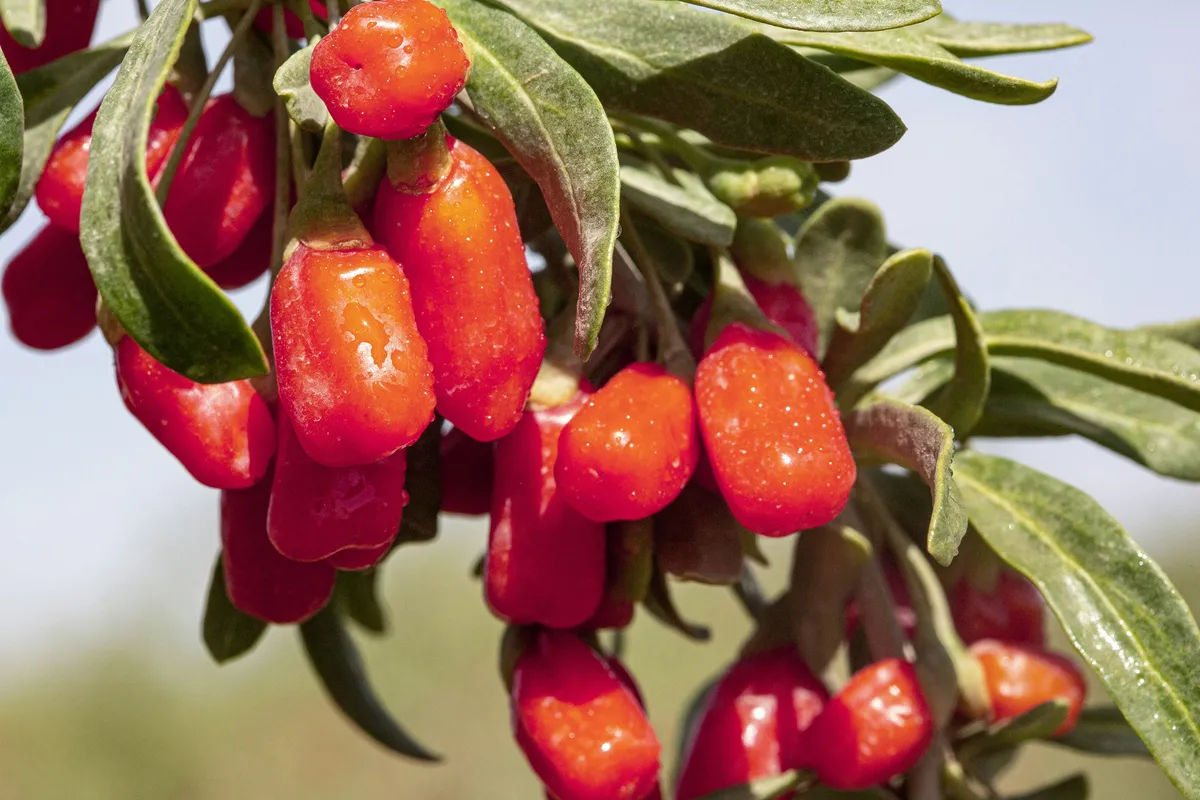
If you have only seen them dried, you might picture goji berries as these tiny, wrinkled red things that taste like a cross between a cranberry and a tomato. But the fresh berries are plump little oval fruits, bright orange-red, that grow on a shrubby plant called Lycium barbarum. The plant itself looks nothing like what you would expect from a “superfood.” It is a rangy, somewhat messy shrub with arching branches and small purple flowers. Not winning any beauty contests, but it has a certain wild charm.
In Chinese, goji is called gou qi (pronounced roughly “go chee”), and the dried berries are gou qi zi - the “zi” just means seed or fruit. The plant has been used in Traditional Chinese Medicine for at least 2,000 years. It shows up in the Shen Nong Ben Cao Jing, one of the oldest texts on herbal medicine, where it was prized for nourishing the liver and kidneys and - yes - protecting eyesight. My mom was not making that up.
The plant is native to China and other parts of East Asia, where it grows in semi-arid conditions. This is your first clue about how to keep one happy: these are tough, drought-adapted plants. They do not want the fussy care you would give a calathea.
Why I Decided to Grow My Own
Honestly? It started as a pandemic-era impulse purchase. I was scrolling through a nursery website, saw a goji berry plant for sale, and thought, “My mom would get a kick out of this.” She did. She also immediately told me I was going to kill it, which was fair given my track record at the time.
But there was something deeper, too. Growing the plants that connect you to your family’s food traditions feels different from just buying the ingredients at the store. When I pick Thai basil from my little herb garden, it smells like my mom’s kitchen. When I see the goji plant fruiting for the first time, covered in those tiny orange-red berries, I thought of every bowl of soup she ever made us. There is a thread that connects the garden to the kitchen to the memory, and growing gou qi zi made that thread feel a little more real.
Plus, dried goji berries are not cheap. A few ounces at the health food store will run you eight or ten dollars. At the Chinese grocery store it is more reasonable, but still - free berries from your own backyard? Dad math says that is a win.
How to Grow Goji Berries (Even in a Small Space)
Here is the good news: goji berry plants are genuinely easy to grow. They are hardy to USDA zones 3 through 10, which covers most of the continental US. They handle heat, cold, drought, and mediocre soil. If you can grow a tomato, you can grow goji berries.
Sun
Full sun is non-negotiable. These plants want at least six to eight hours of direct sunlight per day. They come from sunny, semi-arid regions of China and they have not forgotten it. A south-facing spot is ideal. If you are growing in containers on a balcony, make sure it gets plenty of afternoon sun.
Soil
Goji berries prefer well-draining soil with a slightly alkaline pH, somewhere between 6.8 and 8.1. If your soil is heavy clay, amend it with sand and compost. For containers, a mix of about two-thirds potting soil and one-third perlite or coarse sand works well. They are not picky about soil richness - in fact, overly fertile soil can make them produce more leaves and fewer berries.
Containers vs. Ground
You can absolutely grow goji berries in containers, which is what I do since my NYC-area backyard is approximately the size of a parking spot. Use a pot at least 18 to 24 inches deep and 16 inches wide. The plant will get leggy and a bit wild, which is part of its charm. If you have actual garden space, they will spread more, reaching 6 to 10 feet tall and wide if left unpruned.
Watering
This is where most people overthink it. Goji berries are drought-tolerant once established. Water when the top inch or two of soil is dry. During the growing season, that might be two or three times a week depending on heat and container size. In winter, if the plant goes dormant (it is deciduous and will drop its leaves), water very sparingly. Overwatering is the easiest way to kill a goji plant. The roots will rot in soggy soil faster than you can say “gou qi zi.”
Feeding
A balanced organic fertilizer every four to six weeks during the growing season is plenty. I use a general-purpose 10-10-10 granular fertilizer. Do not overdo it. These plants evolved in lean soil conditions and too much nitrogen will give you a lush green bush with barely any fruit.
Pruning
Left alone, goji berry plants get sprawly. They send out long, arching branches that droop and touch the ground, which is how they spread in the wild. For container growing, I recommend staking the main stem and pruning the side branches to keep things manageable. Think of it like training a tomato plant - you want to encourage upward growth and airflow. Prune in late winter or early spring before new growth starts.
The Patience Part
I will be upfront about this: you probably will not get a huge harvest in the first year. My plant produced maybe a dozen berries its first summer, which I treated like precious gems and added to a single bowl of congee. By the second year, production picked up significantly, and by year three, I was getting enough to actually dry some for winter soups.
The flowers appear in late spring to early summer - small, delicate purple blooms that are actually quite pretty. Bees love them. Berries ripen from July through October, turning from green to bright orange-red. Pick them when they are fully colored. Fair warning: the branches can have small thorns, so harvest carefully or use gloves.
Fresh goji berries are a revelation if you have only had them dried. They are juicy, mildly sweet, with a slight bitterness that is honestly pretty pleasant. My kids actually eat them fresh off the plant, which would make my mom proud. They refuse to eat them in soup, of course. Baby steps.
Common Problems (and Why You Probably Do Not Need to Worry)
Goji berry plants are remarkably pest-resistant. Occasionally you might see aphids or spider mites, especially in dry conditions. A strong spray of water usually takes care of them. I have also seen some leaf spot fungus during a particularly wet summer, but it did not affect fruit production.
The biggest “problem” is actually the plant’s enthusiasm. Goji berries can spread aggressively through root suckers if planted in the ground. This is great if you want a goji hedge, less great if you are trying to maintain a tidy garden bed. Container growing solves this entirely.
Birds also love the berries. If you are growing outdoors, you might want to drape some bird netting over the plant once berries start ripening, unless you are willing to share. I split the harvest with the local blue jays and consider it a fair tax.
Drying Your Harvest
If you get a decent crop, drying them is simple. Spread the berries in a single layer on a baking sheet and put them in a dehydrator at 135 degrees Fahrenheit for about 24 hours. No dehydrator? Spread them on a sheet in your oven at the lowest setting with the door cracked open. They should feel dry and slightly leathery when done, just like the ones from the store.
I keep mine in a glass jar in - you guessed it - the cabinet above the stove. Right next to the dried red dates and the dried longan. My mom visited last fall and spotted the jar. She picked it up, examined the berries, nodded once, and said, “Not bad.” From my mom, that is basically a standing ovation.
What My Mom Knew All Along
There is real science behind those gou qi zi. Modern research has confirmed they are rich in zeaxanthin and other carotenoids that support eye health. They contain significant amounts of vitamin C, vitamin A, iron, and various antioxidants. The Traditional Chinese Medicine practitioners who prescribed them two thousand years ago were onto something - they just did not have the lab equipment to prove it.
But honestly, the nutritional profile is not why I grow them. I grow them because they connect me to my mom’s kitchen, to my grandmother’s advice about good vision, to every bowl of soup that tasted like home. Growing your own food is always a little bit magical. Growing the food that links you to your family’s traditions is something else entirely.
If you have a sunny spot and a big pot, give goji berries a try. They are tougher than most houseplants, more productive than you would expect, and every time you toss a handful of your own gou qi zi into a pot of soup, you are carrying on a tradition that is literally thousands of years old.
Your mom would approve. Mine finally does.
Quick Reference
- Botanical name: Lycium barbarum
- Common names: Goji berry, wolfberry, gou qi zi
- Hardiness: USDA zones 3-10
- Sun: Full sun (6-8 hours minimum)
- Soil: Well-draining, pH 6.8-8.1
- Water: Drought-tolerant once established; let soil dry between waterings
- Container size: Minimum 18 inches deep, 16 inches wide
- Time to fruit: Light harvest year one, full production by year two or three
- Harvest season: July through October