Growing Dragon Fruit at Home: A Climbing Cactus Worth the Wait
The first time I saw a dragon fruit, I was maybe seven years old, standing in a Hong Kong supermarket with my parents during a summer visit. My mom called it huo long guo - fire dragon fruit - and I thought that was the coolest name for any food, ever. The bright pink skin with those green-tipped scales looked like something from a fantasy novel. When she cut it open, the white flesh speckled with tiny black seeds was almost too beautiful to eat.
Almost. We ate it immediately.
Fast forward a few decades, and dragon fruit has gone from a rare Asian market find to a Whole Foods staple. But the prices? Still wild. Three dollars for a single fruit that is mostly water weight. My dad would have a heart attack. So when I learned you could actually grow these things at home in a pot, I was all in. Turns out, dragon fruit (Selenicereus undatus, formerly Hylocereus undatus) is a climbing cactus that is surprisingly manageable as a container plant - even for those of us without a tropical backyard.
Fair warning: this is not a plant that gives you instant gratification. You might wait two to three years before you see your first fruit. But the plant itself is wild-looking and conversation-starting from day one, and there is something deeply satisfying about playing the long game.
What Exactly Is Dragon Fruit?
Dragon fruit is a tropical cactus native to Central and South America, though it has been cultivated across Southeast Asia for so long that most people assume it is Asian. Vietnam is actually the world’s largest producer, and the fruit shows up everywhere from night markets in Taipei to dessert shops in Bangkok.
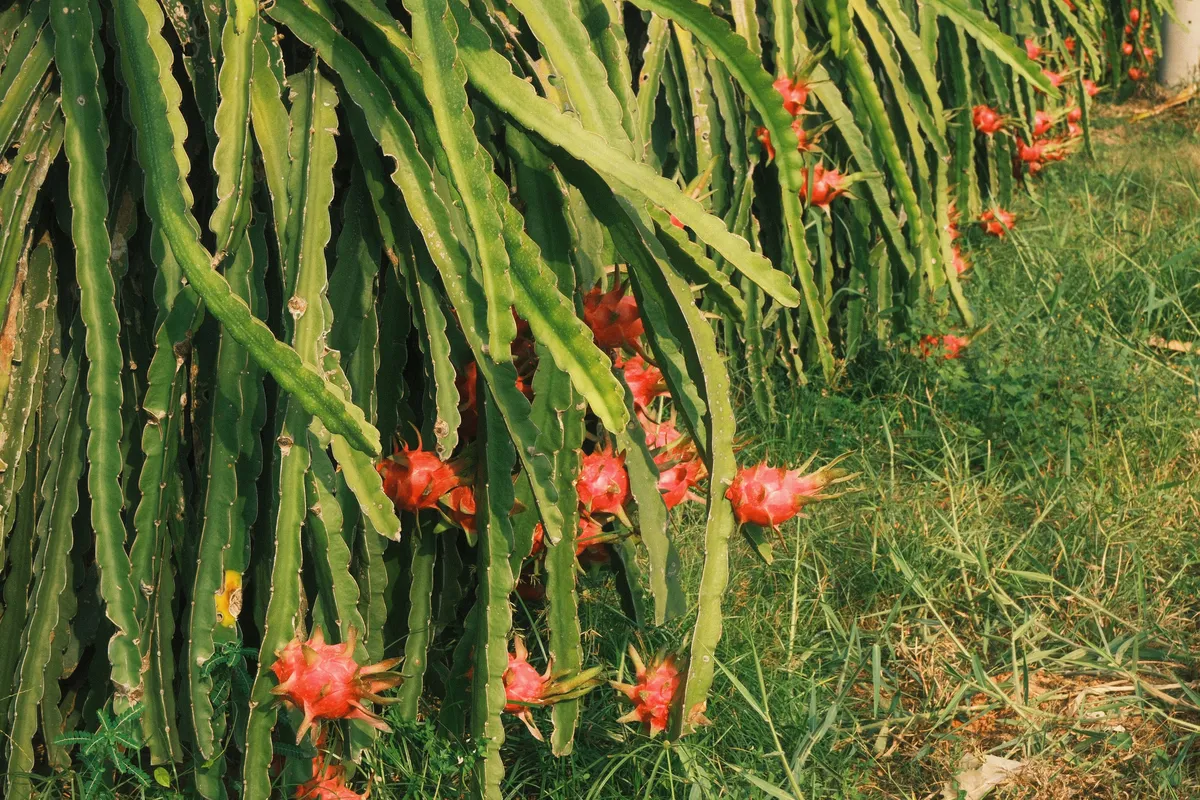
The plant itself is an epiphytic cactus, meaning in the wild it climbs trees and grows in the crevices of other plants. It has long, segmented, three-sided stems that can reach up to 20 feet. The flowers are spectacular - huge, fragrant white blooms that open for just one night. People call them moonflowers for a reason.
There are three main types you will encounter. The most common has pink skin with white flesh. Then there is the pink-skin-with-red-flesh variety, which is sweeter and more visually dramatic. And finally there is the yellow-skinned type with white flesh, which is arguably the tastiest but also the hardest to find.
Starting Your Dragon Fruit Plant
You have two options here: seeds or cuttings. I am going to be real with you - start with a cutting if you can. Growing from seed is a fun science project to do with kids, but you are looking at four to seven years before fruiting. A cutting from a mature plant can fruit in one to two years under the right conditions.
From cuttings
Look for cuttings at local nurseries, garden centers, or online tropical plant sellers. You want a piece that is at least 12 inches long and has been allowed to callous over at the cut end for a few days. This callousing prevents rot - same principle as letting a succulent cutting dry before planting.
Stick the calloused end about two to three inches deep into your potting mix. Do not water for about a week to let the cutting settle. After that, water lightly and wait for roots to establish. You should see new growth within a few weeks.
From seed
If you want to go the seed route - maybe because you have a curious kid who wants to see the whole process - it is surprisingly easy. Scoop out the flesh from a ripe dragon fruit, mash it in water, and strain out the tiny black seeds. Spread them on a damp paper towel, let them sprout for a few days, then transfer to a seed-starting mix. Keep the soil moist and warm. Seedlings will appear in one to two weeks.
My daughter and I did this last spring. She named her seedling Spike. Spike is doing great, but Spike is also about three inches tall after a year. This is a patience game.
Container Setup and Support
Here is where dragon fruit differs from your typical houseplant: it is a climber, and it gets big. You need to plan for vertical growth from the start.
Choosing a container
Start with at least a 15-gallon pot. I know that sounds enormous, but dragon fruit has a surprisingly extensive root system and the plant gets heavy as it grows. A 20- to 25-gallon pot is even better for a mature plant. Use something sturdy - heavy terra cotta or thick resin - because a top-heavy cactus in a lightweight plastic pot is a recipe for a dramatic crash at 2 AM.
Make sure there are drainage holes. Dragon fruit absolutely cannot sit in soggy soil. Root rot will take this plant down faster than anything else.
Building a support structure
In commercial dragon fruit farms, plants are trained up concrete posts with a ring or platform on top, letting the stems cascade down like a green waterfall. You can mimic this at home with a sturdy wooden post or a thick PVC pipe. Aim for something about four to five feet tall, sunk deep into the pot for stability.
Some folks use a tomato cage, which works in the early stages but gets overwhelmed once the plant really takes off. I started with a tomato cage and upgraded to a wooden post after year one. Learn from my laziness.
Attach the stems to the post loosely with soft plant ties or strips of old t-shirt. You want to guide the growth upward without strangling the stems.
Soil, Water, and Light
Soil
Here is a common mistake: treating dragon fruit like a desert cactus. It is technically a cactus, yes, but it is a tropical, epiphytic cactus that grows in humid jungles. Standard cactus mix is too lean and dry. Instead, mix regular potting soil with about 30 percent perlite or pumice for drainage. You want soil that holds some moisture but drains freely. A pH between 6.0 and 7.0 is ideal - slightly acidic to neutral.
I use a mix of two parts potting soil, one part perlite, and a handful of compost. Nothing fancy. The plant is not picky as long as it is not sitting in waterlogged mud.
Water
Water when the top inch or two of soil feels dry. In summer, that might be every few days. In winter, cut back significantly - maybe once every week or two. The stems will tell you if you are underwatering. They start to look a little shriveled and less plump. Overwatering shows up as yellowing stems or soft, mushy sections at the base.
Dragon fruit is more forgiving than most tropical plants when it comes to water, but consistency matters more than volume. A regular schedule beats sporadic drenching.
Light
This is the make-or-break factor, especially indoors. Dragon fruit needs six to eight hours of bright light daily. A south-facing window might work if it is completely unobstructed, but honestly, most indoor setups benefit from supplemental grow lights during the darker months.
If you have outdoor space - a balcony, patio, or fire escape that gets full sun - move the plant outside for the warm months. The difference in growth rate between an indoor plant and one that summers outside is dramatic. Just bring it back in before temperatures drop below 40 degrees Fahrenheit.
Temperature and Humidity
Dragon fruit is tropical at heart. It is happiest between 65 and 85 degrees Fahrenheit, which conveniently overlaps with human comfort range. It can tolerate brief dips into the low 40s, but anything below freezing will damage or kill the plant.
Humidity-wise, it prefers moderate to high humidity - think 50 to 70 percent. Most homes in winter run drier than that, so grouping it with other tropical plants or running a humidifier nearby helps. That said, dragon fruit is more drought-tolerant than other tropicals. It will not throw a fit like a calathea if humidity drops for a week.
Feeding Your Dragon Fruit
During the growing season (spring through fall), feed monthly with a balanced fertilizer. Something like a 10-10-10 or a fertilizer formulated for cacti works well. Once the plant is mature enough to flower, switch to a fertilizer higher in phosphorus and potassium to encourage blooming and fruiting - look for something like a 2-7-7 or similar ratio.
Do not fertilize in winter when the plant is resting. Overfeeding a dormant cactus is asking for trouble.
The Flowering and Fruiting Dance
This is the part that requires the most patience - and a little midnight dedication.
Dragon fruit flowers are nocturnal. They bloom for a single night, opening in the evening and closing by morning. The blooms are massive, fragrant, and genuinely beautiful - one of those moments that makes all the waiting worth it. They are often called queen of the night flowers.
Here is the tricky part for indoor growers: many common varieties are self-pollinating, but they produce better fruit with cross-pollination. If you only have one plant, you can hand-pollinate by transferring pollen from the anthers to the stigma with a small paintbrush or cotton swab. Do this at night when the flower is open.
After successful pollination, you will see the base of the flower start to swell. Fruit typically takes 30 to 50 days to ripen after pollination. You will know it is ready when the skin turns fully colored and the little wing-like flaps start to dry slightly. Give it a gentle twist - if it comes off easily, it is time.
Common Problems and How to Fix Them
Stems turning yellow or soft
Usually overwatering or poor drainage. Check your soil mix and cut back on watering. Remove any rotting sections with a clean, sharp knife.
No flowers after several years
Not enough light is the most common culprit. Dragon fruit needs intense light to trigger flowering. If you are growing indoors, invest in strong grow lights. Also make sure you are not over-fertilizing with nitrogen, which promotes stem growth at the expense of flowers.
Sunburn (white or brown patches)
If you move an indoor plant outside suddenly, it can scorch. Transition gradually over a week or two, starting with a few hours of morning sun and increasing exposure.
Pests
Mealybugs and scale are the most common indoor pests. Check the crevices between stem segments regularly. A cotton swab dipped in rubbing alcohol handles small infestations. Neem oil works for bigger problems.
Stem rot
Usually caused by overwatering or damage to the stem that allows fungal entry. Cut away affected areas well into healthy tissue and let the wound callous before any water touches it.
Is It Worth Growing Indoors?
I will be honest: getting a dragon fruit plant to actually produce fruit indoors is challenging. The light requirements are intense, the plant gets big, and the pollination window is narrow. But I still think it is worth it for a few reasons.
First, the plant itself looks incredible. Those architectural, three-sided stems climbing up a post are a conversation piece that no monstera can match. Second, if you have any outdoor space at all - even a sunny balcony for a few summer months - your chances of fruiting go way up. And third, there is something special about growing a plant that connects to food memories. Every time I look at my dragon fruit cactus, I think about that Hong Kong supermarket and my mom picking out the prettiest one.
My plant is going into its second year. No flowers yet, but the stems are thick and healthy, and it put out about three feet of new growth last summer. I am cautiously optimistic about this year.
Quick Reference
- Scientific name: Selenicereus undatus (formerly Hylocereus undatus)
- Light: 6-8 hours of bright, direct light
- Water: When top 1-2 inches of soil are dry
- Soil: Well-draining mix, pH 6.0-7.0
- Temperature: 65-85 degrees Fahrenheit (no frost)
- Humidity: 50-70 percent preferred
- Fertilizer: Monthly during growing season, higher phosphorus for flowering
- Container: 15-25 gallon pot with drainage and sturdy support post
- Time to fruit: 1-3 years from cutting, 4-7 years from seed
What to Try Next
If the climbing cactus thing appeals to you, check out night-blooming cereus - it is a close relative with equally dramatic flowers. And if you are more interested in the edible side, growing passion fruit in containers is another tropical fruit project that pairs well with dragon fruit. Both love the same conditions and look fantastic on a sunny balcony together.
Whatever you do, do not let the timeline scare you off. Some of the best things in life - raising kids, growing trees, fermenting kimchi - just take time. Dragon fruit is the same way. Start it now, enjoy the weird and wonderful cactus in the meantime, and one day you will cut open a fruit you grew yourself. Trust me, it will taste better than anything from the store.