Growing Chinese Long Beans: The Vegetable That Made Me Feel Like a Real Gardener
There are vegetables you grow because they’re practical. Tomatoes, herbs, lettuce - the sensible stuff. And then there are vegetables you grow because they make you feel like you unlocked a secret level of gardening. Chinese long beans are that second kind.
The first time I harvested a cluster of beans dangling two feet off a trellis in my tiny Brooklyn backyard, I felt like I had accomplished something. My son came outside, stared at them, and said, “Dad, those look like green snakes.” He wasn’t wrong. And honestly, that reaction alone made the whole growing season worth it.
If you grew up eating dou jiao - whether stir-fried with garlic and chili, braised with fermented black beans, or tossed into a dry-fried Sichuan dish - you know how hard it is to find good ones at the grocery store. The ones in plastic bags at the supermarket are usually sad, bendy, and well past their prime. Growing your own changes the game entirely.
What Are Chinese Long Beans, Exactly?
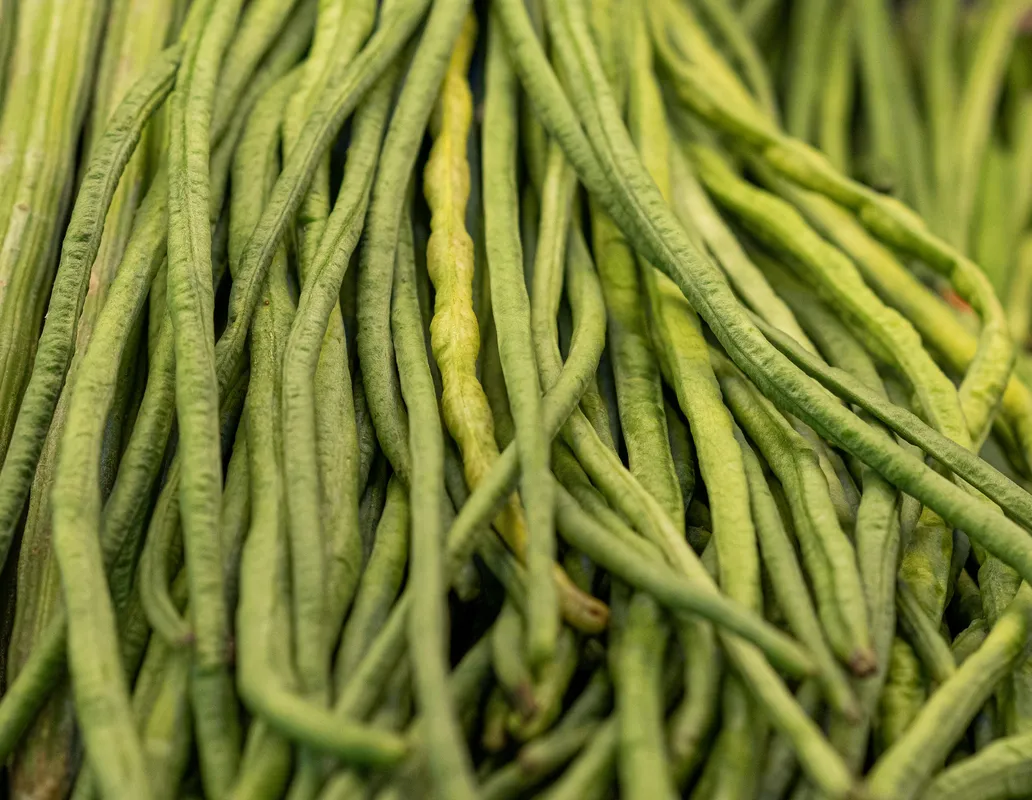
Chinese long beans (Vigna unguiculata subsp. sesquipedalis) go by a lot of names: yard-long beans, asparagus beans, snake beans, bora, or simply dou jiao in Mandarin. Despite the name, they don’t usually grow a full yard long - most top out between 14 and 24 inches, which is still impressively dramatic compared to your average green bean.
Here’s something that surprises people: they’re not actually related to common green beans. They’re more closely related to black-eyed peas and cowpeas. That explains the slightly different texture - a little more chewy, a little more substantial, with a nutty flavor that holds up beautifully to high-heat cooking.
They’re a warm-season annual that loves summer heat, which makes them perfect for planting after your spring crops have finished. While your lettuce is bolting and your cilantro has given up on life, long beans are just getting started.
Why Grow Them at Home?
Three reasons, and I’ll try not to get too passionate about this.
First, freshness matters with long beans more than almost any other vegetable. A freshly picked long bean is crisp, snappy, and slightly sweet. A week-old one from the store is rubbery and bland. There’s no comparison.
Second, they’re incredibly prolific. One plant, properly supported, will produce more beans than a family of four can eat. You’ll be that person handing bags of beans to your neighbors, and honestly, that’s a great person to be.
Third, they grow fast and look cool doing it. In peak summer, the vines can grow several inches in a single day. Watching them climb a trellis is genuinely satisfying. My kids check on them every morning like they’re tracking a race.
Getting Started: Seeds and Timing
Long beans are a direct-sow crop. Don’t bother starting them indoors - they don’t transplant well, and they germinate quickly in warm soil anyway. Wait until your soil temperature is consistently above 65 degrees Fahrenheit. In New York, that usually means late May or early June.
You can find seeds at Asian grocery stores (check near the checkout counter - many carry seed packets), online seed companies, or from gardening friends who saved seeds from last year. Popular varieties include:
- Chinese Red Noodle - gorgeous deep purple-red pods that turn green when cooked
- Orient Extra Long - classic green variety, very productive
- Liana - a reliable green variety with good disease resistance
- Stickless Wonder - shorter pods, great for containers
Soak the seeds overnight before planting. This isn’t strictly required, but it speeds up germination by a day or two, and patience has never been my strong suit.
Planting and Spacing
Plant seeds about 1 inch deep and 4 to 6 inches apart. If you’re doing rows, keep them about 24 inches apart to give the vines room to spread.
In containers, use a pot that’s at least 12 inches wide and 10 inches deep. A 10-gallon fabric grow bag works great. You can fit two to three plants per container. Just make sure there are drainage holes - long beans like consistent moisture but absolutely hate sitting in water.
Fill containers with a good quality potting mix. Garden soil alone is too heavy and compacts in pots. I usually mix potting soil with a handful of compost and a little perlite for drainage.
The Trellis Situation
This is non-negotiable: long beans need something to climb. They’re vigorous climbers that can reach 8 to 10 feet tall, and without support, you’ll have a tangled mess on the ground that invites pests and disease.
Options that work well:
A simple bamboo teepee made from six to eight poles tied at the top works great in raised beds or large containers. String trellises attached to a fence or wall are easy and cheap. A cattle panel arch is the fanciest option - it looks amazing and creates a bean tunnel your kids will love walking through.
Install your trellis before or at the time of planting. Adding it later means you risk disturbing the roots, and young vines start reaching for support within the first two weeks.
Sun, Water, and Soil
Long beans want full sun - at least 6 to 8 hours of direct sunlight per day. More is better. These are tropical plants that thrive in heat. While your tomatoes are getting stressed in a 95-degree heat wave, your long beans are living their best life.
Water deeply once or twice a week, depending on conditions. Container plants may need watering every day or every other day in peak summer. The goal is consistent moisture without waterlogging. A good layer of mulch (straw, wood chips, or shredded leaves) helps retain moisture and keeps the soil temperature even.
For soil, they like it loose, well-draining, and moderately fertile. Here’s a pro tip that applies to all legumes: don’t go heavy on nitrogen fertilizer. Long beans, like their cowpea cousins, fix their own nitrogen through root nodules. Too much nitrogen gives you lush leaves and very few beans. Once flowers appear, switch to a fertilizer higher in phosphorus and potassium - a tomato fertilizer works perfectly.
Common Problems (And How I’ve Dealt with Them)
Aphids. They love long bean plants. I check the undersides of leaves weekly and blast them off with a strong spray of water. For persistent infestations, neem oil spray works well. I’ve also found that letting a few ladybugs set up shop near the beans handles the problem naturally.
No flowers or beans. Usually a nitrogen problem. If your plants are huge and green but not flowering, you’ve been too generous with the fertilizer. Back off and wait. They’ll come around.
Beans are tough or stringy. You waited too long to harvest. Long beans are best picked young, when they’re about 12 to 18 inches long and the seeds inside are still small. Once the pods start bulging with mature seeds, the texture goes downhill fast.
Powdery mildew. This can show up in humid weather, especially if plants are crowded. Good air circulation and avoiding overhead watering help prevent it. If it appears, remove affected leaves and spray with a baking soda solution (1 tablespoon per gallon of water).
Slow germination. If your seeds aren’t sprouting after 10 days, the soil is probably too cold. Long beans really do need that warm soil. Be patient, or try again when it’s warmer.
Harvesting and Cooking
Here’s the fun part. Long beans start producing about 60 to 80 days after planting, and once they start, they don’t stop until frost. Check your plants every two to three days - beans grow fast in warm weather, and an 8-inch bean today can be an 18-inch bean by the weekend.
Harvest when the pods are pencil-thin and snap cleanly when bent. If they bend without snapping, they’re past their prime for eating fresh (but still fine for soups or braising).
Cut the pods from the vine with scissors or pruners rather than pulling - pulling can damage the plant and reduce future production.
For cooking, here are my family’s go-to methods:
Dry-fried long beans (gan bian dou jiao) - This is the classic. Cut beans into 2-inch pieces, blister them in a hot wok with a little oil until they get charred spots, then toss with minced pork, preserved mustard greens, garlic, and dried chilies. It’s the dish that makes people say, “Wait, this is a bean?”
Garlic stir-fry - The weeknight version. Beans cut into pieces, stir-fried on high heat with garlic and a splash of soy sauce. Done in five minutes. Serves well over rice.
Long beans with fermented black beans - A Cantonese staple that brings deep, savory, almost funky flavor. My mom made this constantly when I was growing up, and it’s the dish that taught me to appreciate fermented flavors.
End-of-Season Seed Saving
If you want free seeds for next year - and why wouldn’t you? - leave a few pods on the vine at the end of the season until they dry out completely. They’ll turn brown and papery. Pick them, shell out the dried beans, and store them in a cool, dry place. They’ll stay viable for two to three years.
This is also a great project for kids. My son has his own labeled envelope of saved seeds, and he takes full credit for every bean that grows from them the following year.
What to Grow Next
If you enjoy growing long beans, you’ll probably also love growing edamame (another warm-season legume), bitter melon (which can share the same trellis), or luffa gourds. All three are heat-loving climbers that pair well with long beans in the garden and in the kitchen.
And if this is your first time growing something from the Asian produce aisle, welcome. There’s a whole world of vegetables that taste better from the garden - and long beans are one of the best places to start.