Growing Chinese Celery: The Aromatic Green Your Stir-Fry Has Been Missing
If you have ever walked through a Chinese grocery store and noticed those thin, leggy bunches of celery that look nothing like the thick stalks at your regular supermarket, you have found qin cai - Chinese celery. And if you have ever cooked with it, you know there is no going back to the bland, watery stuff.
My mom used it in everything. Stir-fries with dried tofu. Pork wontons. That simple egg drop soup she could make in ten minutes when nobody felt like cooking. The flavor is bold - think regular celery turned up to eleven, with a peppery, almost herbal edge that wakes up any dish. When I moved out and tried substituting Western celery in her wonton filling, my wife took one bite and said, “Something is different.” She was right. Western celery is a glass of water. Chinese celery is the whole conversation.
The good news is that qin cai is ridiculously easy to grow. Easier than Western celery, actually, because nobody has bred it into a fragile, thick-stemmed diva that throws a tantrum if conditions are not perfect. Chinese celery is still basically a well-behaved herb that just wants some decent soil and regular water.
What Exactly Is Chinese Celery?
Chinese celery (Apium graveolens var. secalinum) is a close relative of the celery you find at American grocery stores, but they have been bred in completely different directions. Western celery was selected for fat, mild, crunchy stalks - basically a delivery vehicle for peanut butter and ranch dressing. Chinese celery was selected for flavor. The stalks are thin and hollow, the leaves are delicate and abundant, and the whole plant is intensely aromatic.
You eat the entire thing - stems and leaves. In fact, the leaves are arguably the best part. They have this concentrated celery-herb flavor that is perfect as a finishing touch in soups or tossed into a stir-fry in the last thirty seconds of cooking.
You will sometimes see it labeled as “leaf celery,” “cutting celery,” or “kintsai” at Asian markets. The Chinese name qin cai literally just means “celery vegetable,” which is charmingly straightforward.
Why Grow It at Home?
There are three reasons I started growing my own. First, availability. Unless you live near a well-stocked Chinese grocery store, qin cai can be hard to find. Even when it is available, the bunches are often wilted or yellowing because this green does not have the shelf life of its thick-stalked cousin.
Second, freshness matters for flavor. Chinese celery is most aromatic when it is just picked. That peppery punch fades fast once it has been sitting in a plastic bag for days. Growing it at home means you can harvest right before cooking, which makes a real difference.
Third, it is genuinely one of the easiest greens to grow. If you can keep a pot of herbs alive on your windowsill, you can grow Chinese celery. It tolerates partial shade, does well in containers, and keeps producing all season if you harvest the outer stalks first.
Starting from Seed
Chinese celery is almost always grown from seed. You will not find transplants at your typical garden center, but seeds are easy to order online. Look for varieties labeled “Nan Ling” or “Chinese cutting celery.”
A few things to know about germination. These seeds are tiny, and they need light to sprout. Do not bury them. Press them gently onto the surface of moist seed-starting mix and keep them damp. I cover the tray with plastic wrap until I see green, which takes about seven to fourteen days. Temperature matters here - they germinate best between 60 and 70 degrees Fahrenheit. If your house runs warm, start them in a cooler spot or wait until early spring.
Start seeds indoors about eight to ten weeks before your last frost date. Yes, that is a long lead time. Chinese celery is not fast out of the gate. But once it gets going, it is a steady producer for months.
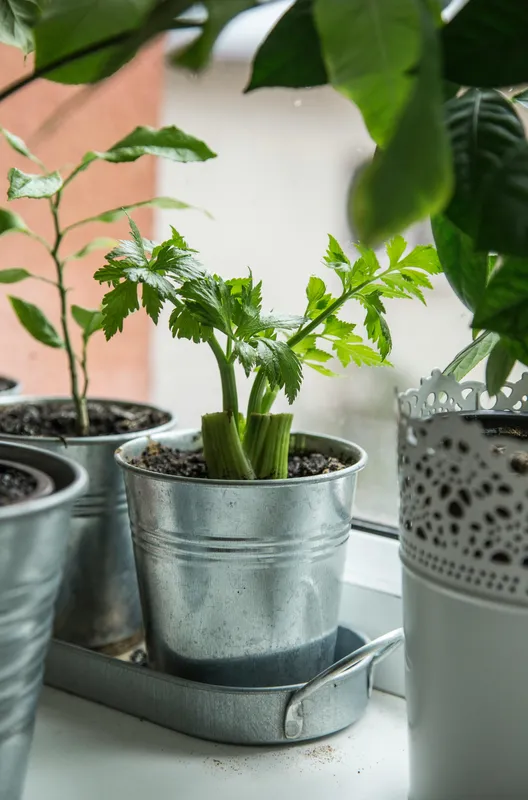
If you are impatient (I am), you can also try regrowing from store-bought Chinese celery. Cut the base off a fresh bunch, leaving about two inches, and set it in a shallow dish of water on a sunny windowsill. New growth will emerge from the center within a week or two. Once you see roots and fresh leaves, transplant it into a pot with good soil. This is a fun project with kids, by the way. My daughter checks “her celery” every morning before school.
Soil, Sun, and Container Setup
Chinese celery is not fussy about soil, but it does best in rich, well-draining mix with plenty of organic matter. I use a combination of regular potting soil, compost, and a handful of perlite. If you are planting in the ground, work in a couple inches of compost before planting.
For containers, use a pot that is at least eight inches deep and twelve inches wide. You can fit several plants in a single pot since they do not take up much horizontal space. I grow mine in a rectangular planter on our balcony and harvest from it all summer.
Sun requirements are forgiving. Chinese celery prefers partial shade to full sun, especially in summer. Four to six hours of light is ideal. In hot climates, afternoon shade is important - too much heat and direct sun will make the stalks tough and the flavor overly bitter. This makes it a great option if your garden or balcony does not get full sun all day. Most herbs demand maximum sunshine. Chinese celery actually prefers a little restraint.
Watering and Feeding
Here is the one thing Chinese celery is particular about: water. Like all celery varieties, it wants consistently moist soil. Not soggy, not waterlogged, but never dry either. Think of a wrung-out sponge.
In containers, this usually means watering every day or every other day during warm weather. Mulching the soil surface with a thin layer of straw or shredded leaves helps retain moisture and keeps the roots cool.
For fertilizing, a dose of balanced liquid fertilizer every two to three weeks during the growing season is plenty. If you mixed compost into the soil at planting time, you might not need to fertilize at all for the first month. Chinese celery is not a heavy feeder compared to something like tomatoes.
Harvesting the Right Way
This is the best part. Chinese celery is a cut-and-come-again crop. You do not have to pull up the whole plant to harvest. Instead, snip the outer stalks at the base when they reach about eight to twelve inches tall, leaving the inner growth to keep developing. The plant will continue pushing out new stalks from the center for months.
First harvest is usually about sixty to seventy days after transplanting. If you started from seed, plan on eighty-five to one hundred days total from sowing.
Harvest in the morning if you can. The stalks are crispest and most flavorful before the afternoon heat. Use sharp scissors or a clean knife - pulling stalks can damage the crown and slow down regrowth.
One more tip: do not toss the leaves. They are packed with flavor and work beautifully as a garnish on soups, congee, and noodle dishes. I chop them finely and sprinkle them on top of everything during growing season.
Using Chinese Celery in the Kitchen
If you are not sure how to cook with your harvest, start simple. The classic preparation in our house is stir-fried Chinese celery with dried tofu (qin cai chao dou gan). Cut the stalks into two-inch pieces, slice firm pressed tofu into thin strips, and stir-fry in a screaming hot wok with garlic, soy sauce, and a pinch of sugar. Five minutes, done. It is one of those dishes that tastes way better than it has any right to given how easy it is.
Chinese celery is also essential in dumpling and wonton fillings. Finely chop the stalks and leaves, mix with ground pork, a splash of soy sauce, sesame oil, ginger, and white pepper. The celery adds this background herbiness that makes the filling taste complete.
For soups, add chopped stalks during the last few minutes of cooking and scatter raw leaves on top as a garnish. The heat softens the peppery bite just enough while keeping things aromatic.
And do not overlook it raw. While qin cai is stronger than Western celery when uncooked, thinly sliced stalks make a surprisingly good addition to cold noodle salads, especially dressed with black vinegar and chili oil.
Common Problems and How to Fix Them
Chinese celery is generally trouble-free, but a few things can go wrong.
Leggy seedlings usually mean not enough light during the germination phase. Move them closer to a sunny window or use a small grow light. Thin, weak stems early on will produce thin, weak plants later.
Yellowing leaves often signal overwatering or poor drainage. Check that your pot has drainage holes and that the soil is moist but not sitting in water. If the roots are brown and mushy, you have root rot. Scale back watering and let the soil dry slightly between waterings.
Bolting - when the plant sends up a flower stalk - happens in hot weather. Once a celery plant bolts, the stalks turn tough and the flavor goes bitter. If you see a flower stalk forming, harvest the entire plant immediately and use what you can. To prevent bolting, keep the plant in partial shade and maintain consistent moisture during heat waves.
Aphids occasionally show up on the tender new growth. A strong spray of water from the hose usually knocks them off. For persistent infestations, a diluted neem oil spray works well. Since you are eating this plant, avoid harsh chemical pesticides.
Growing Through Fall and Winter
Chinese celery handles cool weather much better than heat. In most zones, you can keep harvesting well into fall, and in mild climates (zones 8-10), it can produce through winter. The flavor actually improves in cooler temperatures - stalks become crisper and less bitter.
For colder regions, you can extend the season by bringing container plants indoors before the first frost. A sunny windowsill or a spot under grow lights will keep your celery going through winter. It will grow more slowly, but it will still produce.
I keep a pot on our kitchen windowsill from October through March. Having fresh qin cai available for winter soups and hot pot is one of those small luxuries that makes the cold months more bearable.
What to Grow Next
If you enjoy growing Chinese celery, you will probably like growing other Asian aromatics too. Garlic chives are similarly easy and useful in the kitchen. Thai basil is another great companion - it thrives in the warmer conditions where celery struggles, so they fill different seasonal gaps nicely. And if you want to go deeper into Chinese greens, bok choy and choy sum are both fast-growing and satisfying.
Growing the ingredients that define your family’s cooking is one of the most rewarding things about having a garden, even if that garden is just a few pots on a balcony. There is something about harvesting qin cai for tonight’s stir-fry that connects you to every generation that grew and cooked with this same plant. My mom would approve. She would also tell me I am not watering it enough. She is probably right.