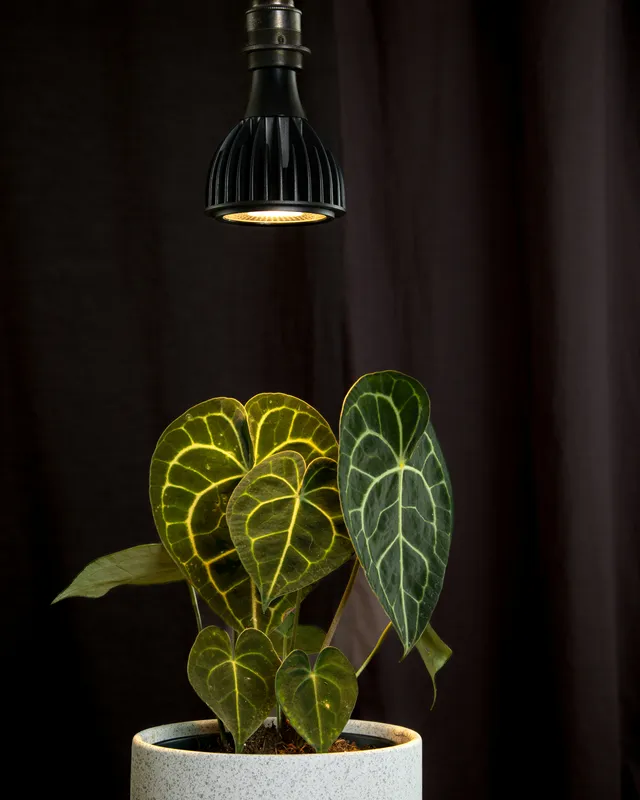
Why I Finally Gave In and Bought a Grow Light
I resisted grow lights for years. I kept telling myself, “We have windows. The plants will be fine.” And then winter hit, and my north-facing apartment in New York City turned into a cave. My Calatheas started throwing tantrums. The Pothos in the hallway stopped growing entirely. And my kid asked me why the Monstera looked “sad.”
That was the moment I accepted the truth: sometimes, sunlight just is not enough.
If you have ever shuffled your plants around the house like furniture, chasing that one good patch of afternoon light, this guide is for you. Grow lights are not just for serious plant collectors or people growing vegetables in their basement. They are for anyone whose windows face the wrong direction, whose apartment gets maybe three hours of decent light, or who just wants their plants to actually thrive instead of merely survive.
Let me walk you through everything I have learned - including the mistakes I made so you do not have to.
What Even Is a Grow Light?
At the most basic level, a grow light is any artificial light source that provides the specific wavelengths plants need for photosynthesis. Plants primarily use light in the 400 to 700 nanometer range, which scientists call PAR (photosynthetically active radiation). That range covers blue light (which helps with leaf and stem growth) and red light (which supports flowering and fruiting).
The key difference between a grow light and your regular lamp is intensity and spectrum. Your living room lamp puts out light that looks nice to human eyes, but it is not delivering the wavelengths or brightness your Fiddle Leaf Fig needs to photosynthesize properly.
Here is the good news: modern LED grow lights have made this whole thing way more accessible and affordable than it used to be.
Types of Grow Lights (and Which One You Actually Need)
LED Grow Lights
This is what you want. Full stop. LED grow lights are the standard for home plant growers in 2026, and for good reason. They run cool (no burnt leaves or fire hazards near curtains), they last for years, and they use a fraction of the electricity that older technologies required.
Within LEDs, you have two main options:
Full-spectrum white LEDs look like normal daylight and blend into your home without making your living room look like a sci-fi movie set. They provide all the wavelengths your plants need. This is what I recommend for most people.
Purple/pink LEDs (also called “blurple” lights) use targeted red and blue diodes. They work, but they cast an intense purple glow that makes your apartment look like a nightclub. My wife vetoed these after approximately 45 minutes.
Fluorescent Lights
T5 fluorescent tubes used to be the go-to recommendation. They still work fine, but LEDs have surpassed them in efficiency, lifespan, and cost. If you already have fluorescent fixtures, no need to throw them out. But if you are buying new, go LED.
Incandescent “Plant Bulbs”
Those green-boxed “plant light” bulbs at the hardware store? They are mostly marketing. They run hot, burn out fast, and provide minimal benefit. Skip them.
How Much Light Do Your Plants Actually Need?
This is where most guides get overly technical, so let me keep it simple. Light intensity for plants is measured in PPFD (photosynthetic photon flux density), which tells you how many usable light particles are hitting your plant’s leaves per second. You do not need to memorize that - just know these general ranges:
Low-light plants (Pothos, Snake Plants, ZZ Plants): 50 to 150 PPFD. These are your “I forgot this plant existed for two weeks” plants. A basic LED bulb positioned a couple feet away will do the trick.
Medium-light plants (Monstera, Philodendrons, most Calatheas): 150 to 300 PPFD. This is the sweet spot for the majority of popular houseplants. A decent panel light or a couple of LED bulbs will cover you.
High-light plants (succulents, Crotons, Bird of Paradise, fruiting plants): 300 PPFD and above. These sun-lovers need serious light. Position your grow light closer or use a more powerful fixture.
If you do not have a light meter (most people do not), here is a rough rule of thumb: if your plant would be happy in a bright window with indirect light, a standard LED grow light positioned 12 to 18 inches above it for 12 hours a day should work well.
Setting Up Your First Grow Light
Choosing the Right Format
Grow lights come in several formats, and the best one depends on your setup:
Screw-in bulbs are the easiest starting point. They fit into any standard lamp socket, cost under $15, and work great for supplementing light on one or two plants. I started with one of these in a desk lamp pointed at my Calathea, and it made an immediate difference.
Clip-on gooseneck lights have flexible arms you can direct at specific plants. Great for shelves or desks where you need targeted light. My kid calls these “the robot arms,” which is honestly a pretty accurate description.
Panel lights cover a wider area and are ideal if you have a plant shelf or a collection of plants grouped together. They are a step up in price but worth it if you are lighting more than a few plants.
Light strips can be mounted under shelves for a clean, built-in look. If you have one of those IKEA shelf setups full of plants, this is the move.
Distance Matters
How far your light sits from your plants makes a huge difference. Light intensity drops off dramatically with distance - move a light twice as far away, and you get roughly one quarter of the intensity.
For most LED grow lights and typical houseplants, start with 12 to 18 inches between the light and the top of your tallest plant. Watch for signs over the next few weeks:
- Leaves stretching or leaning toward the light? Move it closer.
- Leaves bleaching, curling, or developing brown spots? Move it farther away.
- Plant looks happy and is putting out new growth? You nailed it.
How Long to Run Your Lights
Most houseplants do well with 12 to 14 hours of grow light per day. I know that sounds like a lot, but remember - artificial light is less intense than direct sunlight, so plants need more hours to get the same total energy.
A timer is non-negotiable here. Do not try to remember to turn your lights on and off every day. A basic outlet timer costs a few dollars, and smart plugs let you set schedules from your phone. I use smart plugs and have them programmed to turn on at 7 AM and off at 9 PM, which also means the plants are lit up during the hours we are actually home to enjoy them.
Important: Plants do need a dark period. Do not run your lights 24/7. Plants perform important metabolic processes at night, and constant light can actually stress them out. Think of it like sleep - even plants need rest.
Common Mistakes (I Made Most of These)
Buying the cheapest option on Amazon. Not all grow lights are created equal. Those $8 clip lights with the purple LEDs? They often have misleading specs and barely put out enough light to matter. You do not need to spend a fortune, but budget at least $20-30 for a single bulb or $40-60 for a decent panel.
Putting the light too far away. I initially hung my panel light from the ceiling about three feet above my plants and wondered why nothing changed. Light intensity drops fast with distance. Get it closer.
Forgetting about the sides. Light only hits what it can see. If you have a tall plant with a light directly above it, the lower leaves might not get enough light. Consider angling your light or using multiple light sources.
Not using a timer. I went through a phase of manually flipping the switch and kept forgetting. My plants got inconsistent light, and it showed. Get a timer. Seriously.
Expecting instant results. Grow lights are not magic. A plant that has been struggling in low light for months is not going to explode with growth overnight. Give it a few weeks to adjust, and look for subtle signs of improvement - new leaves, better color, less drooping.
Grow Lights on a Budget
You do not need to spend a lot to make a real difference. Here is what I would recommend at different price points:
Under $20: A single full-spectrum LED bulb (look for 15W or higher actual draw) in a desk lamp or clip light. This is enough to supplement one or two plants and is a great way to test whether grow lights make a difference for your setup before investing more.
$30-50: A small LED panel or a multi-head gooseneck light. Good for a small shelf or a cluster of 3-5 plants.
$60-100: A quality panel light like the Spider Farmer SF-300 or similar. Covers a 2x2 foot area and provides enough light for a serious plant shelf.
$100+: Multiple panels or a larger fixture for a dedicated plant corner or full shelving unit. At this point, you are basically building a tiny indoor garden, and I am here for it.
The Aesthetic Question
I get it - not everyone wants their living room to look like a grow operation. Here are some ways to keep things looking good:
Choose white-light LEDs. Full-spectrum white light looks like natural daylight and blends in beautifully. No purple glow.
Use stylish fixtures. Some companies now make grow lights disguised as pendant lamps or track lighting. The trend toward “lightscaping” - using grow lights as design elements - means there are more attractive options than ever.
Tuck light strips under shelves. This creates a clean, almost gallery-like look while giving your plants what they need.
Lean into it. Honestly, a well-lit plant shelf with healthy, vibrant plants is beautiful on its own. My plant shelf with warm-white LEDs is one of the first things guests comment on.
When Grow Lights Are Not the Answer
Real talk: a grow light cannot fix everything. If your plant is overwatered, root-bound, or infested with pests, adding more light will not solve the problem. Make sure the basics (watering, soil, pot size) are dialed in before blaming a light issue.
Also, some plants genuinely do fine in low light. If your Snake Plant or ZZ Plant is doing well in a dim corner, there is no need to add a grow light just because. Save it for the plants that are actually struggling.
My Setup (For the Curious)
Here is what I ended up with after a lot of trial and error: I have a full-spectrum LED panel on my main plant shelf in the living room, running 13 hours a day on a smart plug timer. In my home office, I have a clip-on gooseneck light pointed at the Calathea on my desk. And in the hallway (the darkest spot in our apartment), I stuck a screw-in LED grow bulb in the existing overhead fixture. Total cost was maybe $120, and the difference in plant health has been dramatic.
My Monstera started pushing out two new leaves a month after I set up the panel. The Calathea stopped being a drama queen. Even the Pothos in the hallway started trailing again. Worth every penny.
Where to Go From Here
If you are new to grow lights, start small. Grab a single LED bulb, stick it in a lamp near your most light-starved plant, and set a timer. Give it a month and see what happens. You can always expand from there.
And if you are already dealing with low-light struggles, check out our guide to the best low-light houseplants and our tips on winter watering - because light and water are connected, and getting both right is how you keep plants truly happy.
Welcome to the grow light club. Your plants will thank you.