Garlic Chives: The One Herb My Dad Never Let Run Out
There was never a time growing up when my dad’s garden didn’t have garlic chives. They weren’t the showpiece - that honor went to the tomatoes, which he grew in unreasonable quantities. But the garlic chives were always there, tucked along the edge of the raised bed like a quiet promise. A thick clump of flat, dark green blades that smelled like garlic and home.
In Mandarin, we call them jiu cai (韭菜). If you grew up in a Chinese household, you already know. Jiu cai are as fundamental to the kitchen as soy sauce and rice. My dad would walk outside with kitchen scissors, snip a handful, and ten minutes later we’d be eating jiu cai chao dan - garlic chive and egg stir-fry. The simplest dish in the world, and still one of my favorites.
Now I have my own patch of garlic chives. My kids call them “the smelly grass,” which is honestly pretty accurate. But every time I snip a bunch for dumplings, I feel like I’m continuing something my dad started.
What Garlic Chives Actually Are
Garlic chives (Allium tuberosum) are a perennial herb in the onion family. They’re not the same as regular chives - those are Allium schoenoprasum, with round hollow leaves and a mild onion flavor. Garlic chives have flat, solid leaves and taste like a gentle mix of garlic and onion. Think of them as garlic’s polite cousin.
They’ve been cultivated in China for over 3,000 years, with records going back to the Zhou Dynasty. That’s not a trendy superfood with a good PR team - that’s a plant that has proven itself across millennia of home cooking.
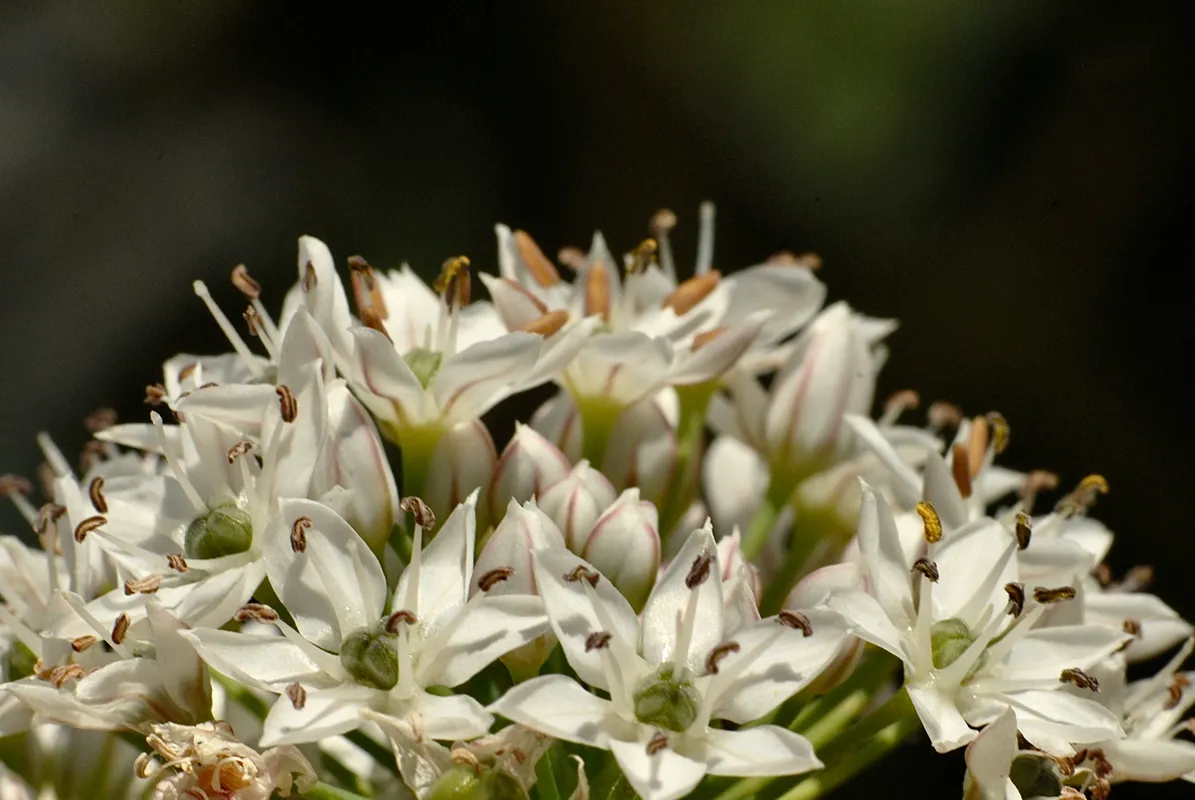
The plant grows in dense clumps, with leaves reaching about 12 inches tall. In late summer, it sends up stalks topped with clusters of small white star-shaped flowers. Those flowers are edible too, and they’re beautiful enough to earn a spot in an ornamental garden if you wanted. My dad never cared about that. He just wanted the leaves.
Why Every Chinese Family Grows Them
If you ask a Chinese gardener what the most essential plant in their garden is, a lot of them will say jiu cai without hesitating. The reason is simple: they’re incredibly versatile, absurdly easy to grow, and you use them constantly.
Here’s just a partial list of what you can do with garlic chives:
- Jiu cai chao dan (garlic chive and egg stir-fry) - the weeknight classic
- Jiu cai jiao zi (garlic chive dumplings) - a dim sum staple and the best use of a rainy Saturday
- Jiu cai he zi (garlic chive pockets/pancakes) - crispy, savory, gone in five minutes
- Stir-fried with pork, shrimp, or tofu
- Added raw to noodle soups for a fresh bite
- Mixed into scallion pancake dough for extra flavor
My mom used to say that a Chinese kitchen without jiu cai was like a sentence without a period. It just doesn’t feel complete.
Growing Garlic Chives at Home
Here’s the best part: garlic chives are one of the easiest herbs you can grow. If you can keep a pothos alive, you can grow jiu cai. Actually, even if you can’t keep a pothos alive, you can probably still grow jiu cai.
Starting Out
You have three options for getting started:
Seeds are the cheapest route. You can find garlic chive seeds at Asian grocery stores, garden centers, or online. Sow them about 1/4 inch deep in moist potting mix. Germination takes 7 to 14 days, and the seedlings will look like tiny grass blades at first. Be patient - they’ll thicken up.
Transplants are faster. Check your local Asian grocery store - they sometimes sell live garlic chive plants in the produce section. Farmers markets in areas with Chinese or Korean communities are another good bet. Plant them and you’ll be harvesting within weeks.
Division is the dad method. If you know someone who grows garlic chives, ask them to dig up a clump and split it for you. They’ll say yes, because garlic chives multiply like they’re on a mission. My dad has given away more garlic chive divisions than I can count.
Sun and Location
Garlic chives want full sun - at least 6 hours of direct sunlight. They’ll tolerate partial shade, but the flavor won’t be as strong. In my experience, the more sun they get, the more that garlic punch comes through.
If you’re growing in containers (which works great for apartment dwellers), put them on a south-facing balcony or windowsill. A pot that’s at least 8 inches deep gives the roots enough room.
Soil
They’re not fussy. Any well-drained potting mix or garden soil works. If your soil is heavy clay, mix in some compost to lighten it up. Garlic chives don’t like sitting in waterlogged soil - their roots will rot if the drainage is bad.
A slightly acidic to neutral pH (6.0 to 7.0) is ideal, but honestly, I’ve never tested my soil pH and my chives grow fine. Don’t overthink this.
Water
Water regularly but don’t go overboard. Once a week is usually enough for established plants. Stick your finger in the soil - if the top inch is dry, give them a drink. New seedlings need more consistent moisture until they’re established.
The number one mistake people make with garlic chives is overwatering. They’re tougher than they look. When in doubt, let them dry out a little.
Feeding
Garlic chives are light feeders. A handful of compost worked into the soil in spring is usually all they need. If you want to be extra, a balanced liquid fertilizer once a month during the growing season won’t hurt.
My dad never fertilized his. They grew anyway. Take from that what you will.
Harvesting the Right Way
This is where a lot of people go wrong. You don’t pull garlic chives out of the ground - you cut them.
Use sharp scissors or kitchen shears and cut the leaves about 2 inches above the soil line. This leaves enough of the plant to keep growing back. And it will grow back. Fast. You can get three to four harvests per growing season easily, sometimes more in warmer climates.
First-year patience: If you started from seed, resist the urge to harvest heavily in the first year. Let the plant establish a strong root system. Light harvests are fine, but don’t cut more than a third of the leaves at once.
After the first year: Go to town. Cut early and cut often. Regular harvesting actually encourages new growth and keeps the leaves tender. If you let them get too long without cutting, they can become tough and fibrous.
The flowers: When flower stalks appear in late summer, you have a choice. The flower buds (called jiu cai hua, 韭菜花) are a delicacy - stir-fry them with pork or make them into a fermented sauce. But if you let the flowers go to seed, you’ll have garlic chive seedlings popping up everywhere. Everywhere. My dad didn’t mind. Our neighbor did.
Cut the flower stalks if you want to keep the plant focused on leaf production and prevent unwanted spreading.
The Yellow Chive Secret
If you’ve ever eaten at a nicer Chinese restaurant, you might have encountered jiu huang (韭黄) - yellow garlic chives. They’re the same plant, but grown in the dark. Without sunlight, the leaves stay pale yellow and develop a milder, more delicate flavor that’s prized in stir-fries and dumpling fillings.
You can do this at home. Cover an established clump with an overturned bucket or pot for about two to three weeks. The leaves will grow tall and yellow, reaching for light that isn’t there. When you uncover them and harvest, you’ll have your own yellow chives.
It feels like cheating, but it’s actually a technique that’s been used in Chinese agriculture for centuries. My dad thought it was too much work for a home garden. I tried it once and was honestly amazed at how different the flavor was - sweeter, less sharp, almost buttery.
Common Problems (And Why You Probably Won’t Have Them)
Garlic chives are remarkably trouble-free. That said, here’s what can go wrong:
Overwatering and root rot. The most common killer. Make sure your soil drains well and don’t water on a schedule - water when the soil actually needs it.
Aphids. Sometimes they show up, especially on new growth in spring. A strong spray of water from the hose knocks them off. If they persist, insecticidal soap works.
Rust. Orange spots on the leaves. This usually happens in humid conditions with poor air circulation. Space your plants so air can flow between them, and remove any affected leaves.
Aggressive spreading. This is less a problem and more a feature, depending on your perspective. If you don’t want garlic chives taking over, deadhead the flowers before they set seed and grow them in containers.
Winter Care
Garlic chives are perennial and cold-hardy to USDA Zone 3, which means they survive winter in most of the continental US without any help. The leaves will die back in fall, and the plant will go dormant. Don’t panic - it’s not dead. It’ll come back in spring, usually stronger than before.
If you’re growing in containers, you can bring them indoors near a sunny window and keep harvesting through winter. The growth will be slower, but you’ll still get fresh chives when everything else outside is frozen.
What My Kids Think
My daughter, who is five, helps me “harvest” garlic chives. This mostly involves her pulling leaves out one at a time and smelling each one, then declaring “so stinky” with obvious delight.
My son, who is three, just eats them raw in the garden. He calls them “spicy grass.” He’s not wrong.
Neither of them loves jiu cai chao dan yet. That’s okay. I didn’t love it when I was five either. But one day they’ll be standing in their own kitchen, craving the taste of garlic chives and eggs, and they’ll remember that their dad grew the smelly grass in the backyard.
That’s how it works. My dad planted it for us. I plant it for them.
Getting Started This Weekend
If you want to start growing garlic chives, here’s your plan:
Check your local Asian grocery store first - both the produce section (for live plants) and the garden supply area (for seeds). H Mart, 99 Ranch, and similar stores often carry them. Seeds are also widely available online.
Plant them in the sunniest spot you have, water them when the soil dries out, and leave them alone. That’s really it. In a few months, you’ll have more garlic chives than you know what to do with.
And when you do, make jiu cai chao dan. Heat oil in a wok, scramble some eggs, toss in a big handful of chopped garlic chives, and stir-fry for thirty seconds. Season with salt and a tiny splash of soy sauce. Serve over rice.
It takes five minutes. It costs almost nothing. And it tastes like someone’s dad loved them enough to keep garlic chives growing in the backyard.